WKRP Radio Call Sign Returns to Cincinnati After 48-Year Hiatus
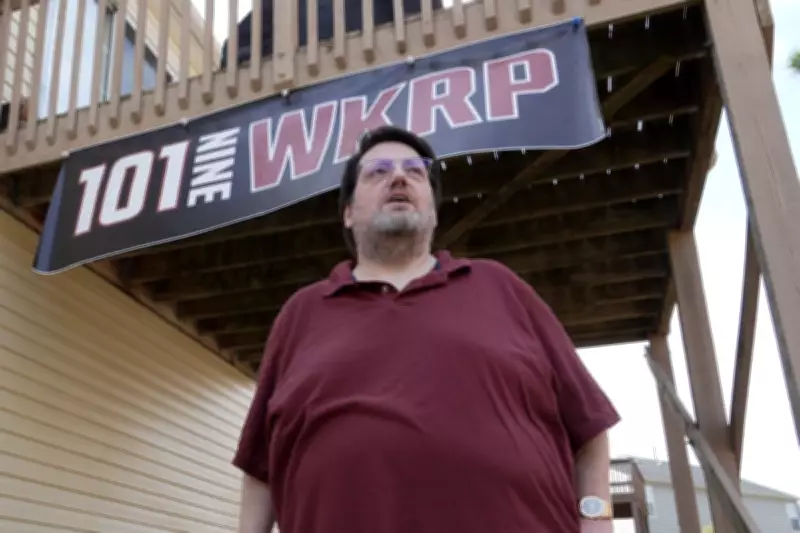
The legendary WKRP call sign is making its long-awaited return to Cincinnati after 48 years, according to the current owner of the famous broadcasting identifier. D.P. McIntire, director of the North Carolina-based nonprofit that holds the rights, has confirmed the deal is finalized, though specific details remain confidential due to contractual obligations.
A Sitcom Legacy Comes Full Circle
The WKRP call sign gained international recognition through the CBS television sitcom "WKRP in Cincinnati," which aired from 1978 to 1982. The show featured memorable characters like disc jockeys Dr. Johnny Fever and Venus Flytrap, alongside bumbling newsman Les Nessman, whose Thanksgiving promotion involving live turkeys dropped from a helicopter became iconic television history.
McIntire shared his personal connection to the show, recalling watching the premiere episode with his family as a child. "I got up and I proclaimed, 'I'm going to be in radio. And if I ever have the opportunity, I'm going to run a station called WKRP,'" he told The Associated Press.

From Childhood Dream to Broadcasting Reality
McIntire's radio career began at age 13 as a news anchor in Pennsylvania. His journey with the WKRP call sign started in 2014 when his nonprofit organization, Oak City Media, acquired the rights from the Federal Communications Commission. The call letters had previously been used by stations in Georgia and Tennessee before finding their home in Raleigh, North Carolina.
WKRP-LP (with LP standing for "low power") launched on November 30, 2015, broadcasting at 101.9 FM with a format McIntire describes as "what radio used to be 35 years ago in small-town America," featuring music from the 70s, 80s, and 90s.
The Low-Power Broadcasting Model
The station operated as a low-power FM (LPFM) broadcaster, a class created specifically for nonprofit organizations serving local communities with limited broadcast ranges. With just 100 watts of power, WKRP-LP typically reached between 4 and 12 miles depending on terrain, perfectly suited for community-focused programming.
The station's operations reflected its modest scale:
- The transmitter was housed in McIntire's garage between recycling bins and cleaning supplies
- The broadcast antenna sat atop a 25-foot metal flagpole in his backyard
- The studio equipment was set up in his basement
Despite the humble setup, the station embraced the irreverent spirit of its television namesake, even hosting an annual Thanksgiving turkey giveaway (though with grocery store gift certificates rather than actual birds).
Passing the Torch to New Stewards
After a decade of broadcasting, the 56-year-old McIntire and his partners decided to transition leadership to younger members and put the call sign up for auction. The proceeds will fund a new nonprofit venture called Independent Broadcast Consultants, aimed at helping new broadcasters establish successful operations.
While television-related suffixes (WKRPTV and WKRPDT) faced some transfer complications, McIntire confirmed the Cincinnati radio deal is secure. "It will be radio," he stated, though he cannot legally disclose further specifics about timing or ownership.
Preserving a Broadcasting Legacy
McIntire expressed hope that the new operators will honor the legacy that inspired the call sign's popularity. "It has a special place in the hearts of an awful lot of people," he reflected. "And we have been very, very, very proud to have been a steward of that legacy."
The return of WKRP to Cincinnati marks a significant moment in broadcasting history, bringing full circle a cultural icon that began as television fiction and became radio reality, now returning to its namesake city after nearly half a century.