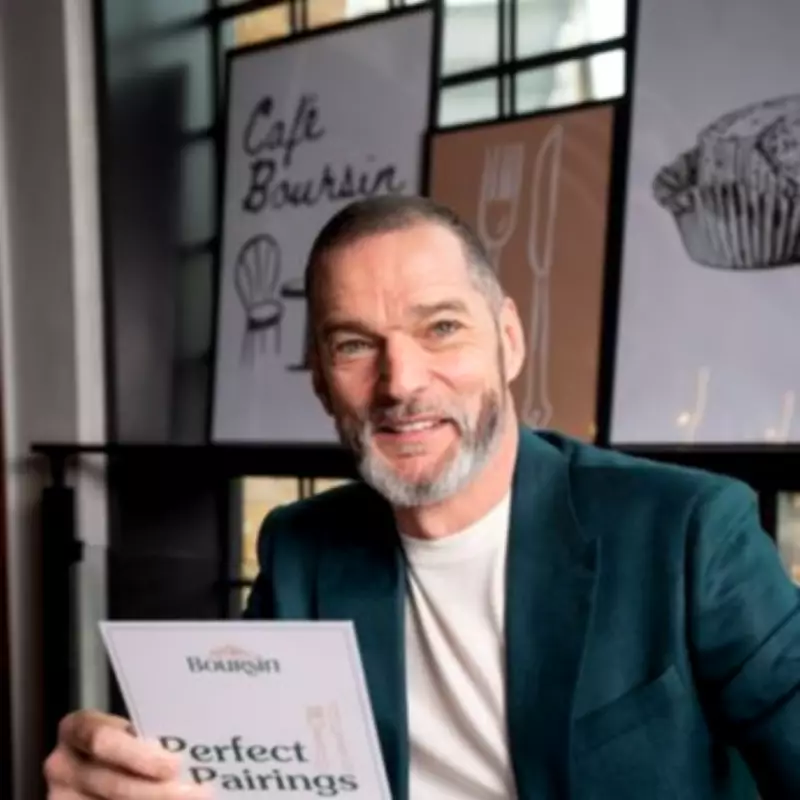
Fred Sirieix, the renowned French maître d', has embarked on a novel matchmaking experiment that explores whether food tastes can ignite romance. Teaming up with Professor Charles Spence from Oxford University, an expert in multisensory flavour science, the duo conducted a scientific study at Café François in London's Borough Market. Their project, dubbed "Perfect Pairing," aimed to determine if culinary likes and dislikes could predict compatibility between individuals.
The Perfect Pairing Experiment
In collaboration with the cheese brand Boursin, Sirieix and Spence welcomed ten paired couples to an exclusive dining experience. Participants were meticulously matched according to their food preferences, creating a unique social setting to observe potential connections. The event was designed to uncover surprising insights about how shared tastes might foster relationships, blending gastronomy with psychology in a real-world laboratory.
Personalised Menus and Shared Discoveries
Executive chef Matthew Ryle crafted personalised menus for each couple, based on their shared culinary preferences and enhanced with various Boursin flavours. As the couples enjoyed their meals, they had the opportunity to explore new friendships or even romantic sparks. One notable pair, William and Chiara, bonded over a mutual love of garlic, quickly discovering that their interests extended beyond food to travel, culture, and a shared passion for adventure.

Despite an 18-year age gap, their enthusiasm for bold and adventurous cuisine dissolved any generational differences. William reflected on the experience, stating, "It was incredible to find out that through being matched on food and flavour preferences alone, I ended up having dinner with someone who has the same interests and passion for adventure as me." This highlights how food can serve as a bridge, connecting people on deeper levels beyond mere taste.
Scientific Insights from Professor Spence
Professor Charles Spence provided scientific context, noting that garlic, once a divisive ingredient, has seen a revival in British cuisine and now symbolises openness to strong flavours. He explained, "Garlic is a really interesting ingredient and flavour profile, and in recent years has had something of a revival in British cuisine, as it is now a hugely popular ingredient. Bonding over this once divisive ingredient is very much on trend and suggests an openness to strong flavours and 'new' flavour experiences."
Spence added a fascinating twist, revealing that "women find men who eat garlic smell better than those who don't. So there may have been more going on than meets the eye." This suggests that food preferences might influence attraction in subtle, multisensory ways, adding a layer of complexity to the matchmaking process.
Broader Research on Food and Personality
The experiment aligns with broader research involving 2,000 adults, which found that 43% believe a person's taste in cuisines and flavours can reveal much about their personality. For instance, lovers of spicy food are often associated with boldness and confidence, while garlic enthusiasts are seen as carefree, comfortable, and open-minded. Nearly half (47%) of respondents thought that similar preferences increase social compatibility, and over a third (34%) reported bonding with others over shared dishes or flavours.
Fred Sirieix's Philosophy on Food and Connection
Fred Sirieix emphasised the transformative power of food, stating, "I've always believed food isn't just about what's on the plate, but how it has the power to create connections and elevate moments between loved ones." He recalled his father's wisdom, "tell me what you eat and I'll tell you who you are," noting that this adage proved true in the Perfect Pairings experiment. Sirieix added, "The way we eat together reveals so much about ourselves, and this experience proved it, with genuine connections made."

Dining Etiquette and Dealbreakers
The study also explored dining habits that affect relationships. Sharing a meal was deemed crucial for relationship-building, with 64% considering it important for romantic connections compared to 50% for friendships. Romantic dishes included sharing plates (29%), steak dinners (28%), and chocolate mousse (25%). Conversely, messy foods like ribs or chicken wings were identified as the top turn-offs for dates by 50% of participants.
Red flags at the dinner table included eating with an open mouth (65%), taking food from others' plates without permission (51%), and using phones during meals (47%). Fussy eaters were a dealbreaker for 32%, highlighting how dining behaviour can impact social perceptions.
Divisive and Beloved Ingredients
Among ingredients, Brussels sprouts emerged as the most divisive, with 21% loving them and 18% despising them. Black olives were heavily disliked, while mushrooms, garlic, and broccoli scored highest in popularity, with overall ratings of four out of five. Oliver Richmond, a spokesperson for Boursin, commented, "We've always believed that food has the power to bring people together. Bold, distinctive flavours can elevate even the simplest meal, whether it's classic garlic and herbs, a creamy blue cheese flavour, indulgent truffle, or punchy black pepper."
Richmond concluded, "This experiment perfectly shows how shared tastes and flavours can spark connections and friendships, turning a simple meal into an elevated, memorable shared experience." The Perfect Pairing project not only entertains but also offers a fresh perspective on how culinary science can enhance human connections, proving that food truly might be a pathway to the heart.