The Shaker Movement's Fading Legacy and Modern Spotlight
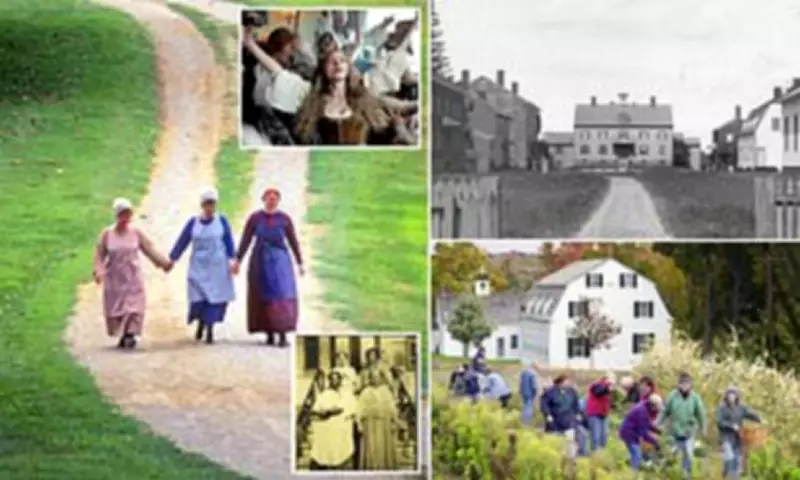
The Shaker faith, renowned for its shaking worship rituals and commitment to a simple, pacifist lifestyle, has nearly vanished from contemporary society. Originating from just 12 followers when founding leader Ann Lee brought the Protestant movement to the United States in 1774, the Shakers peaked at approximately 6,000 members across America during the mid-19th century. Today, only three practitioners remain, residing in the small town of Sabbathday Lake Village in Maine. This dramatic decline has been thrust back into public consciousness following the release of the film The Testament of Ann Lee, which chronicles the life of Ann Lee, portrayed by Amanda Seyfried.
Oscar Controversy and Critical Reception
Directed by Mona Fastvold, acclaimed for co-writing The Brutalist—a film that secured Oscars for Best Actor, Best Cinematography, and Best Original Score last year—The Testament of Ann Lee was notably snubbed for a nomination at this weekend's ceremony. Despite Seyfried receiving widespread praise for her standout performance, the omission sparked outcry among fans and critics. A user on the Oscars Reddit community described the film as 'brutally snubbed by the Oscars,' while publications like Radio Times, Decider, and US Weekly lamented the Academy's decision. This controversy has inadvertently drawn attention to the Shaker movement's rich and tumultuous history.
Historical Roots and Radical Beliefs
Formed from Quakerism in England, Shakerism derived its name from the ecstatic, unchoreographed dancing and spiritual songs that characterized early worship. The movement's core tenets were radical for the late 18th century and remain progressive today. Shakers established highly egalitarian communities where men, women, and individuals of different races enjoyed equal rights and opportunities. They lived in towns with shared resources, rotated leadership roles, and adhered to staunch pacifism. A defining aspect was the emphasis on celibacy, a tenet established by Ann Lee after religious visions during her imprisonment in England for her beliefs. Lee interpreted humanity's original sin in the Garden of Eden as sex, viewing the apple as a metaphor for sexual desire.

Growth and Decline in America
After her release, Lee's charisma and the belief among some Protestant sects that the Second Coming of Jesus would manifest as a woman garnered her followers, who dubbed her Mother Ann. She immigrated to America in 1774, settling in Watervliet near Albany, New York. The Shakers expanded through missionary journeys, peaking at around 6,000 members by the mid-19th century. However, large-scale cultural shifts, the Industrial Revolution's economic opportunities, and the dramatic murder of prominent leader Caleb Dyer accelerated their decline. Dyer, who joined as a child, became a leader and businessman in the Enfield community. His murder in 1863 by Thomas Wier, a father seeking custody of his daughters entrusted to the Shakers, marked a turning point. Posthumous financial mismanagement and a costly legal battle over a $5,000 debt—ballooning to $20,000 (equivalent to $640,000 today)—further weakened the movement.
Modern Shakers and Cultural Adaptation
As of 2026, the three remaining Shakers—Sister June Carpenter, Brother Arnold Hadd, and Sister April Baxter—reside in Sabbathday Lake Village, Maine. This community, which once housed 150 members in the late 1800s, has adapted to modern times. Shakers now utilize social media, cell phones, and technology, distancing themselves from anachronistic stereotypes. While dancing has become less central to worship, song remains integral. Experts like Mary Ann Haagen, a Shaker historian, and Johanna Batman, executive director of the Shaker Heritage Society, note that despite historical inaccuracies, The Testament of Ann Lee effectively captures the essence of Shakerism, fostering appreciation for its enduring legacy.