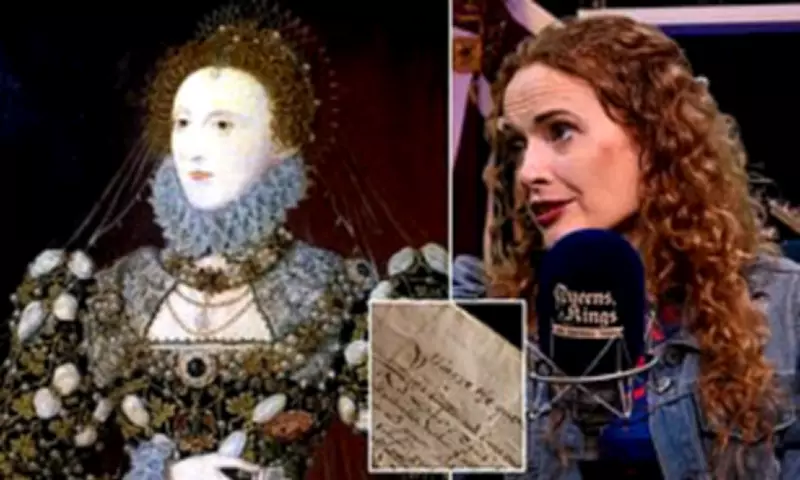
Elizabeth I's Perilous Path to the Throne: A New Podcast Miniseries Unveils Her Survival Story
In the debut episode of the fresh podcast miniseries Queens, Kings and Dastardly Things, historians Robert Hardman and Kate Williams delve into the remarkable early years of Queen Elizabeth I. Before ascending to the throne at age 25, Elizabeth's childhood and adolescence were marked by navigating the intense dynastic turmoil that erupted following her father King Henry VIII's demise in 1547.
The Chaotic Aftermath of Henry VIII's Reign
Henry VIII's rule left England on the brink of civil war, with only one frail son, Edward, and multiple daughters from different wives. This instability was exacerbated by Henry's historic break from the Church of Rome, sparking fierce competition among rival factions across the kingdom to restore a Catholic monarch after his death.
Elizabeth, the daughter of Henry's second wife Anne Boleyn, found herself dangerously caught in these crosshairs. Compared to her half-sister Mary, Elizabeth was perceived as a religious pragmatist unlikely to reverse her father's reforms if she assumed power. Mary, who aimed to realign England with Rome, nearly executed Elizabeth after becoming Queen in 1553.

The Wyatt's Rebellion Crisis and Elizabeth's Narrow Escape
Historian Kate Williams describes how Elizabeth inadvertently became a figurehead for Protestant revolt against Mary's reign. Various rebellions emerged, most notably Wyatt's Rebellion, where Sir Thomas Wyatt plotted to overthrow Mary and install Elizabeth on the throne. Although swiftly suppressed, the rebellion implicated Elizabeth, as rebels were proven to have contacted her.
In the aftermath, Elizabeth was imprisoned in the Tower of London, occupying the same royal quarters where her mother Anne Boleyn had spent her final days. Mary had already signed the death warrant for Lady Jane Grey, another rival claimant, but Elizabeth's situation was more complex. She understood her guilt was harder to prove than Grey's, and her execution would be deeply unpopular with the public as the daughter of a former king.
The 'Genius' Tactic: Elizabeth's Tide Letter
As Williams reveals in the podcast, Elizabeth devised a clever strategy to delay her execution, hoping Mary would lose her nerve. She requested to write a letter to her half-sister, now famously known as the Tide Letter, held in the National Archives. Williams notes, "It's called the Tide Letter because Elizabeth writes it in hopes that the tide against her would change."
The letter is described as chaotic, with writing scattered across the page, as Elizabeth spent considerable time crafting it. This tactic worked: the tide did change, buying her another night. Ultimately, Mary backed down from executing her half-sister, opting instead to place Elizabeth under house arrest at Woodstock Palace in Oxfordshire, now part of the Blenheim Palace estate.
From Imprisonment to the Throne
Just four years later, Mary died of cancer at St James's Palace in London, childless and with her Catholic vision for England in ruins, leaving the throne to Elizabeth I. Elizabeth would go on to rule England for an astonishing 44 years, her early survival paving the way for one of history's most iconic reigns.
To experience a dramatic retelling of Elizabeth's tumultuous early life, listeners can search for Queens, Kings and Dastardly Things on platforms like YouTube, Apple Podcasts, or Spotify, wherever podcasts are available.