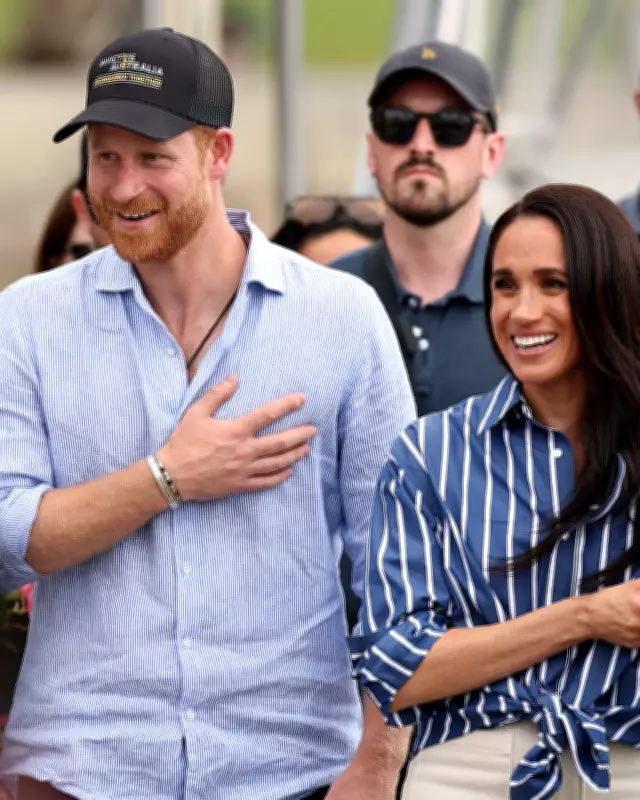
Harry and Meghan's Australian Visit: Royal Tour or Brand-Building Exercise?
Prince Harry and Meghan Markle concluded their four-day visit to Australia on Friday, wrapping up a whirlwind trip that has ignited intense speculation about its true nature and purpose. The couple's activities ranged from discussing mental health to appearing on MasterChef Australia, but the absence of traditional royal fanfare left many questioning whether this was a genuine royal tour or a carefully orchestrated brand-building mission.
The 'Claytons' Tour Phenomenon
In Australian cultural parlance, the Sussexes' visit has been described as a 'Claytons' tour - a term originating from a non-alcoholic beverage marketed as "the drink you have when you're not having a drink." This characterization reflects the tour's ambiguous status: while Harry and Meghan remain royals by birth and marriage, their current non-working royal status created a hybrid experience that blended charitable appearances with commercial ventures.
The tour's tightly controlled events featured no questions from journalists, yet public curiosity persisted regarding ticket prices for commercial dinners (reportedly around $3,000), Meghan's fashion investments, and the taxpayer costs for additional security. These questions underscored the commercial undercurrents running beneath the surface of their Australian engagements.

Academic Perspectives on Brand Strategy
Associate Professor Lauren Rosewarne from the University of Melbourne's School of Social and Political Sciences provides crucial insight into the visit's strategic dimensions. "The primary way to measure the success of the visit is whether it helped their brand," Rosewarne explains. "They are, after all, no longer 'working royals', so they are visiting Australia in service of their brand as individuals and as a couple."
This brand, according to Rosewarne, operates through two distinct channels: charitable initiatives and commercial enterprises. The professor notes that Australia, like much of the world, maintains mixed feelings about the couple, with their avoidance of large public events making it difficult to gauge genuine public enthusiasm beyond those willing to pay thousands for exclusive access.
Contrasting with Their 2018 Triumph
The current tour stands in stark contrast to Harry and Meghan's triumphant 2018 Australian visit, when newly married and expecting their first child, they were greeted by rapturous crowds and met with then-Prime Minister Scott Morrison. Royal researcher Giselle Bastin from Flinders University recalls that earlier moment: "We were very, very excited. They had a glamour attached to them... they felt like a new beginning, like the future of the Windsors."
Harry himself acknowledged in a 2021 Oprah Winfrey interview that the 2018 tour created waves within Buckingham Palace due to Meghan's natural public charm. However, Bastin observes that "the celebrity shine has rather worn off" following years of public fractures within the royal family.
Commercial Elements and Public Perception
Meghan's headline appearance at the three-day "Her Best Life" wellness retreat in Sydney, with tickets costing between A$2,699 and A$3,199, drew particular scrutiny. Bastin suggests the couple may be "not reading the room" with such premium-priced events during challenging economic times. Meanwhile, Meghan promoted her As Ever product line, described on its website as "more than a brand... it's a love language" featuring jams, spice kits, and candles.
Public reaction ranged from outrage to ambivalence, with some critics labeling the couple as "grifters" capitalizing on royal connections they simultaneously criticize. Rosewarne notes this perception stems from how "the couple are often viewed as grifters who only have fame because of the very same family they are perceived to constantly besmirch."

Charitable Impact and Media Frenzy
Despite controversies, the tour delivered meaningful charitable moments. Harry launched a report addressing Australian fathers' mental health struggles during a Western Bulldogs AFL club visit, volunteered time for Lifeline events, and participated in wreath-laying ceremonies at the Australian War Memorial. Supporters like Rose Dennis defended their intentions: "I heard someone say it's just a publicity thing, but it's not, he's really interested in men's mental health."
Celebrity PR agent Max Markson, who previously offered Meghan US$1 million for Australian appearances, acknowledges their charitable contributions while highlighting the media attention generated: "The media has written about it a lot. And that's good. Whether it's been negative or positive, it doesn't matter; they've made a noise."
Ultimately, the Australian visit revealed the complex interplay between modern celebrity, royal legacy, and commercial reality. While the tour's financial success may only be measurable through the Sussexes' bank statements and charity donations, its cultural impact continues to spark debate about the evolving nature of royalty in the 21st century.