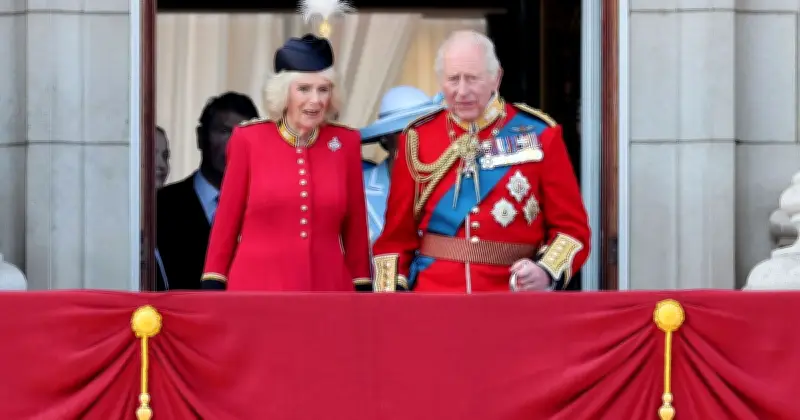
King Charles has made the historic decision not to live at Buckingham Palace once the ongoing refurbishments are completed, making him the first monarch since Queen Victoria in 1837 to forgo the palace as an official residence. However, this move came as no surprise to one former staff member, who says the King confided his preference years before ascending the throne.
Former Butler Reveals King's Long-Held Preference
Grant Harrold, who worked as a royal butler for King Charles between 2004 and 2011, told us exclusively that the King shared his plans to remain at Clarence House long before his mother, Queen Elizabeth II, died. “The King actually told me about his plans to keep Clarence House as his main residence years ago, long before he became monarch,” Harrold said. “So the news isn't really a surprise; I think it's always been on the cards. I knew that this would be a call he would eventually make and announce publicly.”
The £369 million refurbishment of Buckingham Palace, funded through a temporary increase in the Sovereign Grant, is expected to be completed in March 2027. The 10-year renovation addresses ageing cables, lead pipes, wiring, and boilers, many of which have not been replaced in 60 years, following concerns about fire and water damage.

Why Clarence House Suits the King and Queen
King Charles and Queen Camilla have lived at Clarence House for over 20 years. Harrold explained why they are attached to the property: “The King and Camilla love Clarence House. They've lived there for over two decades and they've really made it their home. It's their style and it's homely, their private place away from the spotlight.” He also noted the practical advantage of its proximity to Buckingham Palace: “They also have the benefit of it being just down the road from Buckingham Palace, so they can pop there very easily whenever needed.”
At nearly 80 years old, the King and Queen are thought to want to avoid the upheaval of moving themselves and their staff. Harrold added: “I’ve spent time in the private areas of Buckingham Palace, and they are very dated. The whole building is. They have tried to modernise it over the years with all of the renovations, however it’s a historic building filled with centuries of traditions. It’s also obviously very, very large. Getting from a room on one side of it to a room on the other is quite a journey, and we’ve got to remember they’re getting older. It’s not overly practical.”
Increased Public Access and Modernisation
Royal officials have stated that the decision to keep the monarch out of Buckingham Palace will allow greater public access to the historic landmark, as security concerns would limit visitor areas if the King lived there. Harrold described this as a “telling detail” and “another sign of modernising.” He also suggested the announcement could be a “clever PR move,” as it coincided with King Charles releasing details of his personal tax bill for the first time.
Buckingham Palace has served as the official London residence of the UK monarch since Queen Victoria's reign began in 1837. Since then, six kings and queens have used it as their official residence, most recently Queen Elizabeth II. While the palace will no longer be a private home for the royal family, it will continue to host state occasions. Harrold concluded: “While it’s not practical for the King and Queen’s private living, it’s the perfect place for big state occasions – and it will still be used for that.”