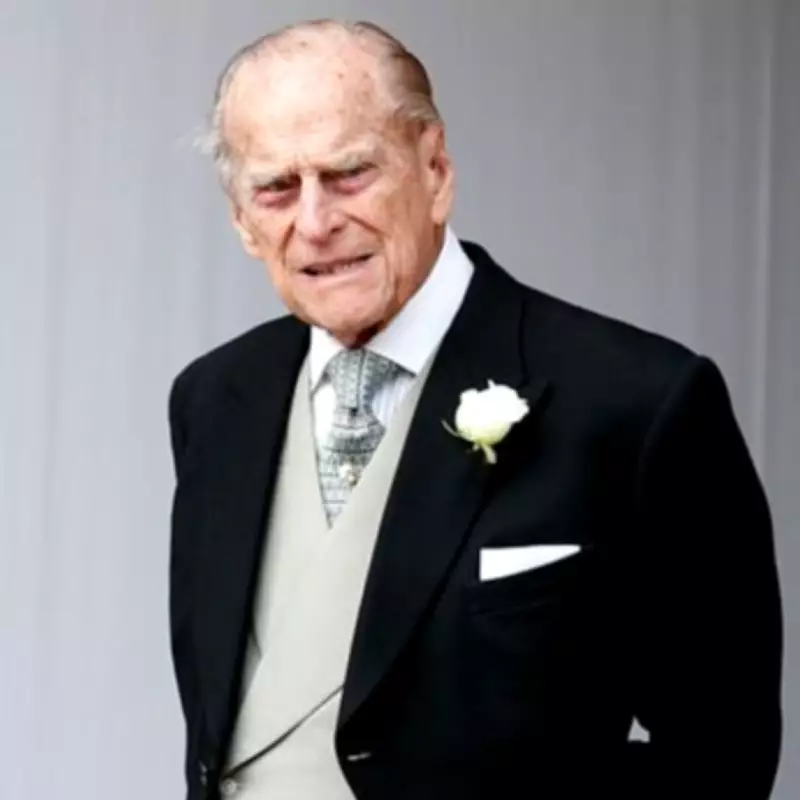
In a startling revelation, a royal expert has disclosed that Prince Philip, the late Duke of Edinburgh, was secretly fighting pancreatic cancer for eight years prior to his passing in 2021. According to royal historian Hugo Vickers, this private health struggle spanned nearly a decade, with Philip remarkably maintaining his royal engagements for four years after the initial diagnosis.
The Diagnosis and Initial Concerns
Hugo Vickers, in his newly released book titled Queen Elizabeth II, details that Prince Philip was diagnosed with pancreatic cancer in June 2013, when he was 91 years old. The diagnosis came after doctors detected a shadow on his pancreas during a hospital stay, leading to a surgical procedure that involved cutting across his stomach. The verdict, as Vickers writes, was "inoperable pancreatic cancer," sparking immediate concerns about his ability to continue with public duties.
Following the diagnosis, there was a prevailing view among insiders that Philip might not be seen in public again. However, defying expectations, the Duke of Edinburgh "outwitted the pessimists," as Vickers phrases it, by surviving with the disease for much longer than anticipated. His resilience allowed him to participate in official engagements until 2017, when he eventually stepped back from his royal role.

Life with Pancreatic Cancer
Prince Philip's battle with pancreatic cancer lasted eight years, a duration far exceeding the typical survival time for this aggressive disease. Vickers notes that during his final days at Windsor Castle, Philip found "elements of tranquillity." In a poignant anecdote, the historian describes how, on the last night of his life, Philip managed to slip away from his nurses, shuffle along a corridor with his Zimmer frame, and enjoy a beer in the Oak Room.
The morning of his passing was marked by a quiet departure. Vickers recounts that Philip got up, had a bath, expressed feeling unwell, and then "quietly slipped away." His death occurred on April 9, 2021, just two months before his 100th birthday, with the official cause listed as 'old age.'
Royal Reactions and Funeral Details
The late Queen Elizabeth II was reportedly not present when Philip died, and Vickers reveals she was "absolutely furious that, as so often in life, he left without saying goodbye." This emotional response underscores the deep bond between the couple, who were married for over 73 years, making Philip the longest-serving Consort in British history. Queen Elizabeth once described him as her "strength and stay," highlighting his pivotal role in her life.
Philip's funeral, held during the height of the Covid-19 pandemic, was a somber affair with limited attendance due to restrictions. Iconic images captured Queen Elizabeth sitting alone, wearing a mask, at the service in St George's Chapel, Windsor, reflecting the isolation imposed by the global health crisis.
The Context of Pancreatic Cancer
According to Cancer Research UK, pancreatic cancer has one of the lowest survival rates among common cancers, with only about five percent of patients surviving five years or more post-diagnosis. The disease is often detected late, when it has already spread, making surgical intervention frequently unviable. In the UK, pancreatic cancer claims approximately 10,200 lives annually, underscoring the severity of Philip's prolonged battle.
Vickers' account sheds new light on Prince Philip's private struggles, revealing a narrative of quiet courage and determination in the face of a devastating illness. His ability to continue public duties for years after diagnosis speaks to his unwavering commitment to service, even as he navigated a personal health crisis away from the public eye.