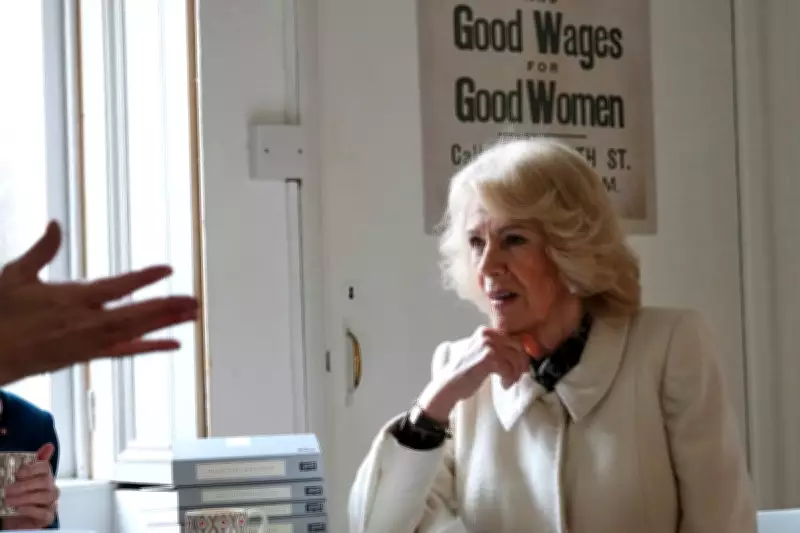
Queen Camilla's Quiet Revolution: From Garrick Club to Social Change
As Her Royal Highness Queen Camilla joins the historic Garrick Club, it marks the latest chapter in her understated yet profound journey as a catalyst for social transformation. This move underscores how she has evolved into a powerful agent for change, leveraging her position with quiet determination and strategic influence.
A Symbolic Membership with Real Impact
Queen Camilla's acceptance as the first royal woman to join the Garrick Club since it opened its doors to women in 2024 is far more than a ceremonial gesture. While King Charles was a regular patron of the club's private dining rooms, providing Camilla with a natural entry point, her membership transcends mere convenience for supper engagements. It represents a deliberate step toward dismantling barriers in spaces where power and networking have traditionally been male-dominated.
This development matters significantly in today's social landscape. While men's social gatherings have their place, the outdated notion of clubs as sanctuaries to "get away from the wife" has faded, except perhaps among the ultra-wealthy. Growing up in an era where gender equality was increasingly emphasized, many have witnessed progress, yet disparities persist starkly. For instance, FTSE CEOs named Andrew or John still outnumber all female counterparts, highlighting the entrenched advantages men hold.

Clubs like the Garrick serve as hubs where deals are forged and connections solidified. By gaining access, women can participate in these influential circles, challenging any lingering perceptions of inferiority. Queen Camilla's presence here is a testament to her commitment to fostering inclusivity and opportunity.
The Art of Soft Power and Personal Advocacy
Long before her royal status, Camilla mastered the art of soft power—a tool she has wielded with remarkable effect. Royal consorts have historically exercised influence discreetly, often through style and demeanor, but Camilla has elevated this approach. With a background in the fast-paced, hard-living hunting set, she brings lived experience to her role, enabling authentic engagement with causes close to her heart.
Her advocacy for osteoporosis awareness, driven by personal loss as her mother and grandmother succumbed to the condition, exemplifies this. Since the 1990s, she has tirelessly promoted understanding through initiatives like appearances on The Archers and collaborations with Strictly Come Dancing. This personal touch resonates deeply, making her efforts more impactful.
Perhaps her greatest strength lies in her unwavering confidence and sense of self, likely honed outside the royal "hot-house" environment. This has allowed her to tackle sensitive issues that others might avoid. From rallying British men after Sarah Everard's murder to candidly sharing her own experience of sexual assault in a Today programme interview, she demonstrates that openness is the best antidote to stigma—mirroring the approach of Princes Harry and William with mental health.
Driving Change Through Diplomacy and Dialogue
In 2013, Camilla orchestrated a groundbreaking meeting between Keir Starmer, then Director of Public Prosecutions, Home Secretary Theresa May, and rape victims, focusing exclusively on sexual abuse. This initiative highlighted her ability to convene high-profile figures for crucial conversations, challenging the British tendency to sweep uncomfortable topics under the rug.
At 78, as an aristocrat by birth and royal by marriage, Queen Camilla embodies the establishment, yet her support for the arts, literacy, and ending violence against women and girls is profoundly meaningful. Her Garrick Club membership, while symbolic, reflects her busy schedule but also her strategic use of platforms to advocate for change.
Celebrating Literacy and Economic Contribution
Recently, Clarence House showcased Camilla's commitment to literacy by hosting authors like Jeffrey Archer, Richard Osman, and Jojo Moyes at the Queen's Reading Room Medal reception. This event not only celebrated writers' contributions to the British economy but also emphasized the grassroots impact of literary arts.

The soft power of the arts is indispensable for Britain. In a climate of funding cuts, the government's decision to increase BBC World Service funding by £11 million annually for three years is a positive step. Literacy, as Camilla champions, fosters independence, combats disinformation, and builds empathy—her focus on reading for pleasure, beyond mere education, is particularly commendable.
A New Era of Royal Influence
While Queen Elizabeth II exemplified judicious silence, and King Charles upholds robust discretion, Queen Camilla carves a unique path. She quietly and persistently drives social change, reshaping attitudes both as consort to the King and as a figure in her own right. Her journey from the Garrick Club to global advocacy illustrates how soft power, when wielded with purpose, can transform societies in subtle yet significant ways.