Royal Fashion as a Weapon: How Wardrobes Shaped the Monarchy's Survival
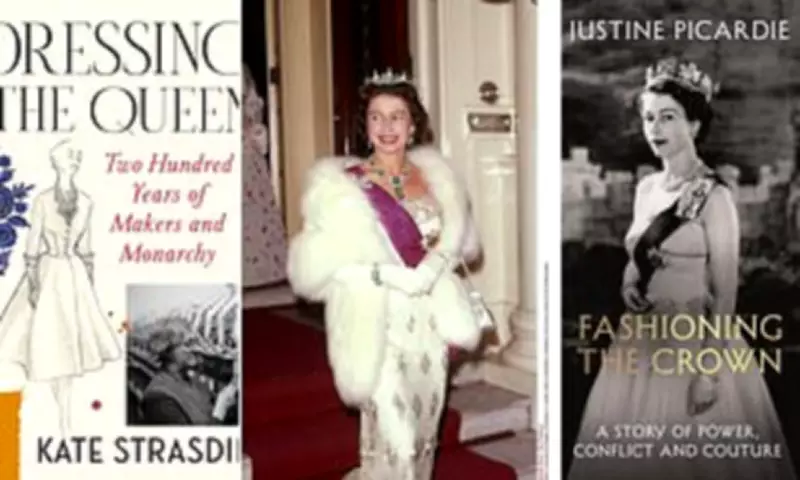
Crisis within the Royal Family is a recurring theme throughout history, but as Justine Picardie explores in her new book, the royals have not relied solely on government policy or carefully crafted public statements to weather these storms. Their wardrobes have played a crucial and often overlooked role in their survival and reinvention.
The 'Soft' Diplomacy of Clothing
As the centenary of the late Queen's birth approaches on April 21, marked by an exhibition dedicated to her style at Buckingham Palace, Picardie demonstrates how fashion has been wielded as one of the monarchy's most unexpectedly powerful weapons. Through a comparison of sartorial choices, she reveals the transformation of the House of Saxe-Coburg into the distinctly British House of Windsor.
Edward VIII and Wallis Simpson made deliberately provocative and abrasive fashion statements, while the Queen Mother, George VI, and Elizabeth II opted for cosier, more reassuring styles. This shift was masterminded through what Picardie terms the 'soft' diplomacy of clothes—a strategy that proved far from gentle in its impact. Through this sartorial propaganda, the Windsors secured their status as rightful monarchs against significant odds.

Personal Insights and Historical Anecdotes
Picardie is uniquely qualified to examine this intersection of fashion and monarchy. With a background as editor-in-chief of Harper's Bazaar and features director of British Vogue, her expertise is enriched by personal connections, including her husband being Prince Philip's godson. During a lunch at Balmoral, she engaged the late Queen in conversation about designer Hardy Amies, mentioning rumours of his wartime espionage. The Queen quipped, 'Ah yes, those rumours that he was very good at garrotting Nazis.'
Critics who dismiss Picardie's work as flitting between couture frivolity and the horrors of war miss a key point: fashion and the social status quo are inextricably linked. In another example, couturier Norman Hartnell faced repeated interventions from Prime Minister Clement Attlee while creating the Queen's wedding dress in 1947, ensuring every element, down to the silkworms, was British—a patriotic statement woven into fabric.
Rebellion and Messaging Through Attire
In contrast, Edward VIII's ascension to the throne was marked by rebellion, starting with his abolition of frock coats at court—a symbolic rejection of his buttoned-up upbringing. In private, he performed what Wallis Simpson called his 'striptease act,' removing his tie and rolling up his sleeves to escape both physical uniforms and the symbolic shackles of kingship. His avant-garde style loudly declared, 'I don't want to be King!'
Wallis complemented this with her 'hard chic' armour, often designed by Schiaparelli, while the Queen Mother's comforting florals during the Blitz offered a reassuring antithesis. Even what royals choose not to wear carries meaning; in the 1940s and 1950s, the late Queen, as heir, was restricted to British designers, whereas Princess Margaret could champion French couture from Dior.
Uncovering Hidden Stories of Makers and Dressers
Alongside Picardie, fashion historian Kate Strasdin's book, Dressing The Queen, sheds light on the often-overlooked stories of the makers and dressers behind royal attire, from Queen Victoria to the present day. By shifting focus from the 'gilded royal swan' to the 'furious activity beneath the surface,' Strasdin rescues from anonymity the laundry women, corset makers, and milliners whose craftsmanship supported the monarchy.
Her work serves as a social history of Britain, highlighting vanishing trades like feather curlers and straw plaiters that once employed millions. This reinforces Picardie's argument that the social and sartorial are mutually dependent, each acting as a barometer for the other. For instance, the late Queen's coronation shoes were designed by Frenchman Roger Vivier but made by British brand Delman Ltd, with ruby-studded heels—a blend of international flair and essential British links.

Modern Implications and Enduring Power
Today, as the monarchy faces renewed crises, King Charles III likely hopes his arsenal of Savile Row suits, some worn since the 1980s, will provide a dose of reassuring familiarity for the nation. As a stylist, I have long advocated for the power of clothes to plant messages; whether we engage with fashion or not, our choices speak volumes.
Fashion, often dismissed as frivolous, is revealed in these works to be a serious tool of diplomacy, rebellion, and survival. The royal wardrobe continues to shape perceptions and secure legacies, proving that in times of turmoil, what one wears can be as impactful as what one says.