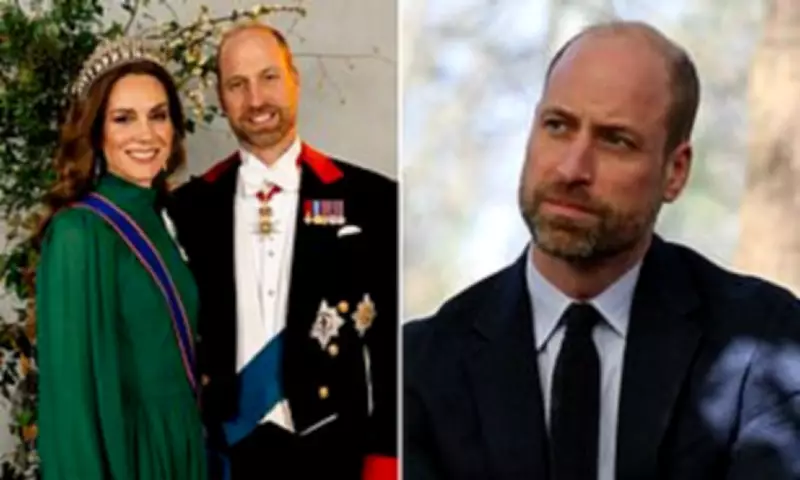
Prince William firmly rejected detailed plans for a major investiture ceremony and church service to formally mark his ascension to the title of Prince of Wales, according to revelations in a significant new royal book. Acclaimed royal author and Daily Mail writer Robert Hardman has disclosed that William turned down proposals drawn up by his father's courtiers for a grand event at St David's Cathedral in Pembrokeshire, West Wales, in 2022.
A Modern Monarchical Approach
Instead of participating in traditional pomp and pageantry, Prince William and Catherine, the Princess of Wales, chose to commemorate their new titles with a simple, low-key visit to Anglesey, where they resided for three years following their marriage, and to Swansea. This understated approach is viewed as a clear signal of William's desire to modernise certain aspects of the monarchy, moving away from elaborate ceremonial displays.
Stark Contrast to 1969
William's decision stands in stark contrast to the extensive investiture of his father, King Charles, as Prince of Wales in 1969. That historic ceremony at Caernarfon Castle was broadcast live to an estimated 19 million viewers across Britain and a further 500 million people worldwide. It featured Queen Elizabeth II presenting her son with the traditional regalia of the Prince of Wales, including the sword, coronet, ring, rod, and mantle.

In his book, Elizabeth II: In Private. In Public. The Inside Story, Mr Hardman writes: 'On becoming Prince of Wales, he [William] had not only ruled out an investiture, like his father's in 1969, but even a church service.' The author further reveals that the British Government had even consulted with Plaid Cymru, the Welsh nationalist party, regarding the ceremony plans to preempt any objections. However, 'the idea never progressed beyond the desk of Prince William,' with one of his team members stating plainly, 'It wasn't ever something that he wanted to do.'
Welsh Engagement and Historical Context
Despite forgoing a formal ceremony, the Prince and Princess of Wales have demonstrated their commitment to engaging with Wales in more personal ways. Last month, Catherine delivered a video message entirely in Welsh to mark St David's Day, the first time she has done so. Prince William revealed in 2024 that he had downloaded the popular language learning app Duolingo and was attempting to grasp Welsh phonetically.
This contemporary engagement contrasts with the historical tensions surrounding the 1969 investiture. King Charles's high-profile ceremony 57 years ago was fiercely opposed by some Welsh nationalist groups, who viewed the title of Prince of Wales as a symbol of the country's occupation by the English crown. Tragically, on the morning of the investiture, two members of a militant group were killed when a bomb they were carrying exploded as they were transporting it to a railway line intended for the royal train.
Royal Viewing Habits Revealed
In a lighter revelation from the same book, Mr Hardman shares insights into the royal family's leisure activities. He notes that while King Charles enjoys writing letters late into the night, Prince William's idea of a fun evening is to 'sit down with the Princess in front of The Traitors.' The BBC's hit show about deception and trust has captivated millions, including members of the royal family.
Stephen Lambert, whose production company creates the show, confirmed this interest. He recounted that Prince William told him last year, while awarding him an OBE at Windsor Castle, that watching the program was a 'big treat.' Mr Lambert added: 'He said he and the family were very much looking forward to watching it.' William later informed Sir Stephen Fry, a celebrity contestant on the show, that he and his family had been 'locked into' the series, highlighting their engagement with contemporary popular culture.