ABC Los Angeles reporter Abigail Velez has issued a public apology after making dismissive comments about Bosnia and Herzegovina on air, following the announcement that the United States would face the Balkan nation in the knockout stage of the World Cup.
Apology Issued After Online Backlash
Velez was subjected to a torrent of online abuse after a clip of her segment spread across social media platforms. By Saturday, she felt compelled to issue a public apology. "In a poor effort to have a little fun with World Cup competition, I took it too far and made a thoughtless comment on air that was insensitive and inappropriate," she wrote.
"I apologize to the people of Bosnia and the Bosnian Football team. The World Cup is supposed to be about uniting communities around the world, and my comment didn't reflect that spirit. Wishing all the teams the very best as they continue their World Cup journey."

The Controversial Comments
In the original broadcast, Velez said: "Okay, the next round Team USA will play Bosnia next Wednesday, and one thing about Bosnia is I could not point out where it is on a map. I don't know the first thing about Bosnia [and Herzegovina], and I don't want to know. That's because Team USA. We're back. We're better than ever. That's next Wednesday. Get prepared, Bosnia, because you don't want it. You don't want it like that, but you're gonna get it."
Context of the Match
The United States men's national team is set to face Bosnia and Herzegovina in the World Cup's Round of 32 next Wednesday in San Francisco. Mauricio Pochettino's side hopes to secure its first World Cup knockout victory since defeating Mexico 2-0 in the last 16 at the 2002 tournament.
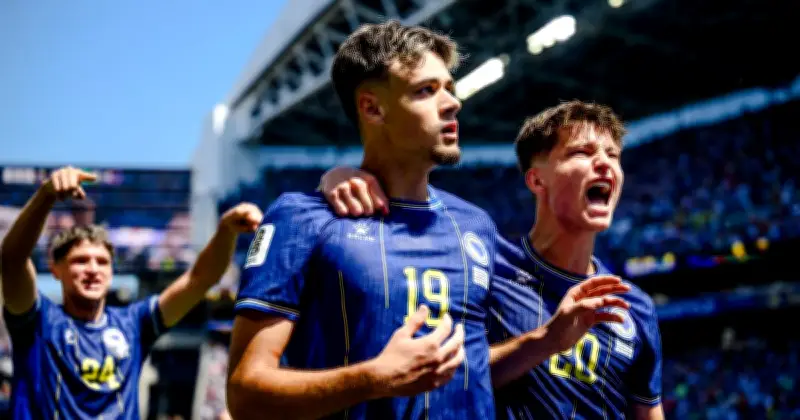
Bosnia and Herzegovina, with a population of under 3.5 million, ranks among the smallest nations to have reached the World Cup knockout stage — alongside Cape Verde, following the African nation's stunning draw against Spain.
Reaction and Implications
Velez's original broadcast mirrored a style reminiscent of Donald Trump, regularly boasting about American supremacy while flaunting a lack of knowledge of international matters as a show of strength. The incident has sparked debate about the role of media in promoting international understanding during global events like the World Cup.