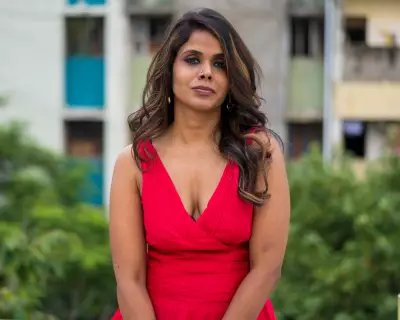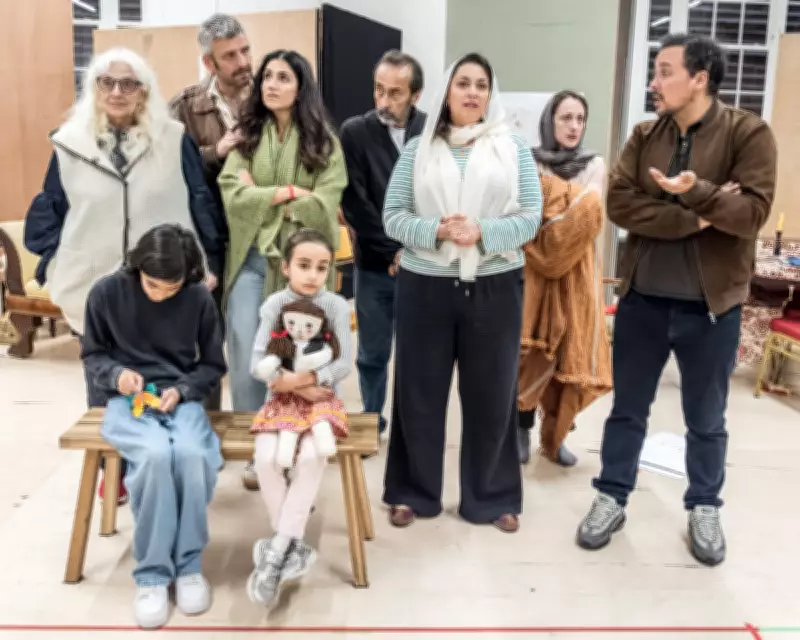
The cast of Under the Shadow, including Leila Farzad as Shideh, brings a chilling supernatural play to the stage that explains the terror of life in Iran. The hit Iranian horror film, which conjured scares from the aftermath of the 1979 revolution, now feels more relevant than ever with Tehran once again under siege.
A Story of Djinn and Revolution
Nadia Latif, the theatre and film director, recalls her grandmother's warnings about djinn. 'If angels are good and devils are evil, then the djinn is something in between,' she remembers learning. When she asked what that meant, her grandmother replied, 'It means that bad things happen to good people.' For rehearsals of Carmen Nasr's stage adaptation of Babak Anvari's 2016 Iranian horror movie Under the Shadow, Latif has placed a protective evil eye over the room, just in case.
The Bafta-winning Farsi horror film, now performed on stage in English, is set in Tehran in 1988 as Iraq hurls missiles across the border, with the shadow of the 1979 Iranian revolution still hanging heavy. Shideh, played in the film by Narges Rashidi and on stage by Leila Farzad, hides in her apartment with her terrified daughter as the story unravels into a deeply political horror. Nightmare and reality collide as the supernatural being becomes an increasingly tangible presence in their home: rumours become real, apparitions stalk the night, and opportunities for escape are steadily slashed.

'It's the beginning of most Persian conversations,' says British-Iranian Leila Farzad, who follows her role in Tom Stoppard's Arcadia by playing Shideh on stage. 'Before the revolution or after the revolution. Even 47 years later, it's the thing that is most talked about. Enqelab, the word for revolution, is one of the first words you hear as an Iranian kid.'
War and Motherhood
We meet Shideh in the aftermath, when she is close to breaking. Blacklisted from studying medicine due to her political activity during the revolution, while her husband, a doctor, is sent to the frontlines, Shideh navigates war's strange cocktail of constant fear and deadening mundanity, on top of the harrowing uncertainty of motherhood. 'Babak came into rehearsal the other day,' says Farzad, 'and I said that sometimes I feel the sharpness of Shideh's words towards her daughter.' Having based the script on his own upbringing, soundtracked by war, Anvari told her not to hold back. 'He said, "This was my mother trying to cope. This is what happens when you are desperate."'
Political Relevance
This story has shifted with the world's politics. When the show was first commissioned in 2022, it was, Latif says, 'in effect, a response to the women's revolution in Iran.' By the time she came on board two years ago, 'it felt like it was responding to Palestine.' Now, as Iran is once again targeted by missiles from the US and Israel, Under the Shadow's story feels even closer. 'The Iranian people have not stopped suffering since,' says Latif. 'The story has just repeated itself.' When asked recently why this play was so relevant, she was shocked. 'I was like: What do you know about Britain's complicity in the situation? This is your history. It has never not been relevant.'
Rage and hopelessness seep through Nasr's script, as the djinn's residency in Shideh's building embodies the daily horrors of war, while she tries to pass the hours by watching her illicit stash of Jane Fonda exercise videos. Shideh's situation is 'impossible and exhausting and horrifying,' says Nasr, whose new play Samira is in the upcoming season at the National Theatre, 'and it feels like the world is conspiring against her. Often, being Middle Eastern, you do feel like the world's conspiring against you.'

Family Stories of Displacement
The conversation between Latif, Farzad, and Nasr is fast-paced, leaping across continents as they relate their own families' stories to that of Shideh, who must choose whether to stay or to leave. Latif talks of her family's experience in Sudan. 'There's a supposed nobility in staying,' she says. 'My grandfather didn't want to leave, but his brothers all left.' Nasr speaks of her family from Lebanon. 'My dad left and went back in the 90s,' she says, 'and I went back with him. It was the same hope that the country will get better: the golden years are coming.' The trio also talk of Palestine, of families thrown from their land who take their keys with them in the hope of one day coming back.
The show's wider creative team have families spread across the world's map. Nasr lists Iranians, Syrians, Palestinians, Lebanese, and Sudanese, adding: 'Everyone in the room we're working with knows those cycles of hope.' She talks about the solidarity she feels with Iranians as someone from Lebanon. 'Of course,' Farzad nods in understanding. 'We're neighbours.' Although Anvari's story is about one woman in one country subjected to one war, huge commonality can be found in Shideh's fear and desperate urge to survive. 'So many things people are feeling now,' Latif says, 'are given a form in this play.'
Horror on Stage
Navigating the classic horror techniques of creeping shadows and disappearing figures, Nasr believes this is a play for people who 'don't find themselves necessarily drawn to horror.' The genre has been finding its footing on stage in recent years, with Paranormal Activity turning up the dial on how frightened an audience can be made. As with that production, Nasr's adaptation raises questions of how to translate the terror of a film to something able to be recreated night after night. 'You can't just dump a film on stage,' says Nasr. 'We were like: How do you make this a deeply theatrical experience?' In some ways, horror is easier on stage than screen, Latif suggests. 'In films, people get drawn into a kind of literalism,' she says. 'In theatre, it's a collective act of imagination. It's much easier to be like: Is that a ghost?'
The trio sit on a sliding scale of love for horror movies. Latif is a diehard fan. 'Horror films are an incredibly democratic art form because they're trying to scare the bejayzus out of everyone,' she says. She saw Under the Shadow twice in the cinema when it came out, and she taught it at a film school during the pandemic, using it as an example of making broad tropes culturally specific. 'In many ways it's a conventional horror story,' she says, 'about a woman trapped in an apartment where something is spreading. But it's also inextricable from the setting in Tehran in 1988. It feels so right.' Having directed her own debut horror feature, 2025's The Man in My Basement, she wanted to bring what she'd learned to the stage.
Nasr sits somewhere in the middle of horror fandom, preferring the psychodrama end of the scale, while Farzad doesn't take to the genre so smoothly. It took her four attempts to finish the movie of this play, and when the team went to see The Woman in Black as research, she was so frightened she accidentally kicked the woman next to her. But, Farzad says, she sees horror's unique power in making politics personal.
Making Politics Personal
The domestic setting of Under the Shadow allows an audience to understand the impact of war up close. 'A continuing question in my practice is about notions of collective and individual suffering,' says Latif, 'and why we can understand it for an individual but not on a mass scale.' They talk of watching the current war on Iran on our phones; the distance of it. 'I see my 11-year-old watching the news on Iran,' says Farzad, 'and it doesn't quite permeate because it is statistics.' By wrapping politics up in a fictional ghost story, this production will allow us to not just see a dusty building in the war zone, but to 'go into the kitchen of an apartment in that building,' says Farzad, 'and to get face-to-face with the woman experiencing that war.'
An Uncertain Ending
The crew are knocking on the door now for rehearsals to start, and Latif admits she is not yet sure how the play will end. The script is written, but the tone is still undecided. 'Do you leave people with a glimmer of hope?' she asks. 'I think hope has high value, but hope is painful too. What is remarkable about Iranians is that they have clung to hope for nearly 50 years.'
Under the Shadow is at the Almeida theatre, London, 2 to 4 July.