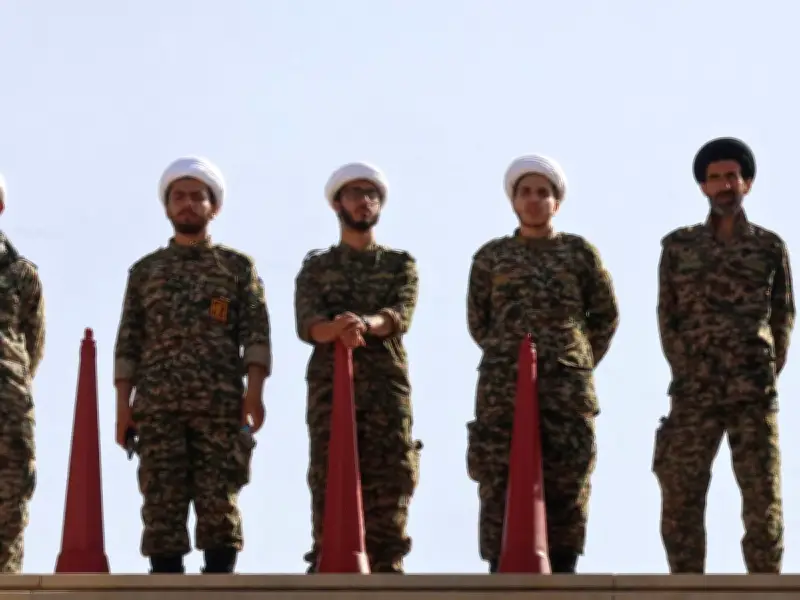
Tens of millions of mourners are expected to flood the streets of Tehran and other cities for a six-day funeral procession for Iran's slain Supreme Leader Ayatollah Ali Khamenei, who was killed at age 86 in the US-Israel war on Tehran. The event, described by lead organiser Mohammad Reza Aref as "the most important event of this century," is set to draw leaders from over 100 countries, though no European allies of the US or Israel have been invited.
Funeral Procession Details and Security Concerns
The funeral began with Khamenei's coffin on display at Tehran's Grand Mosalla on Saturday and Sunday, before being taken through the streets of Tehran on Monday. The body will then be transported to the Shia holy city of Qom, 75 miles south, on Tuesday, followed by a stop at the shrine of Imam Hussein in Karbala, Iraq, on Wednesday—the anniversary of protests against Khamenei's rule that saw thousands killed by security forces. Finally, on Thursday, Khamenei will be buried in Mashhad at the Imam Reza shrine, a site visited by millions of pilgrims annually.
There are growing fears of mass stampedes, similar to those during the 1989 funeral of Ayatollah Khomeini, where at least eight people died and 11,000 were injured when the casket was rushed and the body fell into the crowd. Iran's first vice-president, Mohammad Reza Aref, who is leading the funeral organisation, called the ceremony the most attended since the 1979 revolution.

World Leaders Expected to Attend
Among the dignitaries planning to attend are Pakistan's Prime Minister Shehbaz Sharif, who helped broker the current ceasefire; Tajikistan's President Emomali Rahmon; Armenia's leader Nikol Pashinyan; Georgian President Mikheil Kavelashvili; and former Russian president Dmitry Medvedev. Foreign affairs officials from Afghanistan, India, and Bangladesh will also be present. Notably, it remains unclear whether Khamenei's son, Iran's new Supreme Leader Ayatollah Mojtaba Khamenei, will make his first public appearance during the ceremonies.
Mojtaba Khamenei's Condition and the War's Aftermath
Mojtaba Khamenei was severely injured in the same US-Israeli strike on a government residence in Tehran on 28 February that killed his father, his sister and her husband, his wife, and his 14-month-old daughter. He remains in hiding due to his injuries. The ceasefire appears to be holding despite Iran pressuring ships in the Strait of Hormuz to use approved routes or face attack.
Historical Context and Significance
Khamenei led Iran with an iron fist for nearly four decades. His funeral mirrors the massive outpouring for Ayatollah Khomeini in 1989, when millions took to the streets. The current event, spanning six days across five cities in Iran and Iraq, underscores the regime's effort to consolidate support amid ongoing tensions.
"This is the most important event of this century," said Mohammad Reza Aref, the lead funeral organiser, referring to the ceremony that will end with Khamenei's burial on Thursday in Mashhad. Many prominent Shiite clerics are buried there, including Iran's late President Ebrahim Raisi, who died in a 2024 helicopter crash.