Argentina's Wine Industry Confronts Unprecedented Crisis as Figures Plummet to Record Lows
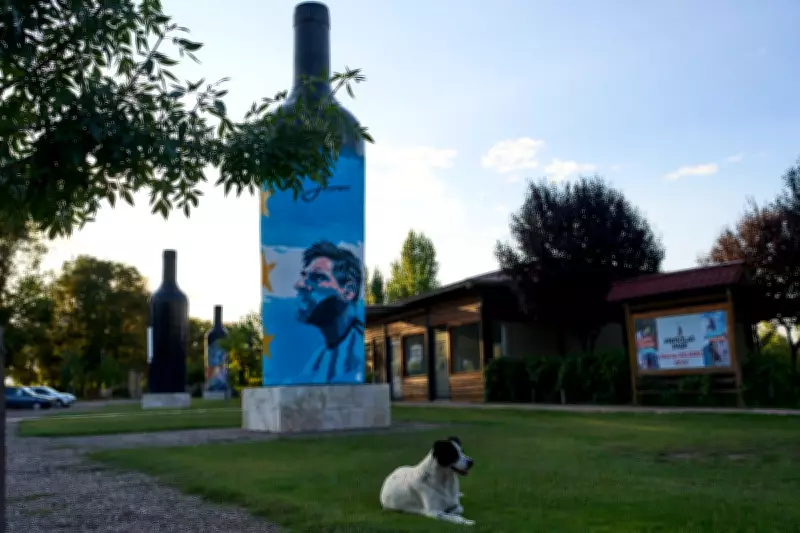
Argentina's once-thriving wine industry is facing its most severe crisis in over fifteen years, characterized by unprecedented declines in domestic consumption, falling export volumes, and poor crop yields. This alarming situation unfolded even as hundreds of wine enthusiasts gathered in Mendoza, the heart of the nation's wine region, for the annual National Wine Harvest Festival, now celebrating its 90th anniversary.
Record Low Domestic Consumption and Vineyard Closures
According to the National Institute of Viticulture (INV), domestic wine consumption in Argentina is projected to hit an all-time low of 15.7 litres per person in 2025. This figure represents a dramatic collapse from 1970, when Argentines consumed a substantial 90 litres per person annually. The crisis has already forced the closure of 1,100 vineyards nationwide, with 3,276 hectares of grape production disappearing from the landscape.
Fabián Ruggieri, president of the Argentine Wine Corp trade group, attributes this sharp decline primarily to a "severe drop in purchasing power" that began in 2023. This economic pressure is most acute among middle- and low-income consumers who traditionally consumed wine on a daily basis.

Shifting Consumer Preferences and Industry Adaptation
Federico Gambetta, director of the Altos Las Hormigas winery in Mendoza, highlights that the crisis is exacerbated by fundamental shifts in consumption patterns. "People no longer consume wine en masse," Gambetta observed, noting that modern consumers seek "coherence" and a sense of purpose behind their purchases.
While older generations favored high-alcohol, full-bodied wines, younger consumers now prioritize attributes like "approachability, freshness, and lightness"—qualities typically found in white wines and rosés. Gambetta's winery, which produces the Malbec Los Amantes 2022 ranked 41st among the world's 100 best wines, began modifying its traditionally heavier profiles starting in 2010 to appeal to this new generation. "Everything has mutated," Gambetta stated. "If you're not dynamic, you're lost."
Parallel Trends in the United States and Export Challenges
The United States is experiencing a similar demographic shift as older wine-focused consumers age out and younger adults fail to fill the gap. A report by Silicon Valley Bank found that millennial and Gen Z drinkers are spreading their consumption across more beverage categories and drinking less overall, particularly those under 29.
Internationally, Argentina's position as the world's 11th largest wine exporter offers little relief. Exports fell to 193 million liters in 2025—a 6.8% year-on-year decline and the lowest volume since 2004, according to INV data. Ruggieri notes that exports are hampered by financing issues, high logistics costs, and a lack of competitiveness due to external tariffs.
While neighboring Chile enjoys free trade agreements with over 60 economies, often accessing markets like China with near-zero tariffs, Argentina faces tariffs between 10% and 20% in most markets, placing its producers at a significant disadvantage.
Inflation and Production Cost Pressures
Local producers like Gabriel Dvoskin, owner of the Canopus winery which produces approximately 50,000 bottles annually and exports to 15 countries, struggle with rampant inflation. Dvoskin, whose main market is the United States, acknowledges that Argentina's high production costs and inflation make his wines less competitive internationally.
"Our inflation makes us a bit expensive," Dvoskin explained. "My equivalent in France has a much lower cost for dry inputs—bottles, corks, etc.—than I do."
Quality as the Non-Negotiable Priority
For Gambetta, the current crisis reinforces a crucial lesson for the industry: product quality remains non-negotiable. "Right now, everything is very delicate, and one wrong step can bankrupt you," Gambetta warned, emphasizing that maintaining high standards is essential for survival in this challenging environment.