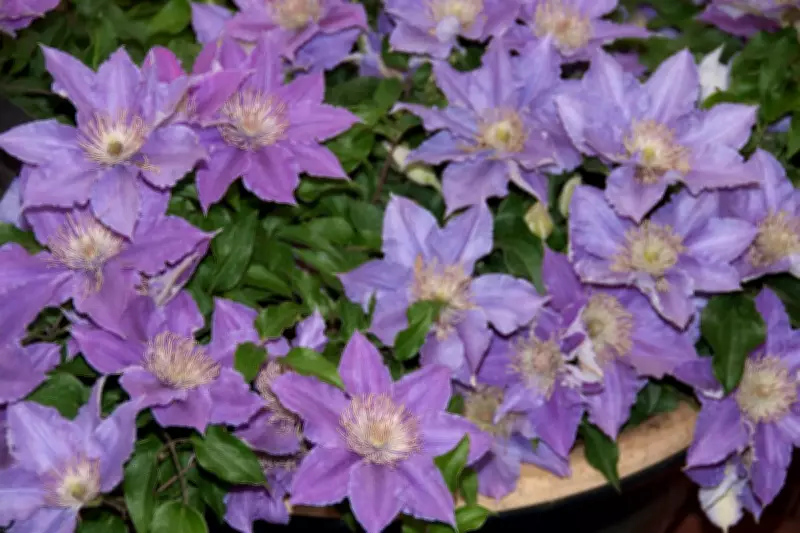
Dwarf Clematis: The Perfect Solution for Compact Urban Gardens
Urban gardeners and city dwellers with limited outdoor space can now transform their plots into vibrant floral paradises with the introduction of dwarf clematis varieties. These compact climbers, traditionally known for scaling trellises and complementing roses, have been specially bred to thrive in confined settings where every inch counts.
New Varieties Launching at Chelsea Flower Show
This year, award-winning Guernsey clematis breeder Raymond Evison Clematis is formally unveiling three exciting new dwarf varieties at the prestigious RHS Chelsea Flower Show. All three cultivars have been developed to reach a manageable height of just three to four feet, making them perfectly suited for containers in urban gardens, balconies, and small patios.
The new introductions include C. Ithemba, which produces elegant white blooms with delicate pink bars; C. 'Eliza', a large-flowered variety that matures from pale blue to pure white; and C. 'Queens Nurse', bearing deep rosy pink flowers. These varieties are currently available through the breeder's website and will appear in quality garden centres from mid-April onward.

Why Dwarf Clematis Excel in Small Spaces
"They're perfect for a small urban garden because they're only going to get to about four or five feet tall," explains Andy Jeanes, international sales and marketing director at Guernsey Clematis. "Containers are perfect. You could have them against the back wall of your house or plant them in the garden as they don't take up much horizontal space—it's all vertical."
The beauty of these smaller varieties lies in their flowering habit. Unlike their taller relatives that often develop woody stems at the base with flowers concentrated at the top, dwarf clematis produce blooms consistently from the base all the way up the plant. Remarkably, the flowers are equally as large and impressive as those on traditional clematis varieties that burst into colour during spring and summer.
Unusual Varieties for Specialised Settings
Other breeders are also developing compact clematis suitable for confined spaces. The Dutch-bred Clematis tangutica 'Little Lemons' presents a completely different appearance from traditional climbing clematis, forming a bushy plant ideal for patios, rockeries, hanging baskets, or larger window boxes.
This particular variety grows to just 45cm and produces small yellow, nodding bell-shaped flowers over several months, providing extended seasonal interest. After flowering, attractive fluffy seedheads develop, adding further visual appeal to the plant.
Expert Planting and Care Guidance
For successful container cultivation, Jeanes recommends using a minimum container size of 18 inches (450cm) cubed with adequate drainage holes. "Clematis hate to be wet over winter, so you'll need plenty of drainage, good free-draining compost, and underplant them with some bedding or trailing plants to go over the outside of the container," he advises.
Watering should be moderate—never excessive. Jeanes emphasises: "As soon as you see the first flower buds being produced, start feeding them with a high potash feed, something like a tomato feed, and continue to feed them until the first flowers are just about to open, then stop feeding. That will stress the plant even further, which will produce more blooms."
Creative Display Options
Dwarf clematis offer remarkable versatility in small-space gardening. They can be planted in hanging baskets or large window boxes where they will trail gracefully among companion plants. In his book Clematis For Small Spaces, Raymond Evison recommends compact varieties such as C 'Bijou' 'Evipo030', a soft violet blue that grows 30-60cm and suits small to medium containers, window boxes, and hanging baskets.
"They look fantastic in hanging baskets," Jeanes agrees. "Instead of growing up, they cascade down." He suggests complementing them with plants featuring grey foliage and mauve flowers for particularly striking displays.

Support and Maintenance Requirements
Those growing dwarf clematis vertically in containers will need to provide some form of support such as canes or decorative frames. "They are semi self-clinging, so they need some structure," explains Jeanes. "They'll hold on to a cane and twirl around it, no problem." For thicker posts, gardeners may need to tie the plants in initially, or provide thinner materials like string to guide their upward growth.
For maximum visual impact, Jeanes suggests mixing two contrasting colours together in the same pot. After flowering, plants can be tidied by deadheading and treated similarly to roses to promote further blooming.
Creating the Ideal Micro-Climate
Clematis perform best with their roots shaded, so in containers and baskets, it's beneficial to plant companion species around them to create a protective micro-climate. "Mix planting in containers with foliage plants such as thyme, saxifraga or any similar ground cover or trailing plants, or bedding of any mix," Jeanes recommends.
Gardeners should be aware that during hot summers when temperatures rise above 27°C, clematis may enter summer dormancy. "They'll go a bit yellow on the foliage and look like they have a drought problem, but actually they've gone into dormancy," Jeanes observes. "One of the biggest killers of clematis in the summer is people thinking that they're too dry. So don't overwater them."
The only reliable way to determine watering needs is to check soil moisture levels manually by inserting a finger into the soil. When temperatures begin to fall in late August and September, clematis typically resume growth and may produce a welcome second flush of flowers, extending the gardening season well into autumn.