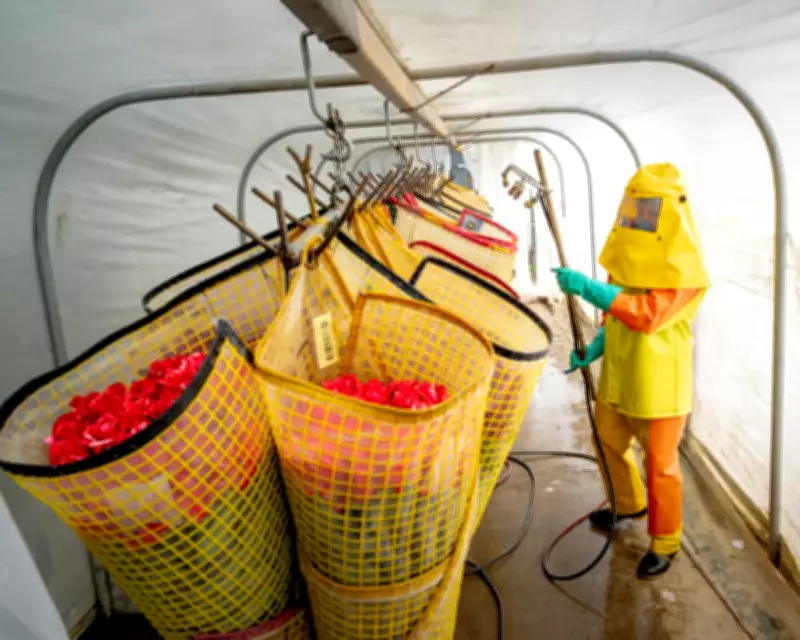
The Hidden Dangers Behind Ecuador's Blooming Rose Industry
In the fertile high valleys of Cayambe, Ecuador, the global demand for perfect roses comes at a steep human cost. As the world's third-largest exporter of cut flowers, Ecuador ships over two billion rose stems annually, generating more revenue than coffee or bananas. However, this economic success story masks a toxic reality for the workers who cultivate these blooms.
Chemical Exposure and Health Consequences
Roses grown in Cayambe's extensive greenhouses are intensively treated with pesticides and agrochemicals to meet international standards for flawless appearance. A 2024 study revealed that 61% of floriculture workers show symptoms consistent with pneumonitis, directly attributed to pesticide exposure. Skin complaints including rashes and eczema are common, with some studies reporting pesticide poisoning rates reaching 60% among flower workers.
Research by Dr. Jose Suarez of University of California, San Diego has documented alarming effects beyond immediate workers. His team studied more than 500 adolescents living in flower-producing areas around Cayambe, finding that intense pesticide use has led to increased inflammation among children, directly linked to worse neurobehavioural performance affecting how they think, learn, remember and socialise.

Global Market Demands and Local Realities
Ecuador's rose industry has flourished due to ideal growing conditions at altitudes of 3,300 metres, where fertile volcanic soil and intense sunlight produce longer stems and larger blooms. Three-quarters of the country's rose production is centred in the Cayambe region, employing nearly half of the area's 100,000 residents.
Indigenous women like Patricia Catucuamba, who started growing roses five years ago alongside her husband Milton Navas after decades of dairy farming, represent the changing face of Andean agriculture. "Diversification isn't just a strategy, it's survival here," Catucuamba explains, pointing to their 4,500 square metre greenhouse containing five rose varieties.
Environmental and Social Impacts
The environmental footprint extends beyond worker health. A report by Austrian environmental organisation Global 2000 examined 16 bouquets and found traces of 79 different pesticides - 49 of which can affect hormones, are carcinogenic, damaging to fertility, or classified by the World Health Organization as hazardous to human health. On average, each bouquet contained residues of 14 pesticides, with one sample tainted with as many as 32 different chemicals.
Water scarcity presents another critical challenge. While large plantations downstream draw from shrinking canals, smallholders like Catucuamba and Navas face regular irrigation cutoffs lasting three 12-hour periods weekly. "Water defines everything," says Navas. "How long the crops will last, how many animals survive, how entire communities endure on the slopes below."
Working Conditions and Economic Pressures
Workers in large flower plantations typically earn Ecuador's minimum wage of $482 monthly, often working unpaid overtime under pressure to achieve higher productivity. Several workers reported fines for missed shifts. At one plantation with approximately 500 workers, agricultural operations continue despite strong chemical fumes in poorly ventilated halls, with workers operating without adequate protection.
The industry's rapid growth has connected Cayambe to global markets including the United States, European Union, and Kazakhstan - which serves as a proxy and supply hub for Russia during its war with Ukraine. Yet certification schemes ensuring safer, more ethical practices remain rare, with only about 0.1% of Ecuador's exported roses carrying Fairtrade labels.
Research Findings and Future Concerns
Dr. Suarez's research has identified specific connections between pesticide exposure and mental health issues. "We have found higher depression scores among participants who have higher exposures to pesticides," he notes, "and we found that more strongly in women than in men." His team also documented more frequent cases of leukaemia, miscarriages, chronic diseases and neurological damage including memory problems and fatigue.

Despite some progress in strengthening industry safety rules and labour codes, enforcement remains inconsistent. New labour rights projects aiming to improve fair pay, workplace safety and legal protection for agricultural workers face challenges from lobbyists, policymakers and government authorities.
As Ecuador continues to navigate social and political unrest alongside its economic ambitions in the global flower trade, the human and environmental costs of perfect roses remain largely invisible to international consumers who purchase these blooms year-round.