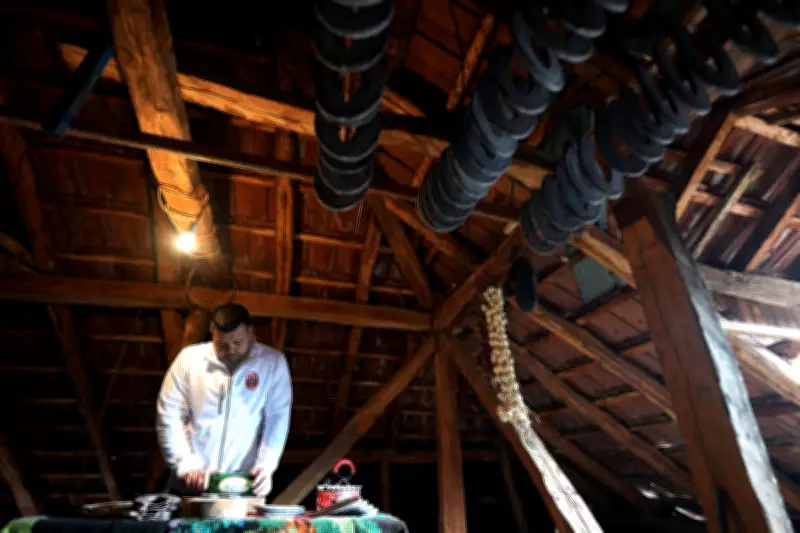
The Unique Craft of Pirot's 'Ironed Sausage'
In the southeastern Serbian town of Pirot, a distinctive culinary tradition has been cherished for generations. The "peglana kobasica" or "ironed sausage" is a spicy, horseshoe-shaped delicacy renowned for its ability to boost energy and spirits during the long winter months. This unique sausage is crafted through a meticulous process that involves flattening it with a bottle to achieve its characteristic thin shape and enhance drying.
A Century-Old Tradition with Modern Recognition
The sausage-making tradition in Pirot dates back at least a century, with some tracing its origins to the Ottoman era, which ended in the Balkans in 1913. Historically, sausage makers used meat from older animals, drying the sausages by hanging them on broomsticks in sheds or attics. Today, approximately 35-40 certified producers continue this craft, using locally sourced beef and goat meat seasoned with garlic, hot pepper, and spices from the nearby Stara Planina mountain.
In 2022, the ironed sausage received a certificate from state food safety authorities for regional excellence and origin, a recognition that requires adherence to strict regulations. Marjan Savic, head of an association of ironed sausage producers, proudly states, "It is a supreme product. Our sausage is one of the best, if not the best."

The Labor-Intensive Production Process
Creating an ironed sausage is described as "hard labor" by Savic. The process begins with meticulously clearing all fat and connecting tissue from the meat, which he notes is the most challenging part. The sausages are then dried and flattened daily by hand to ensure full flavor and proper shape. This careful preparation culminates in time for Pirot's annual sausage fair each January, attracting thousands of visitors, including many from neighboring Bulgaria.
Misa Rajic, who learned the craft from his grandfather and now operates a small manufacturing unit on the outskirts of Pirot, explains that it takes about a month to produce a dry, dehydrated sausage ready for consumption. He demonstrates how sausages are pressed with a glass bottle from the middle outward, a technique that "helps further mix the meat inside the sausage and it helps with the drying because it extracts the moisture."
Threats to a Beloved Delicacy
Despite its growing fame and demand, the ironed sausage tradition faces significant challenges. Dwindling goat herds in the area threaten the supply of key ingredients, while warmer and more humid winters in recent years, partly linked to climate change, complicate the natural drying process. These environmental shifts pose a risk to the sustainable, organic manufacturing that has defined this delicacy.
Serving and Enjoying the Ironed Sausage
A well-dried ironed sausage has a dark color with a greyish surface from the beef intestines' casing, which is peeled off before serving. Locals in Pirot typically consume it as a digestif after a full meal, including dessert. It is cut into leaf-thin slices and chewed slowly with red wine to fully appreciate its rich taste. Savic recommends "red wines that are a bit robust to match the poignant aroma" and notes that it is not as well-suited to white wine.
This traditional sausage, with its unique shape and preparation method, remains a symbol of Pirot's cultural heritage, even as it navigates modern challenges.