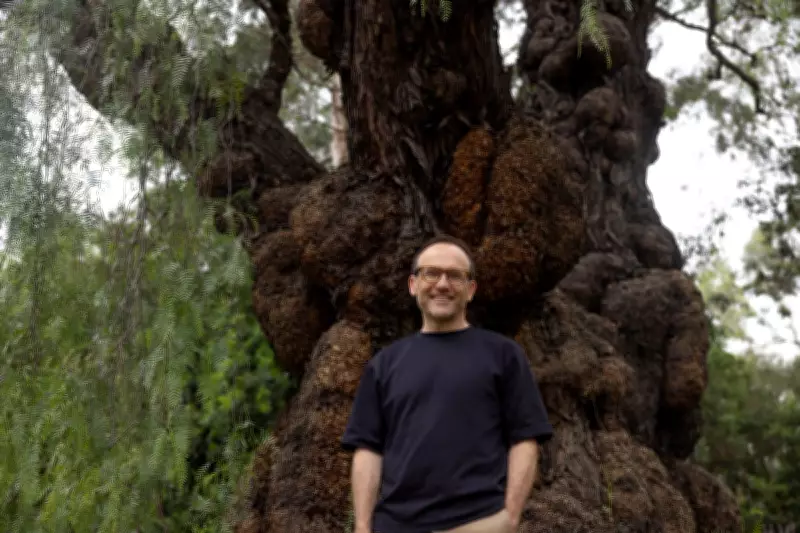
Adam Bandt's Transition from Politics to Environmental Leadership
Adam Bandt, the former leader of the Australian Greens, has embarked on a new chapter as the Chief Executive Officer of the Australian Conservation Foundation (ACF). This appointment, announced in September ahead of a January start, has sparked discussion in both environmental and political circles, signaling a potential shift for one of Australia's oldest and largest campaign groups.
Leaving Party Politics Behind
Following his unexpected defeat in the May federal election, Bandt made a decisive choice to step away from party politics. Despite suggestions from friends and colleagues to consider a return to parliament in 2028, either to his former seat of Melbourne or a Senate position, he firmly declined. "I obviously gave that thought, but no," Bandt stated from his inner Melbourne office. "You have to be more than fully committed to do that, and I've climbed that mountain. I just can't see it now."
After a family camping trip in South Australia's Flinders Ranges and a brief return to work as an employment lawyer, Bandt reached out to a global headhunter tasked with finding a new CEO for the ACF. His pitch was straightforward: "We need to build a movement that is so big that governments and corporations can't ignore us, and in fact, they want to be associated with us."

Reflecting on Election Loss and Personal Impact
The election loss to Labor's Sarah Witty was a blow that caught many by surprise, including Bandt himself. Analysts attributed it to a "perfect storm" of factors, such as electoral redistribution and shifts in voter preferences. Bandt acknowledges the personal toll, saying, "It hurt at a personal level. You have a responsibility as a representative of the hopes and values of a lot of people in this country who want to see action on the things that matter to them. You're kind of a custodian of that hope ... I felt like I let people down."
To cope, he focused on his family, fitness, and even consulted a sleep doctor for better rest. Ultimately, he narrowed his future options to three paths: climate campaigning, politics, or law, with the former winning out.
Addressing Concerns and Embracing New Strategies
Initial reactions to Bandt's appointment raised questions about whether the ACF might be perceived as an offshoot of the Greens, a party with which it has no formal affiliation. This follows past tensions, such as when Bob Brown, the Greens' founding leader, returned his ACF life membership in 2023, criticizing the foundation for being too focused on deal-making with Labor.
Bandt downplays the idea of a major shift, asserting that the ACF's view remains consistent: "Nature and the climate aren't winning fast enough and we need to step up." He emphasizes that the foundation will not become partisan; his Greens membership will lapse, and he won't participate in election campaigning. However, he acknowledges the need for innovative approaches to build support.
Inspired by viral campaigns like that of New York mayor Zohran Mamdani, Bandt is launching a social media initiative featuring posters and videos to foster a "people-powered movement." He also plans to incorporate his passion for European electronic music, potentially DJing at festivals to make environmental activism more engaging. "We need to be fun and be a movement that people want to be a part of," he explains.
Challenges and Vision for the Future
Bandt highlights the significant influence of corporations on government decisions, citing examples like Western Australian premier Roger Cook's intervention on behalf of the mining industry to block environmental laws. "Governments listen to big corporations more than they do to nature and climate-conscious voters," he observes. "At such a crucial moment in history for climate and nature, we need to alter that equation."
With over 500,000 supporters but only about 5,200 formal members, the ACF faces competition for limited funding. Bandt's strategy involves expanding the movement through both traditional methods and new experiments. He praises Climate Change Minister Chris Bowen for their collaborative work on legislation, while sharply criticizing the government's continued approval of coal and gas expansions, which he argues fuel the climate crisis.

Bandt acknowledges that many Australians may not oppose these exports, but he is determined to change minds. "Our job is to communicate that these coal and gas exports are what are fuelling the climate crisis, and making your life harder," he says. "We've got to start speaking more loudly and build up a movement around that."