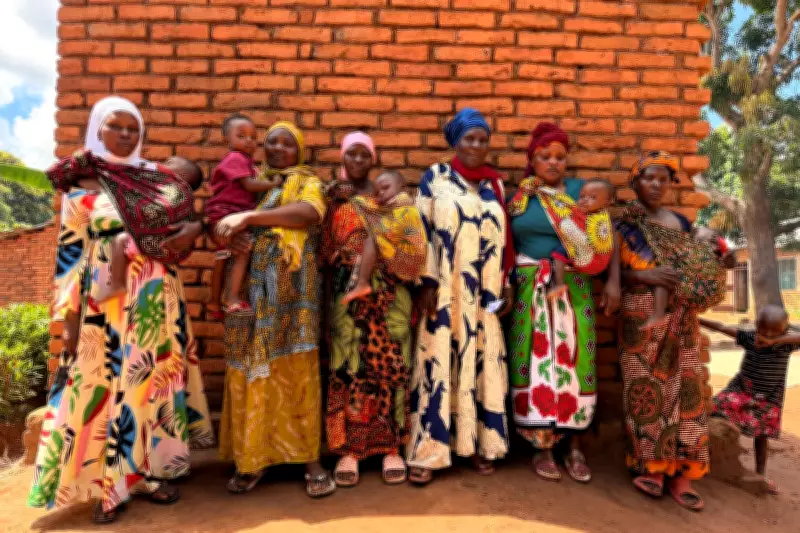
In the remote village of Madudumizi, located in the Kilosa District of Tanzania, the opening of a new clinic with a deep borehole providing clean water has transformed the lives of pregnant mothers. Previously, they faced dangerous journeys of several hours, including a river crossing, to reach the nearest clinic. Salma, a pregnant mother of three, explained that some mothers died due to the long journey or while crossing the river during the rainy season.
The clinic was funded by the international children's charity World Vision as part of a 20-year development programme called Ulaya, which aims to improve the lives of 27,000 people across 13 villages. The programme addresses health, nutrition, water access, and education. World Vision's overall presence in Tanzania is substantial, with the NGO spending approximately $48 million (£35m) last year, targeting three million children through child sponsorships, donations, and government grants.
Tanzania is experiencing rapid economic growth, with a 6.2% increase in the first three months of 2026. Infrastructure projects like a new rapid rail system and the East African Crude Oil Pipeline are benefiting urban elites in cities such as Dar Es Salaam. However, half of the country's 70 million population still lives on less than $3 per day, and inequality is widening. NGOs like World Vision remain critical in addressing major challenges like maternal mortality and malnutrition.

Impact of Aid Cuts
In the past year, aid cuts by wealthy nations, including the US and UK, have threatened projects like Ulaya. Overall foreign aid from wealthy nations fell by 26% in 2025 compared to 2024. Tanzania, which received $3.2 billion in aid in 2024, is expected to be disproportionately affected as funding is prioritised towards conflict-affected countries.
Climate Change Undermining Development
A visit to Ulaya revealed how climate change is seriously undermining aid efforts. Nearly every aspect of daily life is being disrupted, from health and nutrition to agriculture and infrastructure. This pattern reflects a broader trend across sub-Saharan Africa, where climate pressures are eroding development gains.
Rural communities in Tanzania report an increasingly obvious 'climate whiplash', with rainy seasons becoming wetter and dry seasons drier. The Ulaya area, situated on the floodplain of the Mkondoa River, is particularly vulnerable to intensifying rainfall. Floods that were once considered 'once-in-a-generation' events have occurred repeatedly in 2020, 2024, and 2026.
Elisei Chilala, coordinator for the Ulaya Area Programme, noted that 98% of people in the area are farmers dependent on rain-fed agriculture, making them highly vulnerable to extreme weather. 'Climate change is really impacting everything we are doing here, from health and nutrition to infrastructure and water programmes,' said Leonard Slaa, a climate advisor for World Vision.
Effects on Health and Nutrition
At the clinic in Madudumizi, Nurse Ida described how major flooding leads to increased cases of malaria and respiratory infections. The link between rising temperatures and disease spread is well documented, with mosquitoes thriving in standing water left by floods. Aid cuts have further complicated disease treatment, with certain malaria tablets previously provided by USAID no longer available in 2026.
In Zombo village, a mother-and-toddler group trained by World Vision in nutrition practices has seen significant improvements in child health. However, failing harvests due to flooding are raising fears that families will be unable to grow enough food to meet their children's nutritional needs. Rehema, a mother of five, expressed worry about the future, noting that unpredictable weather makes it difficult to know what food will be available.
Water and Infrastructure Challenges
World Vision's deep boreholes have improved water access in some areas, but shallower boreholes are drying out during the dry season. This is particularly problematic in higher altitude areas, where violent rainstorms rush down hardened clay soil without recharging groundwater.

A government-built bridge across a tributary of the Mkondoa River, completed two years ago, already shows cracks due to the river's expansion from more intense rainfall. Leonard Slaa explained that the bridge's design did not account for the river's changing behaviour.
Broader Implications Across Tanzania
Other NGOs report similar challenges. Yukiko Yamada Morovic, technical director for climate action at World Vision International, stated that repeated droughts, floods, and unpredictable rainfall are destroying harvests and driving hunger and malnutrition. Prudence Masako, Tanzania country director for Care International, noted that climate change is causing children to miss school and vaccines, and threatening women and girls by creating instability in homes.
Adaptation Efforts
World Vision is focusing on adapting its programmes to the climate crisis. This includes training farmers in more efficient practices and distributing seeds for climate-resilient crops like sunflower, pumpkins, sesame, and legumes. However, there is concern that climate knock-on effects, such as conflicts between farmers and pastoral communities over resources, are escalating faster than authorities can manage.
World Vision has extended the Ulaya programme by five years to ensure interventions become self-sustaining. Programme coordinator Elisei Chilala expressed confidence that with the right resources and empowerment models, communities will adapt to future challenges.