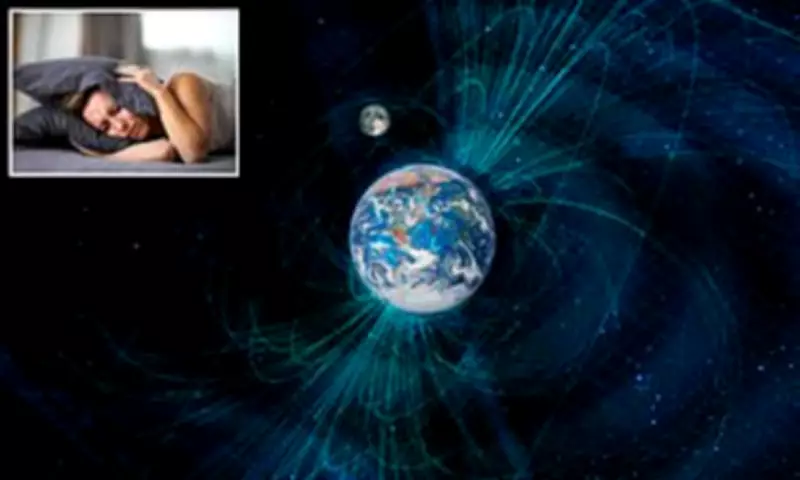
Earth's Mysterious Hum Spikes: Could It Affect Human Mood and Cognition?
Earth's natural electromagnetic vibration, often described as the planet's "heartbeat," has experienced a series of unusual spikes in recent weeks, raising intriguing questions about whether this phenomenon could influence human mood and cognitive functions. Known as the Schumann Resonance, this steady rhythm is generated by lightning and trapped between Earth's surface and the ionosphere.
Recent Observations and Expert Caution
A space weather monitoring application called MeteoAgent has reported elevated Schumann Resonance readings throughout February, labeling them as "high" and potentially disruptive. However, experts caution that such measurements can fluctuate naturally, and the biological significance remains uncertain. The main frequency typically pulses around 7.83 cycles per second, measured in Hertz (Hz), with several higher-frequency bands also detected.
Some researchers and wellness advocates believe these frequencies overlap with human brain wave patterns associated with sleep, relaxation, and concentration. Yet, mainstream scientists argue that research on their biological effects is inconclusive, highlighting the need for more robust clinical evidence.

Space Weather and Disturbances
Chaotic events such as solar flares, geomagnetic storms, and other space weather phenomena can disturb Earth's magnetic field and alter the resonance. On Thursday, MeteoAgent reported that the Schumann Resonance was still registering as high due to a moderate solar flare that unsettled Earth's magnetic field. Scientists track these disturbances using the K-index, a scale from zero to nine that measures how much the planet's magnetic field is shaken by space weather.
Key points about the K-index:
- Zero indicates calm conditions.
- Anything above five signals a geomagnetic storm that can disrupt satellites, power grids, and radio signals.
- The index fell to 3.7 on Thursday, indicating higher-than-normal electromagnetic activity but less intense than earlier spikes in February.
- There have been four days this month where the K-index rose above 5.0, suggesting serious spikes that could be felt by people sensitive to these wave frequencies.
Potential Human Impacts and Anecdotal Reports
When people relax or fall asleep, the brain produces slow "theta" brain waves, typically between four and eight cycles per second, similar to the main frequency of the Schumann Resonance. Some researchers suggest overlaps like this could influence mood or sleep, but scientific evidence is limited. Supporters of this theory propose that spikes in Earth's electromagnetic activity may contribute to:
- Anxiety
- Trouble sleeping
- Difficulty concentrating
- A high-pitched ringing in the ears
Medical experts, however, warn that these symptoms have many more established causes, and anecdotal reports linking resonance spikes to such issues lack robust clinical backing.
How the Schumann Resonance Works
The Schumann Resonance is generated largely by lightning strikes around the world, with thousands occurring every second, especially in tropical regions. These strikes create electromagnetic waves that bounce between Earth's surface and the ionosphere—a layer about 60 miles above the planet—forming a global "echo chamber" that produces the steady background frequency.
Factors that can disturb this calm rhythm include severe weather and charged particles from the sun, such as solar wind and solar flares. These events send super-hot gas made of electrons and protons hurtling across the solar system, compressing and rippling Earth's magnetic field upon impact. This extreme space weather affects the ionosphere by adding more charged particles, altering its electrical conductivity, and making Schumann Resonance waves bounce more intensely.
Broader Implications and Future Concerns
Human brains produce their own electrical waves, which change based on activities. Since Schumann Resonance wave frequencies match up with brain patterns, major atmospheric disturbances could produce waves that clash with body rhythms. Beyond human effects, extreme space weather poses risks to infrastructure and safety.

For instance, in November 2025, Airbus revealed that severe exposure to solar radiation caused one of its passenger airliners to fall uncontrollably for thousands of feet. Additionally, a "solar storm emergency drill" conducted in May 2025 simulated a major geomagnetic storm hitting Earth, with results showing power grid failures, blackouts, and communication breakdowns across the United States.
As Earth's mysterious hum continues to spike, the debate over its potential impacts on human health and technology remains ongoing, underscoring the need for further scientific investigation into this fascinating natural phenomenon.