Flawed Economic Models Risk Global Financial Crash from Climate Crisis, Experts Warn
Experts are issuing a stark warning that flawed economic models, which ignore the shocks from extreme weather and climate tipping points, could lead to a catastrophic global financial crash. The accelerating impact of the climate crisis poses a severe threat, with recovery potentially far more challenging than after the 2008 financial crisis, as one cannot simply bail out the Earth like the banks.
Uncharted Territory and Tipping Points
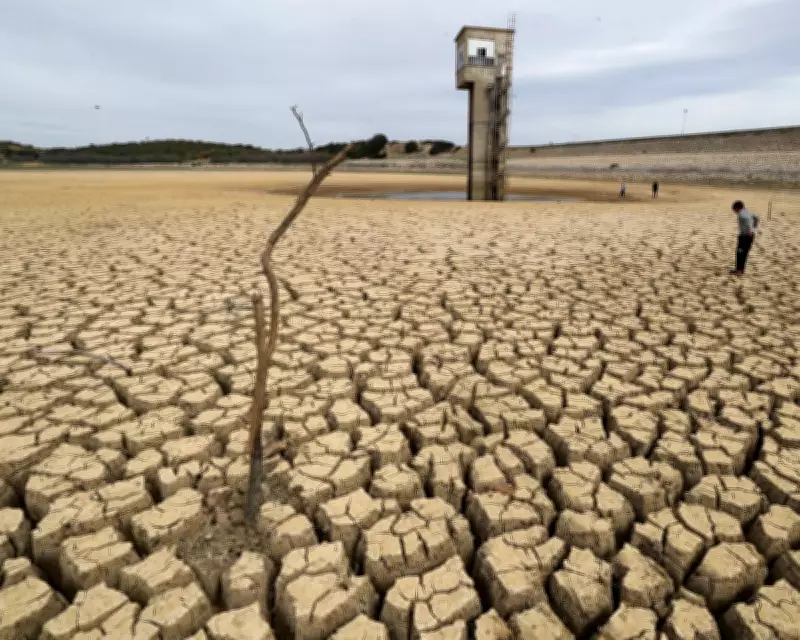
As the world speeds towards 2°C of global heating, the risks of extreme weather disasters and climate tipping points are increasing rapidly. However, current economic models used by governments and financial institutions entirely miss such shocks. These models forecast that steady economic growth will only be slowed by gradually rising average temperatures, assuming the future will behave like the past. This is despite the burning of fossil fuels pushing the climate system into uncharted territory.
Tipping points, such as the collapse of critical Atlantic currents or the Greenland ice sheet, would have global consequences for society. Some are thought to be at, or very close to, their tipping points, though the timing is difficult to predict. Combined extreme weather disasters could wipe out national economies, according to researchers from the University of Exeter and the financial thinktank Carbon Tracker Initiative.

Fundamental Misreading of Risks
The report concludes that governments, regulators, and financial managers must pay far more attention to these high-impact but lower-likelihood risks. Avoiding irreversible outcomes by cutting carbon emissions is far cheaper than trying to cope with them. Dr Jesse Abrams at the University of Exeter emphasised that current economic models cannot capture what matters most: the cascading failures and compounding shocks that define climate risk in a warmer world, which could undermine the very foundations of economic growth.
He stated, "We are thinking about something like a 2008 crash, but one we can’t recover from as well. Once we have ecosystem breakdown or climate breakdown, we can’t bail out the Earth like we did the banks." Mark Campanale, CEO of Carbon Tracker, added that flawed economic advice leads to widespread complacency among investors and policymakers, with a tendency to trivialise climate impacts to avoid difficult choices today, resulting in catastrophic consequences from delay.
Underestimation of Physical Risks
Hetal Patel at Phoenix Group, which manages about £300 billion of long-term investments, noted that underestimating physical risk distorts investment decisions and underplays the real-world consequences affecting society as a whole. Actuaries predicted in 2025 that the global economy could face a 50% loss in GDP between 2070 and 2090 from catastrophic climate shocks, far higher than previously estimated.
The new report drew on expert judgments from 68 climate scientists from research institutions and government agencies in the UK, US, China, and nine other countries. A key finding was that while economic modelling traditionally links climate damages to changes in average temperatures, societies and markets suffer most from extremes like heatwaves, floods, and droughts.
GDP Masks Full Climate Damage
Another finding highlighted that GDP can mask the full cost of climate damage by failing to account for deaths, ill health, social disruption, and degraded ecosystems. GDP can actually increase after disasters due to spending on recovery, the researchers added. They argued that rather than waiting for perfect models of risk, greater emphasis should be placed on extremes, not just central estimates, and on the vulnerability of the entire financial system.
Investors should speed up the move away from fossil fuels as a fiduciary duty to avoid large future losses, Campanale advised. Current economic models can give precise-looking loss estimates, but scientists warn these are wildly optimistic. Abrams pointed out a mismatch: some models predict a 10% GDP loss at 3-4°C of global heating, while physical climate scientists say the economy and society will cease to function as we know it.

Paradigm Shift in Climate Risks
Laurie Laybourn at the Strategic Climate Risks Initiative noted that we are living through a paradigm shift in the speed, scale, and severity of risks driven by the climate-nature crisis, yet many regulations and government actions are dangerously out of touch with reality. This underscores the urgent need for updated economic frameworks that accurately reflect the profound threats posed by climate change.