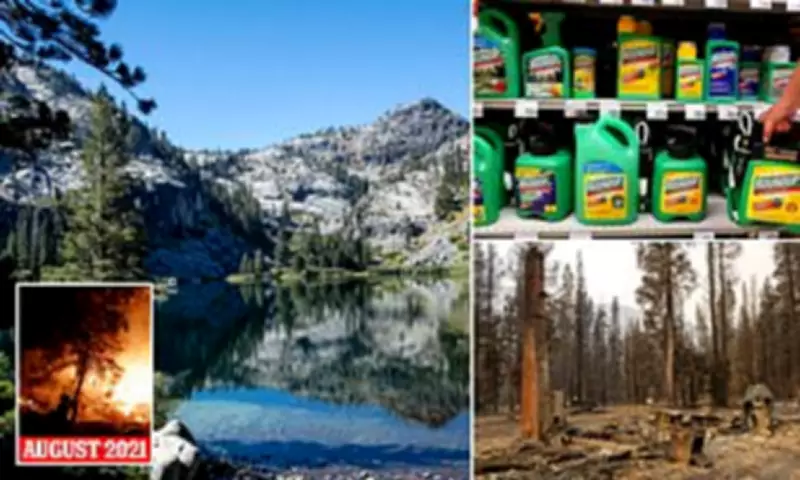
Residents in one of California's most idyllic forest communities are furious after federal officials confirmed plans to spray a controversial herbicide linked to Roundup across thousands of acres devastated by the Caldor Fire in 2021.
The US Forest Service is moving ahead with a massive reforestation project that will rely on glyphosate, the powerful weed killer that has sparked years of environmental and health controversy. The decision has sparked backlash from local residents, environmental groups and wellness advocates who fear the chemical could contaminate the pristine alpine watershed surrounding the famed Lake Tahoe Basin.
Scale of the Spraying Operation
The scale of the spraying operation has alarmed many locals. Federal plans approve herbicide use across more than 46,000 acres within the Caldor Fire burn scar, including between 2,400 and 3,600 acres inside the Tahoe Basin itself. Critics say the government is preparing to spread a 'toxic' chemical near hiking trails, streams and neighborhoods while offering few specifics about exactly where the spraying will happen or when it will begin.

The outrage intensified after an investigation published by Mother Jones reported that the Forest Service dramatically increased its use of glyphosate across California forests in recent years. According to the report, the agency sprayed around 266,000 pounds of glyphosate in California forests in 2023 - roughly five times the amount used two decades ago.
Glyphosate Controversy
Glyphosate, first sold by Monsanto as Roundup in 1974, has long been controversial. Environmentalists say it harms pollinators including bees and monarch butterflies. In 2015, the World Health Organization's cancer research arm classified glyphosate as 'probably carcinogenic to humans,' helping trigger more than 100,000 lawsuits from people who claimed Roundup exposure caused cancers including non-Hodgkin lymphoma.
The Forest Service insists the chemical is necessary to restore forests destroyed by the 2021 Caldor Fire, which burned more than 221,000 acres. Officials say herbicides help remove competing shrubs and weeds so newly planted native tree seedlings have a better chance of survival in the fire-ravaged landscape.
Growing Opposition
But opposition is growing rapidly. More than 14,500 people had signed a petition protesting the spraying plans as of Tuesday morning. The petition warns glyphosate 'has been linked to serious environmental harm, including the decline of crucial pollinators like bees, contamination of water sources, and risks to human health.'
'It could have devastating effects on our local wildlife, flora, and the crystal-clear waters that have earned Tahoe its nickname, 'The Jewel of the Sierra,'' the petition states.
Federal officials maintain the fears are misplaced. In statements, the Forest Service said herbicides would be used 'selectively' and insisted no chemicals would enter Lake Tahoe, which is federally protected under the Clean Water Act. The agency said most spraying would be carried out manually using backpacks and handheld wands rather than aerial spraying. However, officials are also considering truck-mounted and all-terrain vehicle spraying systems along some forest roadsides outside the basin.
It has done little to calm residents already suspicious of the project. Tobi Tyler, vice chair of the Sierra Club's Tahoe Area Group, said she wants clearer answers from federal officials about where the herbicides will ultimately be used. 'I would love to get a phone call back and know what their plans are,' Tyler told SFGate.
Tyler, a retired water quality expert, strongly disputed claims that glyphosate would stay out of Tahoe's watershed. 'It will get into the water, the streams,' she said. 'They say it breaks down. Well, it could definitely go into the air or the water before it breaks down. All the water that falls in the basin all goes to Lake Tahoe, eventually.'
Environmental nonprofit Keep Tahoe Blue is also demanding more transparency from the Forest Service, saying residents have been left with few details beyond broad environmental assessment documents. 'The lack of publicly available information … has understandably raised concern and questions from groups like ours and the broader community,' the organization said in a statement.

Tahoe Regional Planning Agency spokesperson Jeff Cowen said confusion online has fueled public fears about the project. 'It seems like the lack of understanding of the different watersheds and project plans … isn't giving people a good basis from which to express their concerns,' Cowen stated to SFGate. Cowen stressed that most of the spraying would occur outside the Tahoe Basin in Eldorado National Forest.
But some critics remain unconvinced. Maps from previous spraying operations show glyphosate use near recreation areas, including around the Sierra-at-Tahoe ski resort. Federal officials also plan to use herbicides near campgrounds, hiking trails and off-highway vehicle routes.
For many residents, the controversy has become about far more than forest management. Comments on the anti-spraying petition reveal a growing fear that one of America's most famous natural landscapes could be exposed to a chemical still being debated decades after it first entered the market. One El Dorado County nurse wrote that she cares for patients exposed to glyphosate who later suffered from 'blood cancers, leukemia, non-Hodgkin lymphoma and other serious illnesses.' 'Spraying glyphosate in the Lake Tahoe Basin risks contaminating one of the clearest alpine watersheds in the world,' another commenter warned.