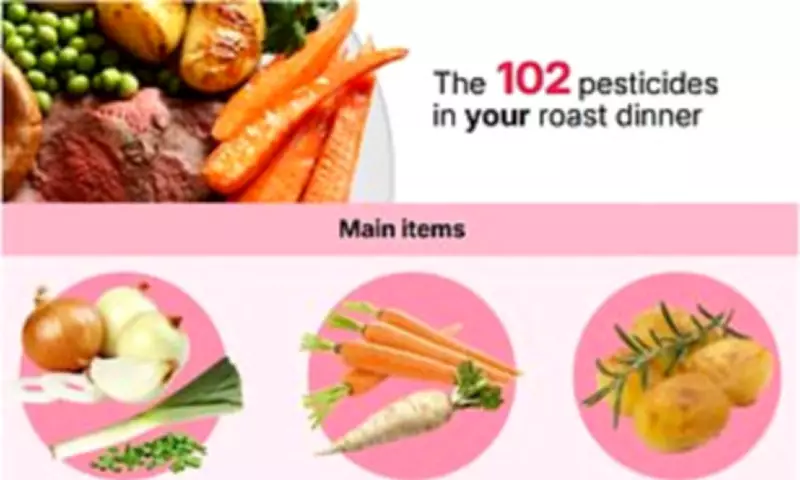
A new study by Greenpeace has uncovered a cocktail of over 100 dangerous chemicals in a typical British roast dinner. The research, which analysed pesticide use on staple ingredients, found that onions and leeks are the worst offenders, harbouring 43 different pesticides. Carrots and parsnips are treated with 40, while strawberries, often served as dessert, contain 42.
Key Findings
Greenpeace discovered that 102 different pesticides were used on onions, leeks, carrots, parsnips, potatoes, peas, swede, turnips and strawberries over either 2023 or 2024. Seven of these pesticides have been banned in the EU due to links to cancer, harm to bees, birds, mammals and aquatic ecosystems.
Breakdown by Crop
- Onions and leeks: 43 pesticides
- Strawberries: 42
- Carrots and parsnips: 40
- Field potatoes: 31
- Peas: 29
- Swede and turnips: 20
- Stored potatoes: 5
Most samples contained residues below the maximum residue level (MRL), which officials say is set well below the level considered safe. However, campaigners argue MRLs do not account for cumulative exposure from water, packaging and household products.

Health and Environmental Concerns
Nina Schrank, senior campaigner at Greenpeace UK, said: 'A Sunday roast and strawberries might feel like one of the most natural and traditionally British meals imaginable. But behind the scenes they're produced using an astonishing cocktail of pesticides.' She added that intensive pesticide use is putting public health and wildlife at risk, with many classified as highly hazardous pesticides (HHPs) or PFAs 'forever chemicals' linked to cancer and harm to pollinators.
Martin Lines, chief executive of the Nature Friendly Farming Network (NFFN), said: 'Many people will doubtless be shocked to learn how extensive pesticide use is within our conventional farming system, but it doesn't have to be this way.' He called for stronger support and regulation to help farmers transition away from chemical dependency.
Government Response
The Government's pesticides action plan aims to reduce pesticide use by 10 per cent by 2030. Official figures show a 25 per cent decrease in total weight of pesticides on arable crops between 2018 and 2024. An Environment Department (Defra) spokesperson said: 'We place strict limits on pesticide residue levels in food, which are set after rigorous risk assessments to make sure levels are safe for consumers.'
Greenpeace is calling for a 50 per cent reduction by 2030 and an 80 per cent reduction by 2040, along with funding for farmers and tighter restrictions on pesticide use in public spaces and homes.