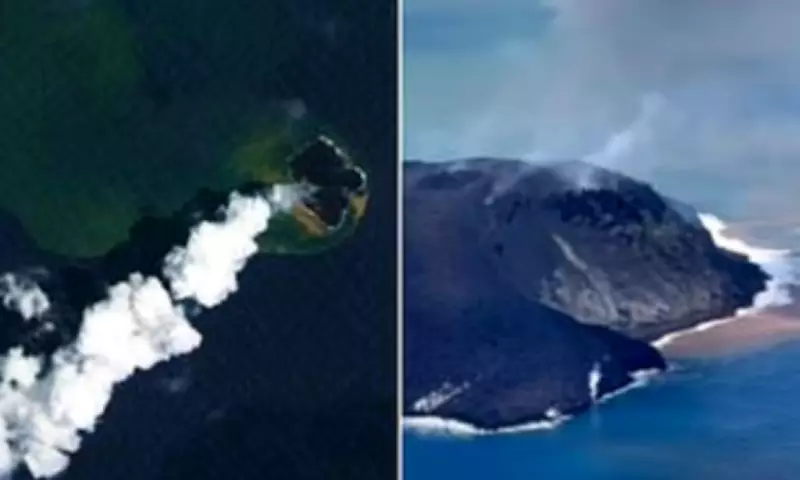
An active mid-ocean volcano within the Tonga archipelago has dramatically transformed into a fully formed island through persistent volcanic activity. Home Reef Island, situated approximately 170 kilometers northeast of Tonga's primary island, has been gradually increasing in size since initial activity was first observed in 2022. However, the land mass experienced a significant acceleration in growth starting from December 2025.
Rapid Expansion and Ongoing Eruptions
The latest series of eruptions has continued well into mid-February, suggesting that additional land could soon emerge above the water's surface. Thermal data analysis reveals that this current phase of intense activity commenced on December 17, following a period of roughly five months of dormancy. According to data collected by German researcher Simon Plank and reported by NASA, lava flows have systematically extended the island's boundaries to the east and south initially, then progressed to the northwest, and finally to the northern regions.
Satellite Evidence and Growth Metrics
Satellite imagery has meticulously documented the island's remarkable expansion, with recent photographs captured on December 3, December 27, and January 28 providing clear visual evidence of the ongoing changes. The island has grown by nearly eight hectares in just under three months, spanning from December through to mid-February. Discoloured water surrounding the island, visible in these satellite images, is attributed to gases and magmatic fluids venting from the volcano rather than indicating further land formation.

Geological Context and Regional Significance
Tonga, a Polynesian archipelago located in the South Pacific Ocean, stands as one of Australia's closest neighbours. Home Reef Island is an integral part of the Tonga Volcanic Arc and lies in close proximity to Hunga Tonga-Hunga Ha'apai, an island responsible for one of the region's most substantial recent eruptions in 2022. This geological activity underscores the dynamic and volatile nature of the area's volcanic landscape.
The continuous monitoring of Home Reef Island's development provides valuable insights into volcanic processes and island formation, highlighting the ever-changing topography of our planet's oceanic regions.