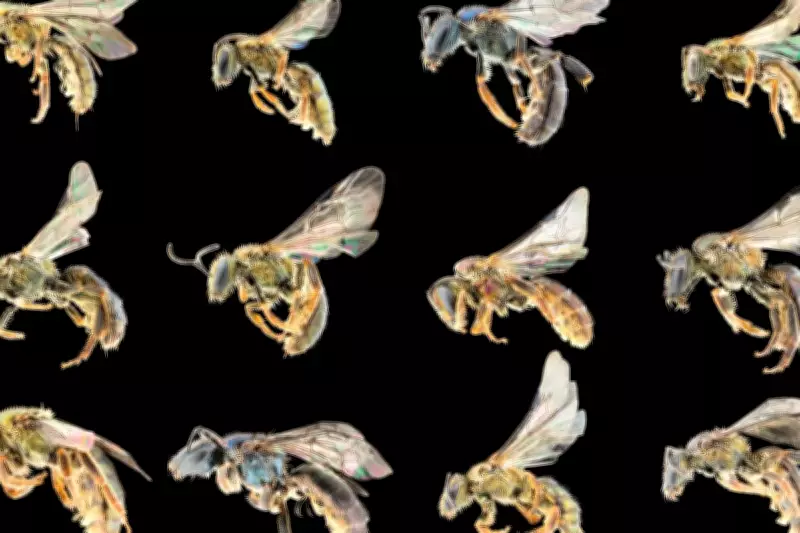
Scientific Study Uncovers 'Treasure Map' for Thousands of Hidden Bee Species
A groundbreaking new study has revealed what scientists are calling a "treasure map" for discovering thousands of previously unknown bee species across the globe. The research, published in the prestigious journal Nature Communications, estimates that between 3,700 and 5,200 bee species remain undiscovered worldwide.
Global Bee Diversity Far Greater Than Previously Known
Researchers have documented approximately 18,000 bee species to date, but the latest analysis suggests the true number could be significantly higher. The comprehensive study calculates that Earth may host between 24,705 and 26,164 distinct bee species in total, painting a far richer and more complex picture of global bee biodiversity than previously understood.
"Knowing how many species exist in a place, or within a group like bees, really matters," emphasized study author James Dorey. "It shapes how we approach conservation, land management, and even big-picture science questions about evolution and ecosystems."

Discovery Timeline and Geographic Hotspots
At current research rates, scientists estimate it could take between 30 and 45 years to identify and document all remaining bee species. The study identifies several key geographic regions where undiscovered species are most likely to be found:
- Australia: Despite being a wealthy nation, Australia has only named approximately 12% of new species described since 2000
- China and Israel: Both countries show particularly high species discovery gaps
- Argentina and Chile: South American nations with significant potential for new discoveries
- Turkiye: Estimated to have 843 bee species yet to be discovered
In contrast, European countries like Sweden and Switzerland show relatively stable species diversity with few remaining undiscovered bees.
Conservation Implications and Research Challenges
The findings arrive amid growing concerns about global bee population declines, with colonies dying in large numbers worldwide. Researchers warn that species may be disappearing before they can even be documented.
"If we don't understand how many bee species there are, we're missing a key part of the puzzle for protecting both nature and farming," Dr. Dorey cautioned.
The study assessed global datasets, country checklists, and literature records across 186 nations, revealing significant research challenges:
- Regionally poor data collection in many areas
- Political and cultural barriers to scientific collaboration
- National restrictions on data sharing
- Insufficient funding for taxonomy and species research
These obstacles are particularly pronounced in Africa, Asia, and many Central and South American countries where high species diversity meets limited research capacity.
Island Nations and Climate Change Considerations
The research presents a surprising finding regarding island nations, which are most vulnerable to climate change impacts. These regions may harbor richer bee diversity than continental nations, adding urgency to discovery efforts as environmental pressures intensify.
The study's methodology offers a valuable framework for targeted species discovery, providing conservationists and researchers with a strategic "treasure map" to guide future exploration and protection efforts for these crucial pollinators.