Trump Overturns Obama-Era Climate Regulation, Dismissing It as a 'Giant Scam'
In a significant move that reshapes United States environmental policy, President Donald Trump on Thursday revoked what he labelled a 'giant scam' – a pivotal Obama-era scientific ruling that has guided American climate action for over a decade. The president asserted that scrapping this regulation would reduce car prices by thousands of dollars for consumers nationwide.
Repeal of the EPA's 2009 Endangerment Finding
The executive action formally overturns the Environmental Protection Agency's 2009 'endangerment finding', a landmark determination that declared greenhouse gases a threat to public health and welfare. This finding served as the legal foundation for federal limits on vehicle emissions and other climate-related regulations throughout the past fifteen years.
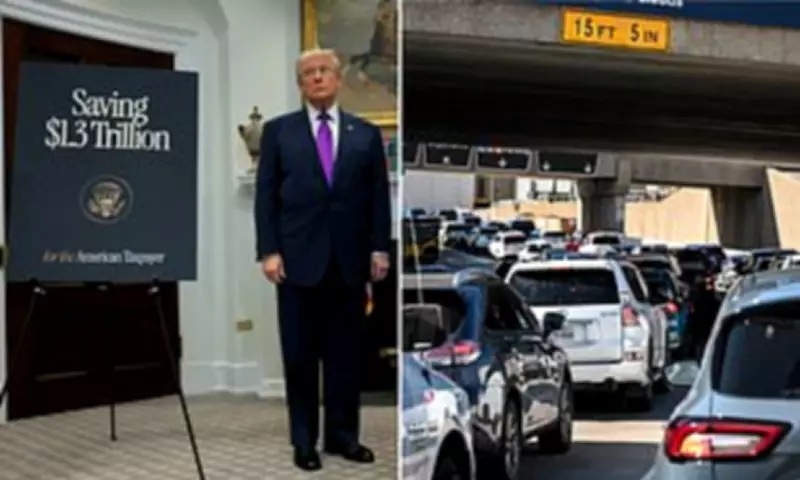
The Trump administration coupled this repeal with the elimination of greenhouse gas standards for automobiles, arguing these changes would deliver more than $1 trillion in regulatory savings. Officials claim this will substantially lower the cost of new vehicles for American buyers, though critics dispute these calculations.

Broader Implications for Climate Regulations
Beyond automotive standards, this decision places numerous other climate rules in immediate jeopardy. Regulations covering carbon dioxide emissions from power plants and methane leaks from oil and gas producers now face potential challenges, with legal battles expected to follow swiftly in the wake of this announcement.
Speaking from the Oval Office on Thursday, President Trump characterised the 2009 ruling as 'a disastrous Obama era policy that severely damaged the American auto industry and massively drove up prices for American consumers'. He further described it as 'the legal foundation for the Green New Scam, one of the greatest scams in history', directly criticising Democratic climate initiatives.
Scientific and Legal Controversies
The 2009 endangerment finding originated from a prolonged legal battle culminating in the 2007 Supreme Court decision Massachusetts v. EPA. That ruling determined greenhouse gases qualify as pollutants under the Clean Air Act and directed the EPA to assess whether they endanger public health. The resulting finding was based on scientific consensus that six greenhouse gases threaten welfare by fuelling climate change.
President Trump dismissed these scientific foundations, stating 'This determination had no basis in fact, had none whatsoever, and no basis in law'. He also rejected concerns that repealing the finding could cost lives by worsening climate impacts, asserting 'I tell them, don't worry about it, because it has nothing to do with public health. This was all a scam, a giant scam.'
Political and Environmental Reactions
The announcement prompted immediate condemnation from Democratic leaders and environmental organisations. Former President Barack Obama, who rarely comments on sitting administrations' policies, warned that repealing the finding would make Americans 'less safe, less healthy and less able to fight climate change - all so the fossil fuel industry can make even more money'.
Manish Bapna, president of the Natural Resources Defense Council, described the move as 'the single biggest attack in history on the United States federal government's efforts to tackle the climate crisis'. Environmental advocates argue the administration is ignoring crucial benefits of the regulations, including lives saved through reduced pollution and fuel savings from more efficient vehicles.
Procedural Details and Scientific Challenges
The final text of the repeal will undergo intense scrutiny in coming weeks. Procedurally, the draft proposal contends greenhouse gases should not be treated as traditional pollutants because their health effects are indirect and global rather than local. It argues regulating them within US borders cannot meaningfully address a worldwide problem.

However, the Supreme Court has previously upheld the endangerment finding, including as recently as 2022. Critics maintain the administration's scientific case is fundamentally flawed, pointing to a controversial study commissioned by an Energy Department working group of climate skeptics. That report, widely criticised by researchers for errors and misrepresentations, attempted to challenge scientific consensus on human-caused climate change.
Market and Competitive Concerns
Environmental groups warn this regulatory rollback could skew the automotive market toward more gas-guzzling vehicles, potentially undermining the American auto industry's competitiveness in the global transition toward electric vehicles. They argue the administration's focus on purported cost savings ignores substantial economic and health benefits of cleaner transportation standards.
As legal challenges prepare to mount, this decision marks a pivotal moment in US environmental policy, with ramifications extending far beyond vehicle showrooms to the nation's broader climate strategy and international commitments.