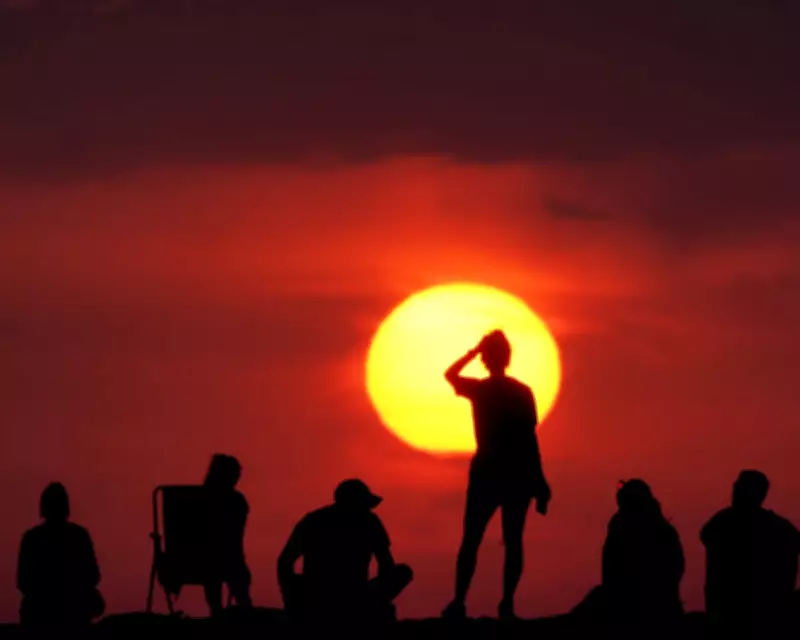
Britain must think like a hot country or risk rising temperatures making social disparities worse, according to a major report from the Climate Change Committee (CCC). The report warns that the UK was built for a climate that no longer exists and needs urgent changes to survive global heating.
Record temperatures and extreme weather
Temperatures are already 1.4C above the historic norm and heading for a 2C rise within two decades. This will mean far higher summer temperatures, with heatwaves as high as 45C lasting for more than a week, dwarfing the previous record of 40C in 2022. More frequent droughts and severe flooding are also expected.
Every area of the UK and nearly every aspect of infrastructure will be affected, from transport and communication networks to housing, schools, hospitals, and care homes. The CCC states: "The UK was built for a climate that no longer exists today and will be increasingly distant in years to come."

Unequal impacts on health and education
Without strong preventive action, a hotter Britain will be far more unequal. Extreme weather will affect people on lower incomes more than those with means to adapt. Pregnant women are among the most vulnerable, with a Wellcome study showing higher risks of pre-term birth, stillbirth, and complications without cooling.
Schools are another factor. Students are more likely to fail exams taken at 32C compared to 22C, according to CCC-quoted research. While the CCC advises all schools should have air conditioning by 2050, overstretched budgets may mean uneven rollout.
With nine out of 10 British homes at risk of overheating, air conditioning may be the only answer, but families that cannot afford it may only cool one room. "Tropical nights" where temperatures do not fall below 20C will become more common, affecting sleep and study.
Food prices and flooding
Climate impacts have added about £360 to the average annual food bill, with a 50% rise in prices forecast by November compared to 2021. Richer households may weather these shocks, but the poorest will struggle. When floods hit, higher-income households can move or install prevention measures, while the poorest are stuck. Lower-income groups also have less access to nature, a lifeline during heat.
Cath Smith, head of social impact at Green Alliance, said: "Climate change consequences aren't felt equally. Impacts such as heat and flooding intersect with inequalities in income, health, housing, and place, leaving some communities facing greater harm with fewer resources to adapt or recover."
Political consequences and need for action
Sam Alvis, associate director at IPPR, warned of political fallout, noting that populists like Nigel Farage's Reform party could exploit public anger over lack of preparation. "Government's priority should be to help those least able to protect themselves and spend on things that lower risk, like infrastructure improvements, rather than masking risk with subsidised insurance."
Dr Friederike Otto, professor of climate science at Imperial College London, emphasised prevention: "While adaptation is vital, we can't simply adapt ourselves out of this problem. The ultimate solution remains the rapid transition away from fossil fuels to net zero."