UK Winter Rainfall Intensifying Rapidly Due to Climate Crisis, Study Finds
New research from Newcastle University delivers a stark warning: the United Kingdom is experiencing a dramatic and accelerating increase in winter rainfall directly linked to anthropogenic climate change. The study, published in the journal Geophysical Research Letters, reveals that UK winters are becoming "significantly wetter," with each degree of global or regional warming driving an approximate 7 per cent rise in precipitation. This rate of increase is occurring far more rapidly than most leading global climate models have projected, placing the nation at heightened and immediate risk of severe flooding.
Thermodynamic Drivers Outpace Model Predictions
The research team conducted a comprehensive analysis of UK winter rainfall records spanning from 1901 to 2023. Their primary objective was to determine whether the observed wetter winters stemmed from shifts in atmospheric circulation patterns or from the fundamental thermodynamic effects of a warming atmosphere. The findings were unequivocal: the dominant driver is the increased capacity of warmer air to hold and subsequently release more moisture, leading to larger and more intense rainstorms.
"The rainfall increase of 7 per cent per degree of warming is consistent with the expected rate of moisture increase in a warmer atmosphere," the authors stated. This thermodynamic effect, primarily fueled by the burning of fossil fuels, is the central factor behind the trend. Alarmingly, the study discovered that on average, global climate models project only a 4 per cent rise in rainfall per degree of warming—a substantial underestimation compared to the 7 per cent observed in real-world data.

"We Are 20 Years Ahead" of Climate Projections
Dr. James Carruthers, lead author and researcher at Newcastle University’s School of Engineering, emphasized the urgency of the findings. "Climate change has already made our winters significantly wetter," he declared. Since the 1980s, the UK has warmed by roughly 0.25°C per decade, resulting in nearly 9 per cent more winter rainfall today compared to that period.
"This is really concerning, as seasonal rainfall is increasing at a much faster rate than global climate models have predicted," Dr. Carruthers explained. "We’re already experiencing changes in UK winter rainfall that global climate models predict for the 2040s—we’re 20 years ahead." He highlighted that the period from October 2023 to March 2024 was the wettest winter half-year on record, with the current season tracking closely behind.
Flood Risks and the Staggering Volume of Extra Water
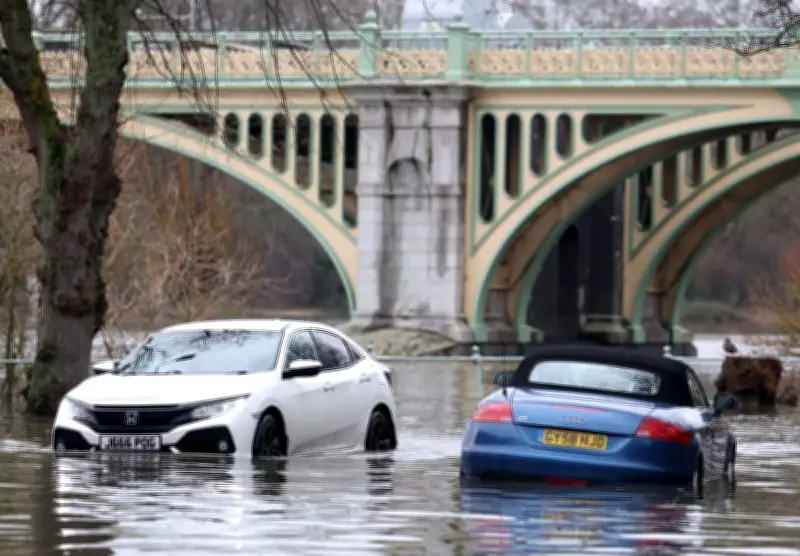
Co-author Professor Hayley Fowler issued a grave warning regarding the implications for flooding. The additional rainfall attributable to fossil-fuel-induced warming is already immense. "The extra water that falls every winter across the UK from fossil-fuel induced warming would fill three million Olympic-sized swimming pools," she quantified. This surplus predisposes the country to flooding as soils become more persistently saturated.
"This extra rainfall will continue to increase every year with additional global warming. We can only stop these increases in flooding by stopping the burning of fossil fuels," Professor Fowler asserted. With the UK recently facing more than 100 active flood warnings in a single week, she stressed that without major investment in adaptation infrastructure, economic losses and casualties are poised to grow. "There is a widening gap between growing climate risks and action on adaptation," she cautioned.
Broader European Context and Call to Action
The Newcastle study builds upon earlier research indicating that northern and central Europe are undergoing similar winter wetting trends, while the Mediterranean region becomes drier. These patterns, in both their speed and magnitude, are also underestimated by existing climate models. The collective evidence underscores a continental-scale hydrological shift driven by global warming.

The research presents a clear and pressing call to action. The accelerated rate of winter rainfall increase leaves little time for delay in both mitigating greenhouse gas emissions and implementing robust adaptation strategies. The UK, now experiencing rainfall levels not anticipated for decades, must confront the immediate and escalating threat of climate-driven flooding with renewed urgency and substantial resource allocation.