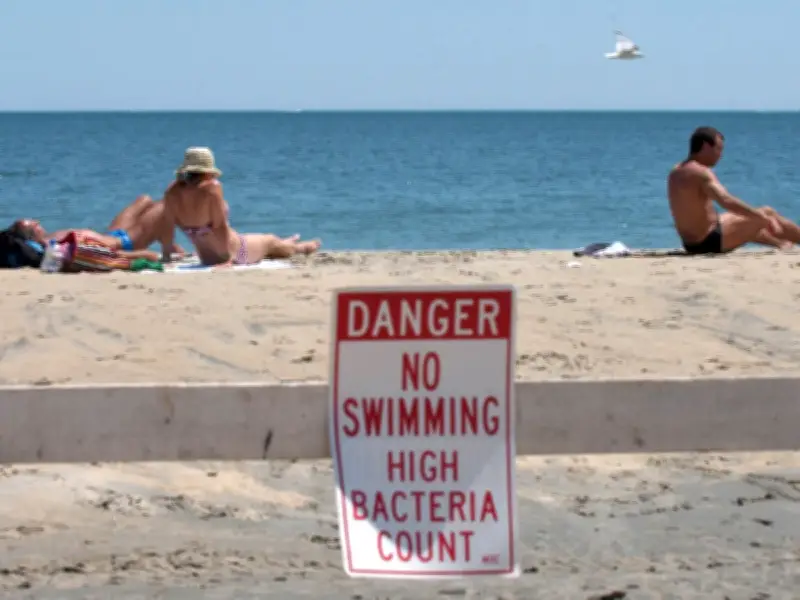
High levels of faecal bacteria have sparked 'do not swim' warnings at multiple popular beaches in New York and New Jersey, threatening day-trippers with severe stomach bugs as a blistering heatwave arrives. Testing has revealed horrifying levels of Enterococcus bacteria, which originates in the intestines and faeces of humans and animals, indicating the potential presence of even more dangerous pathogens.
Pollution Sources and Health Risks
The stomach-turning pollution stems from a cocktail of pet and wildlife waste, leaking septic systems and sewer failures, and stormwater runoff washing pollutants into bays and rivers. Sweltering temperatures and direct sunlight threaten to worsen the situation, as extreme heat can rapidly accelerate bacterial growth in both water and sand.
Swallowing contaminated water can trigger gastrointestinal illness, including diarrhoea, vomiting, stomach cramps, and pain, according to the New York City Department of Health. The dirty water can also cause infections if it comes into contact with open cuts or wounds.

New York City Beach Readings
In New York City, five beaches across Brooklyn, Queens, and the Bronx have breached safety thresholds. Sea Gate 42nd, a private beach near Coney Island in Brooklyn, recorded 233 bacteria per 100 millilitres of water, more than double the city's acceptable limit of 104. Queens' Douglaston Manor Beach recently saw 1,362 bacteria per 100 millilitres, 13 times above the safe standard, though levels have since dropped. The Whitestone Boosters Civic Association Beach in Queens measured 136 this week, following a peak of 873 last week. In the Bronx, the Trinity Danish Young People's Society beach and White Cross Fishing Club are also under watch.
New Jersey Advisories
Across the Hudson River, New Jersey faces its own crisis. Four swimming areas have triggered alarms: Windward Beach (Brick), Cedar Point (South Toms River), Summit Avenue Beach (Island Heights), and Cedar Bridge Manor Park (Brick). On a positive note, advisories at Miller Beach, East Beach, and Anglesea Avenue Beach have been lifted after water quality improved.
Recommendations for Beachgoers
The Environmental Protection Agency (EPA) explicitly recommends avoiding putting your head underwater or swallowing water at any beaches currently under advisory. Even wading in the shallows carries risk; experts advise protecting open wounds and thoroughly washing hands after touching the sand. Beachgoers are urged to check local tracking maps before heading to the shore.