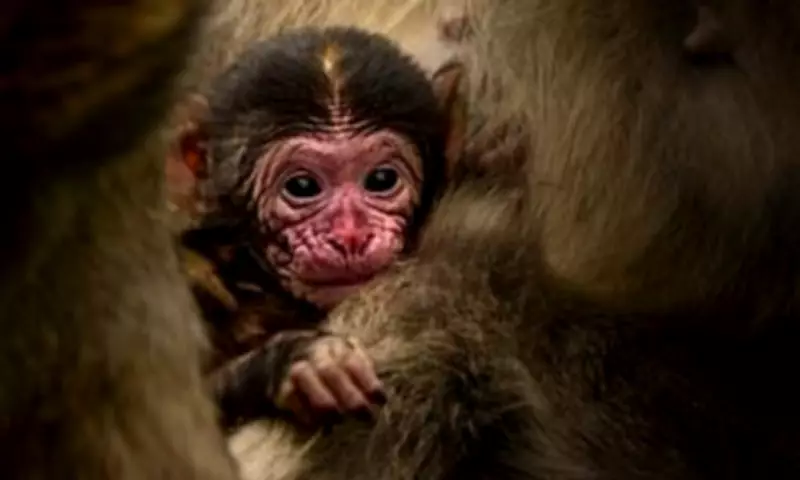
Peeking out from its mother's arms surrounded by lush greenery and trees is an endangered baby Barbary macaque. Though typically from Morocco and Algeria, this infant, alongside three others, have been born in the UK's only monkey forest. Located in Stoke-on-Trent, Trentham Monkey Forest has recently become the birthplace for the four babies, and they were born high up in treetops just as they would be in the wild.
Conservation Win
Conservationists have described the exciting event as a 'small but important win for a highly endangered species'. Over 50 per cent of wild Barbary macaque populations have declined over the past 40 years and there's an estimated 8,000 left in the wild. But thanks to conservation efforts, the Staffordshire woodland is now home to 140 free-roaming Barbary macaque monkeys split into three social groups spread out across the 60-acre forest.
UK's Largest Primate Habitat
It's the largest primate habitat in the UK, and has been open since 2005, with visitors able to walk alongside the monkeys from two metres away and witness their natural behaviours up close. The Monkey Forest claims to be the only one in the UK that gives visitors the chance to do so, 'making it one of the most unique days out in the country'.

Due to the breeding behaviour of the monkeys, it's hard to tell initially if a female is pregnant and they have to be observed from afar. Barbary macaques mate during the winter and have a gestation period of around five and a half months. Expecting female monkeys tend to head into sleeping areas in the woodland during the late spring and early summertime, and will emerge with a baby clinging to them at any time. The nature of the birth means lucky visitors in the woodland might even spot a new-born that is just hours old.
Guide's Delight
Head guide Anna Smith, who has looked after the primates since the park first opened, described the babies as 'fresh bundles of joy'. 'It's hard to describe how amazing baby season is,' she says. 'The Barbary macaque is a species that experiences challenging times in the wild.' The monkeys are often 'victims of the illegal pet trade, suffering habitat loss and experiencing wildfires has had a profound impact on their wild populations,' Anna reveals.
New additions to the forest 'go on to live remarkably similar days to their wild counterparts gives this species in jeopardy a powerful lifeline and is a small yet important victory for them,' she adds. The experienced Barbary macaque guide says, 'As we welcome four fresh bundles of joy to the woodland, we cannot wait to see who’s next to join the Monkey Forest family, with more babies expected to arrive soon.'
Since the conservation project began back in 2005, the woodland has welcomed over 100 baby monkeys. Trentham Monkey Forest works closely with organisations that help protect the wild Barbary macaques in Morocco and Algeria, as well as other primates that are facing threats in the wild. Monkey Forest also aims to educate visitors and raise awareness of the endangered status of the primate. Tickets to visit the forest are priced from £13.50 per adult, and the website warns that feeding and touching the monkeys is 'strictly prohibited,' emphasising that 'sustaining human-to-monkey boundaries is conservation and protection'.