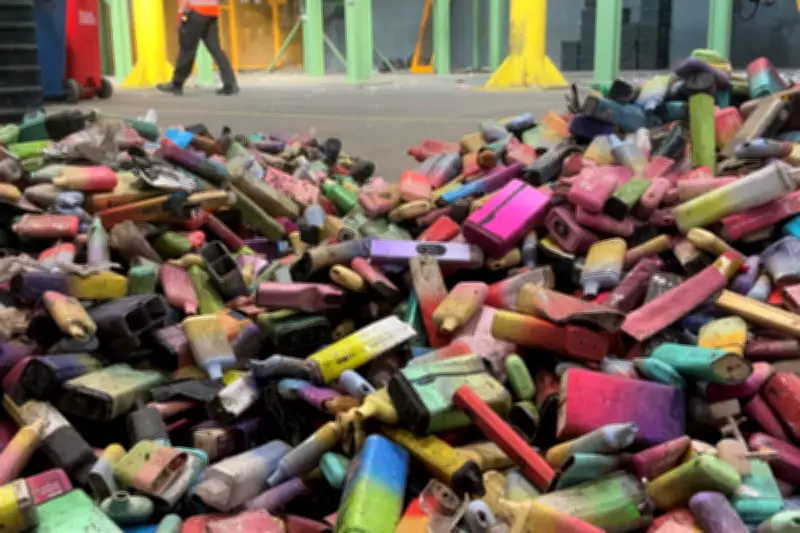
Despite a comprehensive ban on disposable e-cigarettes implemented last summer, more than six million vapes and vape pods continue to be discarded in the United Kingdom every single week. This staggering volume of electronic waste is placing immense pressure on recycling infrastructure, with waste management firms warning of severe operational strains and significant safety hazards.
Recycling Systems Under Fire
Research conducted by the recycling campaign group Material Focus has uncovered that an estimated 6.3 million vapes are binned weekly across the nation. While this figure represents a 23 per cent decrease from 2024 levels, the sheer quantity remains alarmingly high. The study further found that nearly half of all vapers—47 per cent—are unaware that their devices can be recycled at all.
Monthly Mishandling Crisis
Waste management company Biffa reports receiving over 200,000 incorrectly recycled vapes each month. This improper disposal creates dangerous conditions, as the lithium-ion batteries inside these devices can explode when crushed during waste processing. These incidents have sparked a dramatic increase in fires at recycling centres and within collection vehicles nationwide.

Daily Fire Incidents and Pollution Spikes
Another major waste firm, Veolia, has disclosed that it tackles approximately one fire per day across its network of facilities. These blazes are not only a direct safety threat to workers and infrastructure but have also caused localised spikes in air pollution that exceed World Health Organisation safety limits. Fire services across the UK have corroborated this trend, noting a sharp rise in vape-related incidents in recent years.
Legal Obligations and Consumer Confusion
Vapes should never be placed in regular household bins. Instead, they must be recycled at specific collection points located in supermarkets or other designated locations. Scott Butler, the executive director of Material Focus, emphasised the need for systemic change: "It should be as easy to recycle a vape as it is to buy one. It is a longstanding legal obligation for all of the stores who are profiting from selling them to offer safe recycling drop-off points and cover the costs of doing that. Vape producers and importers should then cover the costs of recycling."
Health Implications and Regulatory Context
The disposable vape ban was introduced last summer with dual objectives: to reduce sales to children and to curb the environmental waste created by single-use devices. Initially promoted as a safer alternative to traditional cigarettes and a potential quitting aid, the health implications of vaping have become increasingly ambiguous over the past decade.
Recent scientific studies indicate that vaping is associated with elevated health risks, including increased blood pressure, heart complications, and diminished lung function—even in individuals with no prior smoking history. A particularly concerning trend is the rise of nicotine addiction among young people who have never smoked, with research linking regular vaping to mental health issues such as depression and anxiety.
While e-cigarettes may assist some adults in quitting smoking, public health experts note that traditional nicotine replacement therapies—including patches and gum—are generally considered more effective and better-evidenced options for smoking cessation.