It is Carnival season in New Orleans, a time traditionally marked by an abundance of green, gold, and purple Mardi Gras beads. Once crafted from glass and treasured by parade-goers fortunate enough to catch them, today these necklaces are often cheap plastic imports tossed in handfuls from floats. Spectators may drape dozens around their necks, but many end up discarded on the ground or in trash bins. Following heavy flooding a few years ago, the city discovered over 46 tons of beads clogging storm drains, highlighting a growing environmental concern. Yet, envisioning Mardi Gras without beads seems nearly impossible, prompting innovative solutions.
A Radical Shift Away from Plastic
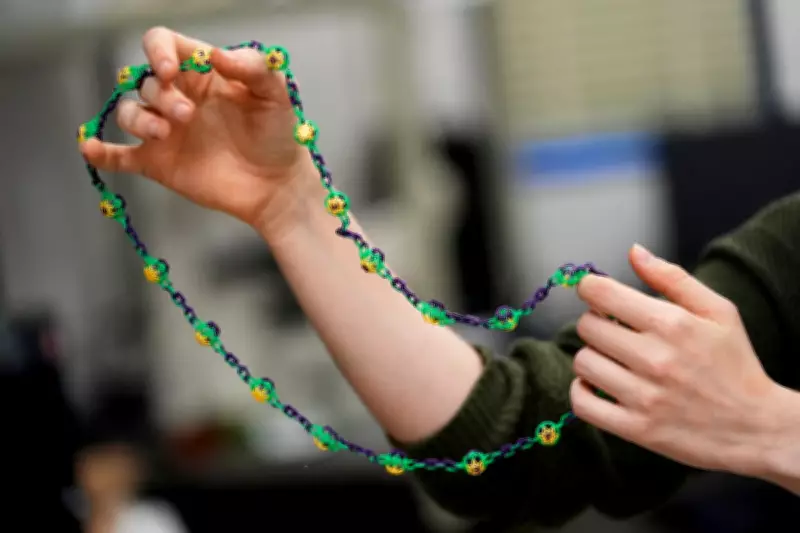
In a bold move last year, the Krewe of Freret decided to ban plastic beads from their parade. Greg Rhoades, co-founder of Freret, explained that riders embraced this change because spectators no longer value the cheap plastic beads. "It's become so prolific that they dodge out of the way when they see cheap plastic beads coming at them," Rhoades said. This year, beads have returned, but not the plastic variety. Freret is among three krewes now using biodegradable beads developed at Louisiana State University, known as "PlantMe Beads."
Innovative Design and Environmental Benefits
Graduate student Alexis Strain detailed that these beads are 3D-printed from polylactic acid (PLA), a starch-based, commercially available material. The large hollow spheres contain okra seeds, allowing the necklaces to be planted. The okra attracts bacteria that aid decomposition, offering a sustainable alternative. Kristi Trail, executive director of the Pontchartrain Conservancy, emphasized the dual problem of plastic beads: they clog storm drains, leading to flooding, and those not caught wash into Lake Pontchartrain, harming marine life. The conservancy is preparing to study microplastics in the lake, underscoring the urgency of this issue.

Historical Context and Development
The trend toward a more sustainable Mardi Gras has been growing for years, with efforts including thoughtful throws like food, soaps, and sunglasses. Trail noted that while data on impact is limited, a recent grant will help assess effectiveness. She highlighted that beads are part of a larger waste problem, with Mardi Gras generating about 2.5 million pounds of trash. Professor Naohiro Kato, an associate professor of biology at LSU, first conceived the idea for biodegradable beads in 2013 after discussions about the celebration's environmental impact. As a plant biologist, Kato explored bioplastics derived from plants.
In 2018, the lab produced beads from microalgae-based bioplastic, but high production costs made them impractical. Strain's experimentation with 3D printing led to the creation of PlantMe Beads. For the 2026 Carnival season, LSU students have produced 3,000 necklaces distributed to three krewes in exchange for feedback on design and spectator reception. Interestingly, Kato mentioned that people find the beads unique and want to keep them, which contrasts with the goal of biodegradability. "So wait a minute, if you want to keep it, the petroleum-plastic Mardi Gras bead is the best, because this won’t last," he remarked.
Future Directions and Community Engagement
The lab continues to innovate, with Strain testing a different 3D printer material that biodegrades quickly without planting. Kato is collaborating with local schools to turn bead-making into a community project, where students can learn about bioplastics and plant biology while 3D printing necklaces. He is also exploring ways to make algae-based bioplastic commercially viable. Ultimately, Kato stressed that the goal should extend beyond replacing plastic beads to embracing less waste overall.
Inspiring Broader Change
Rhoades affirmed Freret's commitment to this direction, noting they were the first major parading organization in 2025 to reject cheap beads. "Let’s throw things that people value, that people appreciate, that can be used year-round," he said. Coveted items like baseball hats with the Freret logo are now thrown, and Rhoades observes people wearing them around the city, inspiring other krewes. "I really believe that we, and other krewes, are able to inspire your larger krewes," he added, emphasizing the desire for throws that are cherished and shared on social media.

Reported from Nashville, Tennessee, this shift toward biodegradable beads represents a significant step in making Carnival season more sustainable, blending tradition with environmental responsibility.