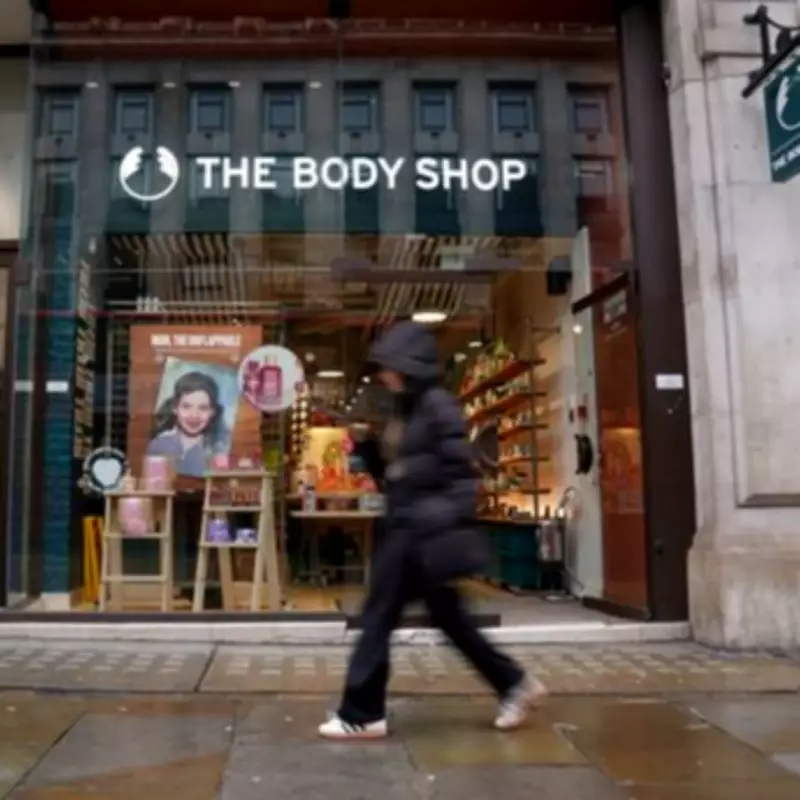
The Enduring Legacy of Anita Roddick and The Body Shop at 50
This year marks the 50th anniversary of The Body Shop, the iconic British beauty brand founded in Brighton in 1976 by the visionary entrepreneur Anita Roddick. As the company reaches this significant milestone, we reflect on its revolutionary principles and the remarkable story of its founder, who left her entire £51 million estate to charity upon her death.
Humble Beginnings and Unconventional Start
When Anita Roddick opened the first Body Shop store in March 1976, she openly admitted knowing nothing about business. "My sole object was to survive, to earn enough to feed my kids," she once said. "If it hadn't worked, I would have found something else to do." The venture nearly didn't happen after the 33-year-old was initially denied a £4,000 bank loan, turned down flat when she arrived wearing jeans and a Bob Dylan T-shirt with her two children.
A week later, she returned with her husband Gordon, both wearing suits and carrying an impressive business plan in a plastic folder. This time, they secured the loan without trouble. Friends helped fill bottles and handwrite labels, while Anita painted the entire store dark green—not to make an environmental statement, but because it was the only colour that would cover the damp patches on the walls.

Innovative Solutions and Ethical Foundations
Roddick's resourcefulness extended to her choice of containers. The cheapest she could find were plastic bottles used for urine samples, but she couldn't afford enough. Her solution was to offer refills for empty containers or customers' own bottles, running her shop "like my mother ran her house in the Second World War—refilling, reusing and recycling everything."
This ethos of sustainability and ethical practice became The Body Shop's hallmark. The company pioneered reuse and recycling on the high street long before it became fashionable and was the first major retailer to refuse to sell beauty products tested on animals—a stance that eventually contributed to a European ban.
Rapid Expansion and Global Influence
Six months after opening the Brighton store, a second location followed in Chichester, West Sussex. By 1988, there were 138 stores, growing to 1,800 branches worldwide by 2004 and peaking at 3,000 at the height of its success. Born in a bomb shelter in Littlehampton in October 1942, Roddick credited her work ethic to her large Italian immigrant family who ran a local cafe.
After briefly working as a history and English teacher, she traveled extensively, with experiences in Greece, the UN, and backpacking journeys that inspired her use of natural ingredients like cocoa butter. Her campaigning spirit was ignited at age 17 by a Daily Mirror front page headline about the Soviet Union's defence of the Hungarian Invasion, which taught her "the power of communicating with passion."
Campaigning and Industry Transformation
The Body Shop's first major campaign came in 1985, partnering with Greenpeace to demand an end to dumping poisonous waste in the North Sea. Their most high-profile effort followed in 1989 when the European Community proposed requiring animal testing for all cosmetics. "We would have chosen to have gone out of business rather than start testing our products on animals," Roddick declared.
The company mobilized a massive campaign that gathered over five million signatures, leading to the directive's withdrawal. In 1998, the UK became the first country to ban cosmetic testing on animals, with The Body Shop playing a prominent role alongside Cruelty Free International. CEO Michelle Thew noted that Roddick proved "business can be a force for good" through her "fearless leadership and compassion."
Broader Social Impact and Recognition
Other notable campaigns included 1997's "Love Your Body" initiative featuring Ruby, a size 16 doll designed as a curvier, more realistic alternative to Barbie. The campaign's slogan declared: "There are 3 billion women who don't look like supermodels and only 8 who do." Barbie manufacturer Mattel viewed Ruby as such a threat that The Body Shop was forced to remove the posters from American stores.

In 1991, the Roddicks helped launch The Big Issue with a £500,000 investment. Anita was made a Dame in 2003 for her environmental and human rights campaigning, having stepped down as co-chair the previous year to focus on activism and sourcing ingredients abroad.
Controversial Sale and Final Years
After floating on the Stock Exchange in the 1980s, The Body Shop remained publicly listed until its 2006 acquisition by L'Oréal—a controversial deal given the French company's previous stance on ethical issues including animal testing. Dame Anita died in 2007 at age 64 from a brain haemorrhage following a long battle with hepatitis C, which she believed resulted from a transfusion after her youngest daughter's birth.
In a remarkable final act, she left nothing in her will to family and friends, instead donating her entire £51 million estate to charity—a decision fully supported by her husband Gordon and daughters Justine and Sam.
Recent Challenges and Lasting Influence
Last year, the chain entered administration just months after global private equity group Aurelius took control, with only 115 UK stores remaining. Competitors prioritizing environmental concerns left The Body Shop without its unique selling point, but its influence endures.
Lord John Bird, who first met Anita in 1969 through Gordon, reflected: "She could never sit still. Anita wanted to change the world and make people sit up and say 'yes, we need to do more.'" He recalled a 1990s conversation with the boss of Superdrug's parent company, who admitted placing greater importance on environmental and animal welfare issues "because of the Body Shop."
"The greatest thing she achieved is not a chain of stores," Bird concluded, "but how her ethical way of doing business radicalised the high street." Will McCallum, co-executive director of Greenpeace UK, added that Roddick "showed it was possible to run a successful business while sticking a middle finger up to polluters and nature destroyers."
As The Body Shop celebrates half a century, Anita Roddick's legacy—from urine sample bottles to multi-million pound philanthropy—continues to inspire a generation of ethical entrepreneurs and activists.