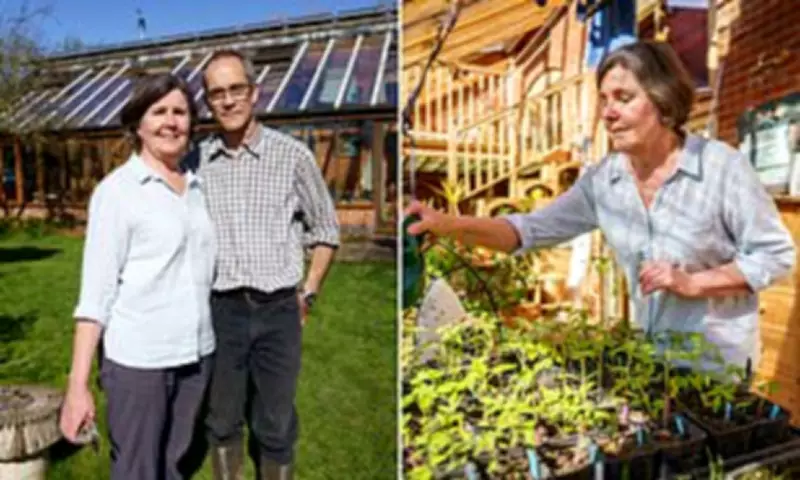
Helena Tilley and her husband Simon, both 61, have revealed how they save approximately £2,000 each year by residing in an off-grid, self-sufficient community. However, this significant financial benefit comes with a substantial commitment: the couple must contribute around 600 hours of additional labour annually to maintain the project and its surrounding land.
The Hockerton Housing Project: A Model of Self-Sufficiency
The Tilleys live at the Hockerton Housing Project (HHP), a pioneering co-housing site located on the outskirts of Southwell in Nottinghamshire. This innovative community spans 11 acres and operates entirely off-grid, featuring its own wind turbine, solar power installations, and an independent water system. Their unique four-bedroom property requires no conventional heating, relying instead on natural thermal regulation.
Financial Benefits and Energy Profits
By selling surplus renewable energy back to the national grid, the couple generates an annual profit of £144. This income helps reduce their household bills to just £288 per month. When compared to typical UK households, they estimate yearly savings of £1,884. Helena, a paediatrician, emphasised the broader value of their lifestyle, stating: 'It's a low carbon, healthy lifestyle that we're trying to promote and it's a very special place.'

The Catch: Extensive Community Labour Requirements
The financial savings are balanced by rigorous community obligations. All 16 residents at HHP must participate in extensive upkeep duties, including land maintenance and supporting the project's not-for-profit business operations. Tasks range from brief daily chores, such as collecting eggs from chickens, to larger group efforts typically scheduled for Sundays.
Simon Tilley expressed frustration with conventional housing development, remarking: 'It's a crying shame that the UK has spent decades building very poor quality houses with zero consideration for climate resilience or local community.'
Sustainable Living Practices and Food Production
The community prioritises sustainability by growing approximately 90% of its own fruit and vegetables during summer months and around 30% in winter. While HHP aims for a fully plant-based diet, residents currently maintain a small flock of sheep for meat and keep beehives for honey production. The Tilleys occasionally visit Waitrose for personal essentials like gluten-free products, but another HHP family reported spending almost nothing at supermarkets in summer and as little as £50 monthly during winter.
Eco-Home Design and Construction
Properties at HHP are constructed using materials like concrete blockwork, concrete beams, and clay tiles, which effectively store and release heat energy over extended periods. Heating is primarily derived from solar gain, body heat, and appliance usage, maintaining internal temperatures between 18 and 24 degrees Celsius year-round. Two-bedroom eco-homes are priced at £325,000, while five-bedroom properties cost £600,000, figures residents consider consistent with local market rates.
Family Life and Long-Term Community Engagement
The Tilleys have lived at HHP since its establishment thirty years ago, raising their children in what Helena describes as 'an absolutely amazing and safe place.' Their 33-year-old son Luke has recently returned with his own family to reside in one of the newer, similarly designed houses on the site. Helena, who is semi-retired, continues her paediatric work and leads climate change initiatives for the Royal College of Paediatrics and Child Health.
In her spare time, she grows cabbages, produces juice from orchard apples, and preserves food for winter. Reflecting on their experience, she noted: 'This place is my mental health place. Access to trees and clean air is so important for all of us.'
A Vision for Broader Adoption
The couple passionately advocates for more widespread construction of similar eco-homes across the UK. They hope their lifestyle serves as 'a source of education and inspiration' to others, demonstrating that sustainable living is both feasible and rewarding. Helena added: 'If we create a demand for low energy homes - people saying this is what they want - then maybe the house builders will start to work on that.'

Despite the considerable time investment required, the Tilleys remain committed to their off-grid existence, viewing it as a holistic approach that integrates environmental stewardship, community cooperation, and personal wellbeing.