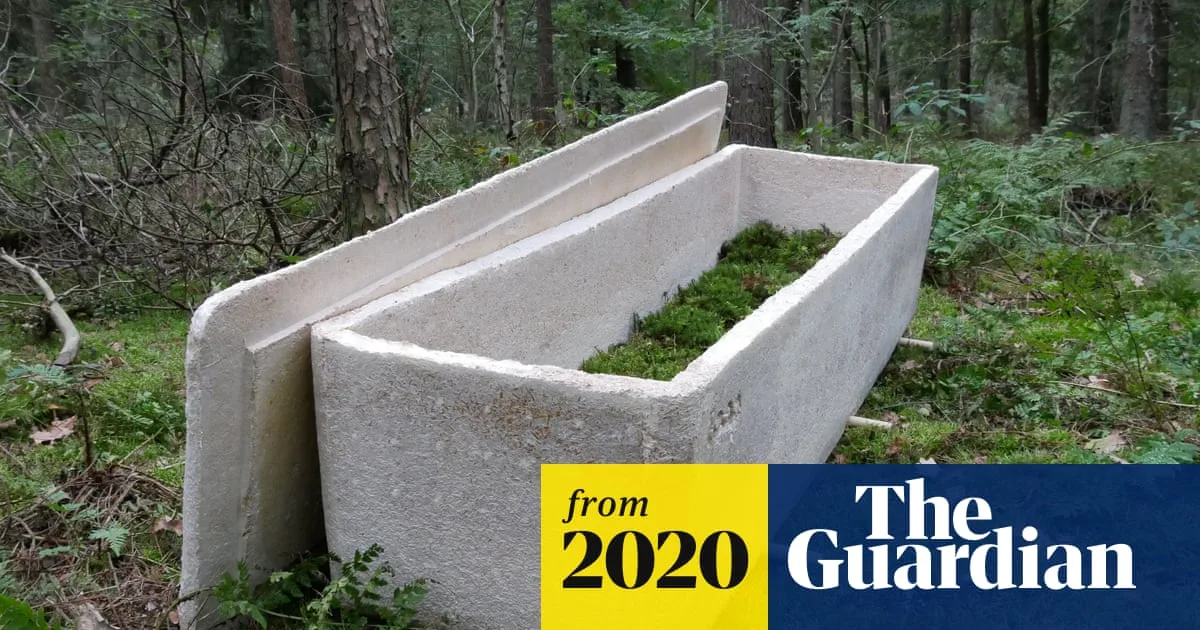
The first funeral using a 'living coffin' made of mycelium, the fibrous root structure of fungi, has taken place in the Netherlands. The coffin, called the Living Cocoon, is produced by the Dutch startup Loop and is designed to compost quickly, enriching the soil rather than polluting it.
Bob Hendrikx, the 26-year-old founder of Loop and a biodesigner from the Technical University of Delft, said the coffin allows people to become one with nature again. He described mycelium as 'nature's recycler', capable of neutralising toxins and converting pollutants into nutrients for the environment.
Hendrikx explained that a traditional coffin can take a decade or more to decompose, slowed by varnished wood, metals, and synthetic clothing. In contrast, a mycelium coffin is absorbed into the soil within a month or six weeks, with the body fully decomposing and enriching the surrounding soil within two to three years.

Loop has produced 10 coffins so far, costing around €1,250 (£1,150) each, in collaboration with two funeral cooperatives in The Hague. The company expects the price to drop as production increases, with Hendrikx hoping mycelium caskets become 'a new normal'. Each Living Cocoon takes several weeks to grow and is then dried; it comes back to life when exposed to damp soil, initiating decomposition.