A controversial immigration detention camp in the Florida Everglades, dubbed 'Alligator Alcatraz', has been revived after two Trump-appointed appeals court judges blocked a closure order. The camp, which opened in early July, had been ordered shut by a district court judge for violating federal environmental laws, but the appeals panel's intervention has allowed it to continue operating.
Activists report that the 3,000-capacity facility is rapidly filling up again, with buses arriving and departing frequently. Attorneys say Immigration and Customs Enforcement (ICE) officials are escalating efforts to restrict access to detainees. The Miami Herald reported that hundreds of captives have 'dropped off the grid', suggesting the site has become a hub for a secretive Trump programme that transfers detainees around the country or deports them without notifying lawyers or family.
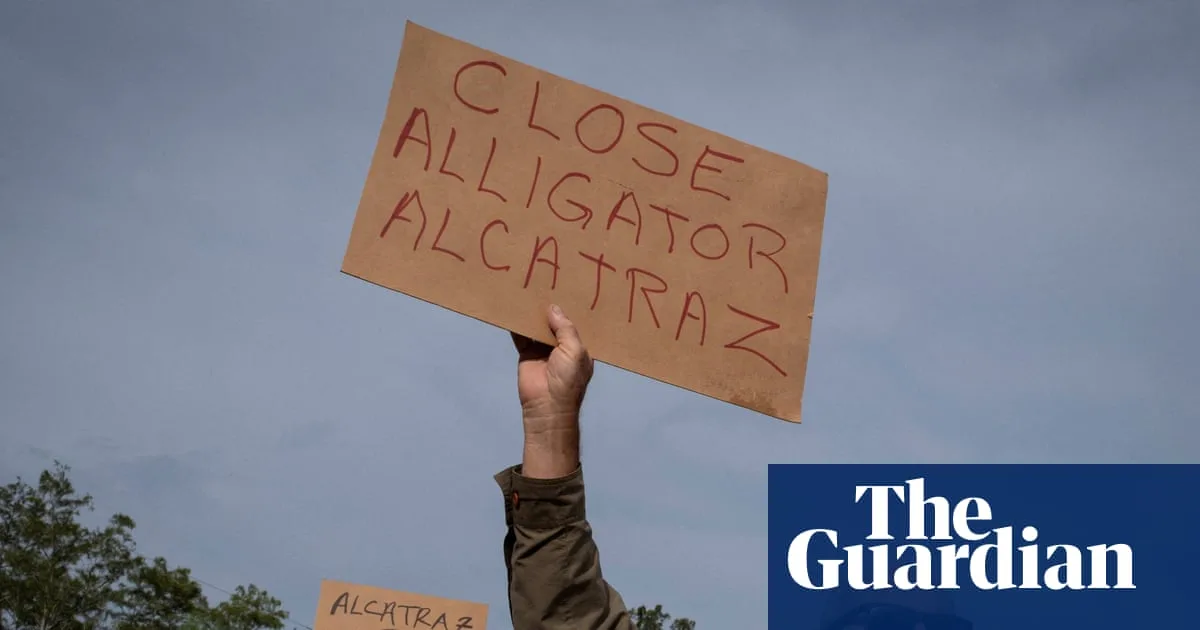
'Now it's back open, this mismanaged state-run facility is essentially operating like a US black site, people are being disappeared,' said Noelle Damico of the Workers Circle, an advocacy group. Protests against the camp have swelled, with vigils held every weekend and demonstrations in other Florida cities.

The camp was built in eight days in June on a disused airstrip 40 miles west of Miami. It is the subject of multiple lawsuits seeking its closure. The appeals court ruled 2-1 that because the state initially used its own money (an estimated $450m) to build it, no federal environmental impact study was required. However, it was later reported that Florida received a $608m reimbursement from the Federal Emergency Management Agency for the camp and other ICE-related projects.
'This seems to be the smoking gun proving that our lawsuit is entirely correct,' said Elise Bennett of the Center for Biological Diversity. 'This is a federal project built with federal funds that's required by federal law to go through a complete environmental review.' The legal battle continues as activists and environmental groups push for the camp's permanent closure.