Hundreds of Cambodian villagers gathered on Thursday morning to honor their village’s guardian spirits through a vibrant, centuries-old ceremony designed to pray for good fortune, rain, and prosperity. The ritual, known as “He Neak Ta,” has been celebrated annually for several hundred years by the residents of Phum Boeung, a community located approximately 25 kilometers (15 miles) northwest of the capital, Phnom Penh.
Significance of the He Neak Ta Ritual
The ceremony, which has become increasingly rare in modern times, coincides with the onset of the summer monsoon season as farmers prepare for planting rice—a crop that requires substantial water. Although the majority of Cambodians are Buddhist, the He Neak Ta ritual reflects a widespread belief in animism, the idea that spirits can inhabit all types of living and inanimate objects.
Chamrouen Ratha, a 26-year-old blacksmith, explained that he took the day off from work to participate in honoring the same spirits venerated by his ancestors. “The significance of this ceremony is to pray for happiness and prosperity for all the villagers in this area and the participants who have joined this ceremony,” he said.

Procession and Festivities
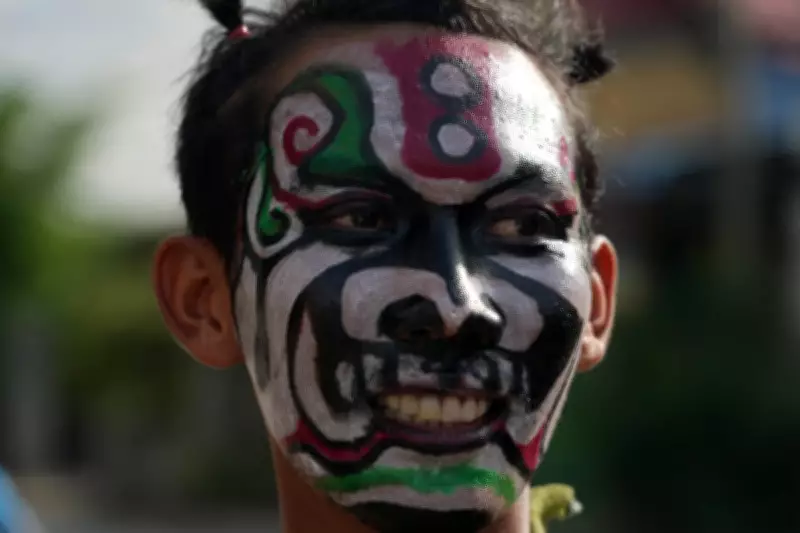
Villagers of all ages congregated about 2 kilometers (1.2 miles) from the local monastery dedicated to their guardian spirit. Young men painted scenes inspired by local folklore on their faces and bodies, dressed as spirits, and donned grass skirts, with some wearing painted oversized heads atop their costumes. Many young women wore traditional silk clothing, adorned with gold-colored necklaces and flowers tucked behind their ears. Some danced elegantly to the rhythm of handheld drums and small gongs.
The ragtag procession, which included participants traveling on motorbikes and even horseback, slowly made its way to the guardian spirit’s shrine. There, villagers lit incense sticks and offered various types of fruit, food, soft drinks, and alcohol while praying for good fortune, adequate rainfall, prosperity, and the prevention of disease within their community.
Conclusion of the Ceremony
The half-day ceremony concluded with the spraying of holy water on the cheerful participants. “I pray for enough rainfall with abundant rice production … so that villagers would enjoy their harvest,” said Sim Pov, a 30-year-old driver who marched in costume. Neak Mao, 64, who brought two horses with him, noted that he has attended the ceremony since he was young. “This celebration is to ensure that the traditions of our ancestors are not lost, which they have tried to preserve and we continue to do so every year,” he said.