Rediscovery of a Rare Bee Species in Urban New York
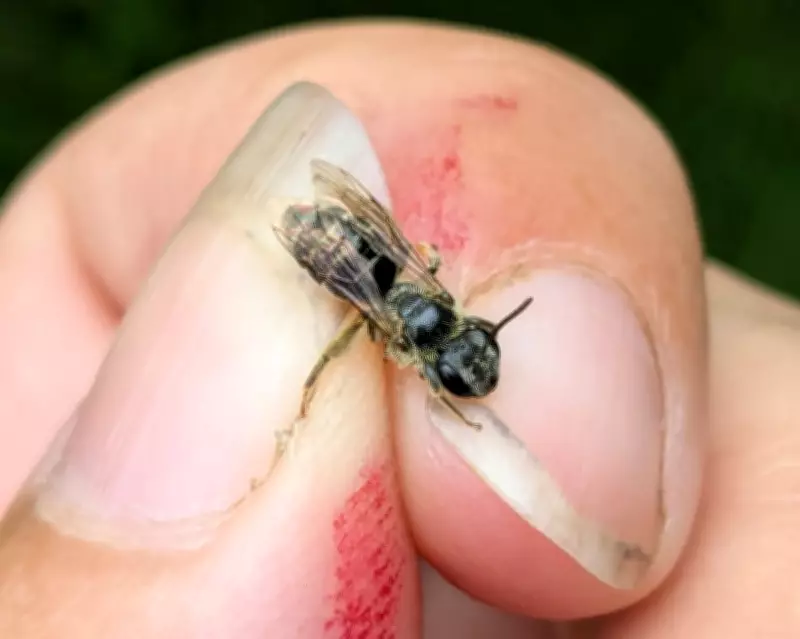
In a remarkable turn of events, the chestnut mining bee (Andrena rehni), a species not documented in New York State for over a century, has been rediscovered by pollinator ecologist Molly Jacobson. This finding occurred in a chestnut orchard in Syracuse, an area densely urbanised and surrounded by highways, challenging assumptions about where such rare insects might thrive.
A Lifelong Passion for Insects
Molly Jacobson's fascination with insects began in childhood, where she would spend hours observing ants and other creatures. Now, as an adult, she leads groups to meadows, encouraging a childlike curiosity through hands-on exploration with nets. Her work aims to reconnect people with the natural world, often overlooked in daily life.
Last summer, while working weekly in the Syracuse orchard, Jacobson questioned why the chestnut mining bee had never been surveyed there. Historically, this bee was considered possibly extinct in New York, with the last record dating back to 1904, and no nationwide sightings for decades until a 2018 discovery in Maryland.

The Moment of Discovery
During a brief moment before packing up from her travels, Jacobson, always carrying her butterfly net, decided to swing it around just ten feet from where she had spent the summer. To her excitement, she caught two chestnut mining bees within minutes, suggesting they had been present all along but unnoticed.
This discovery is particularly significant as it marks the first time the bee has been found north of the Hudson Valley, indicating that restoration efforts for chestnut orchards, devastated by blight in the early 1900s, are yielding positive results. These bees are entirely dependent on chestnut trees, and their return signals ecological recovery.
The Growing Hunt for Lost Bees
In recent years, interest in tracking rare bees has surged exponentially, part of a broader movement to search for species that have disappeared from records. Many bees are listed in museum archives but have not been seen in years, leaving their status uncertain—whether extinct or simply overlooked.
The chestnut mining bee is considered a holy grail among enthusiasts, and Jacobson's find in 2023 ended a 119-year gap in southern New York records. This highlights the importance of persistent observation, even in unlikely urban settings.
Identification and Conservation Challenges
The United States is home to approximately 450 species of mining bees, which often appear identical to the untrained eye. Distinguishing them requires years of skill, involving microscopic examination of exoskeleton details such as pit patterns, groove textures, and hair placement. In some cases, genitalia analysis is necessary for accurate identification.
Jacobson emphasises that every location holds hidden wonders, urging people to look closely at their surroundings. She advocates against the assumption that only pristine habitats harbour valuable biodiversity, pointing out that cities can host amazing discoveries.
The Role of Citizen Science
Following this rediscovery, residents in upstate New York have expressed interest in surveying for the bee themselves. Jacobson stresses the critical role of citizen science, as backyard observations can uncover species that professional scientists might miss. Engaging the public fosters empathy and care for insects, which is essential for effective conservation.
When searching for insects, Jacobson finds joy in being outdoors, appreciating their beauty and ecological importance. She believes that making eye contact with creatures builds empathy, inspiring protection efforts. Her work has motivated others to value and safeguard insect life, a sentiment her younger self would applaud.
Molly Jacobson is a pollinator ecologist at the College of Environmental Science and Forestry, State University of New York, specialising in native bees and wild pollinators. Her discovery underscores the potential for urban areas to support rare wildlife and the power of curiosity-driven science.