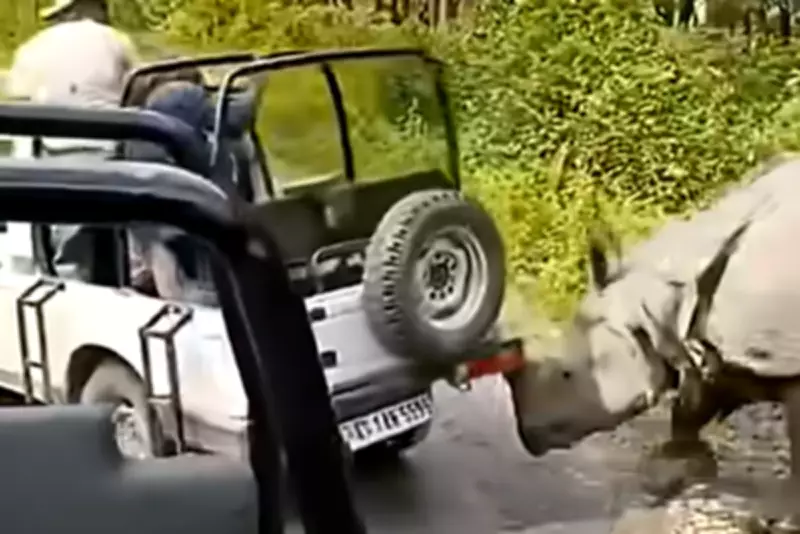
A dramatic wildlife encounter inside a national park in northeastern India has gone viral after a video captured a rhinoceros charging at a tourist jeep. The incident reportedly took place inside Manas National Park in Assam state during a routine jungle safari. The rhino suddenly moved towards the vehicle and began attacking it.
The video shows the animal repeatedly ramming the jeep with its horn, shaking it violently and leaving the passengers sounding terrified. So intense is the impact that the vehicle’s alloy rim is dislodged and thrown to the ground. At one point, the rhinoceros appears to try lifting or overturning the jeep. No injuries were reported, however.
In spite of the chaos, the driver manages to steer the jeep away from danger, earning praise from some people online and criticism from others. “The safari driver should have maintained a safe distance, and the people sitting in the jeep should also have asked him not to go so close,” one user wrote on X. “But everyone wants to get right on top of the rhino/tiger for videos and photos, so the rhino is simply reacting naturally. Unfortunately the poor animal doesn’t understand what a jeep is or why people are behaving this way. This kind of recklessness and insensitivity needs to stop.” Another wrote: “You're trespassing on their home and you want to defame them when they are tired of you?”

Wildlife specialists note that animals in protected reserves may react aggressively if they feel disturbed or threatened. Visitors on safaris are usually instructed to stay quiet, avoid sudden movements, and follow safety guidelines during close wildlife sightings. “I’m team Rhino! He’s only trying to protect his home. These safaris that cause nuisance to their natural peaceful habitat need to be banned,” one social media user wrote.
Manas National Park, a Unesco-recognised reserve, is known for a rich ecosystem and for housing endangered animal species like the Indian one-horned rhinoceros. The incident has reignited discussions about responsible tourism and the need for stricter protocols to ensure both visitor safety and animal welfare.