Asbestos has been found in children's sand kits sold online, a concerning investigation reveals. Experts from Which? have discovered two products sold on popular online marketplaces contain the harmful substance.
Products Found with Asbestos
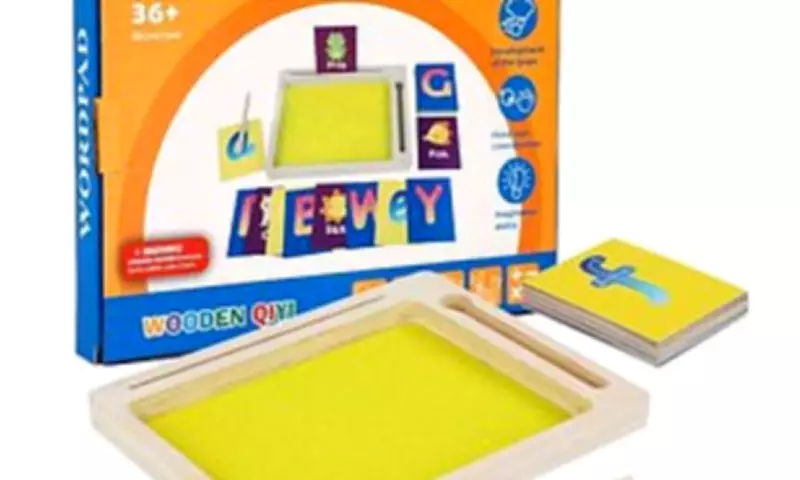
One toy, marketed as a 'Montessori sand art tray', was being sold on Amazon Marketplace and TikTok Shop. It is designed for hands-on learning to support fine motor skills by encouraging children to draw in the sand using the pencils provided or their fingers. However, testing revealed that the sand in the kit contained tremolite asbestos — a banned substance.
Researchers also found tremolite asbestos in the 'GL Style Sand Bottle Art Heart or Stars' set purchased from Asda. What appeared to be the same kit was also listed for sale on eBay from three private sellers.

Health Risks of Tremolite Asbestos
Tremolite asbestos is an incredibly harmful, naturally occurring mineral that can become airborne and cause severe lung diseases if inhaled, even at low levels of exposure. The International Agency for Research on Cancer has classified all forms of asbestos as carcinogenic to humans. Products containing asbestos in any quantity, including trace amounts, are prohibited for sale in the UK.
Recall Notices and School Closures
Since November 2025, more than 39 recall notices have been issued by the Office for Product Safety and Standards (OPSS) relating to asbestos-contaminated sand products. The issue has also led to the closure of schools and parks, most recently in north-east England. It is believed the affected toys contain sand sourced from specific quarries in China, where naturally occurring asbestos is present.
Call for Stronger Regulations
Which? said that toys contaminated with asbestos are only the latest example of dangerous products being sold through online marketplaces and warned that platforms continue to evade meaningful legal responsibility for products listed by third-party sellers. Sue Davies, Head of Consumer Rights Policy at the consumer champion, said: 'It is outrageous that online marketplaces are selling products which may expose children to asbestos, especially when some of these products had already been recalled by the OPSS. Seemingly innocent items like toys and craft kits can have serious health consequences if there are not proper checks to make sure they comply with safety laws.'
She added: 'The government has published proposals that would require online marketplaces to exercise due care in preventing, identifying and removing dangerous products sold through their platforms, an area where regulation is currently far too limited. Ministers now urgently need to introduce legislation that makes these duties sufficiently robust and properly enforceable. The longer the government delays taking action, the greater the risk that more dangerous products will reach consumers.'
Risk Assessment and Responses
According to information published by the UK Health Security Agency, the level of risk depends on the amount of asbestos fibres to which you are exposed, the duration of exposure and the way you are exposed – for example by inhaling or ingesting the fibres. The amount of asbestos found in play sand is likely to be low and children tend not to be exposed over long periods of time.
A spokesman for Amazon said it is in the process of removing all products in this category while it investigates further, while Asda said it issued a full product recall after being made aware of the findings. A representative for eBay said it removed the items identified by the investigation and is conducting further sweeps to identify similar listings, while TikTok said the product identified had already been removed from its shop.

Background on Asbestos
Asbestos is a heat-resistant mineral that was popular in building and construction until the 1980s until the dangers it posed became clear. As the material was cheap and resistant to fire, it was regularly used as insulation for buildings and electrical hotplate wiring. The first reports about the cancer-causing properties of asbestos first emerged in Germany in the late 1930s. However, it was not until the 1960s that serious diseases like mesothelioma were firmly established as being caused by asbestos exposure. The danger of asbestos comes from microscopic fibres which can tear off the material and fester in the body to cause cancer. Breathing in small amounts of the fibres does not cause any problems, but it is with larger quantities when health conditions occur. It is now banned in the UK, but it is allowed to remain in some buildings where it is in good condition and undisturbed.