Father's Journey Raising Autistic Sons: From Isolation to Community
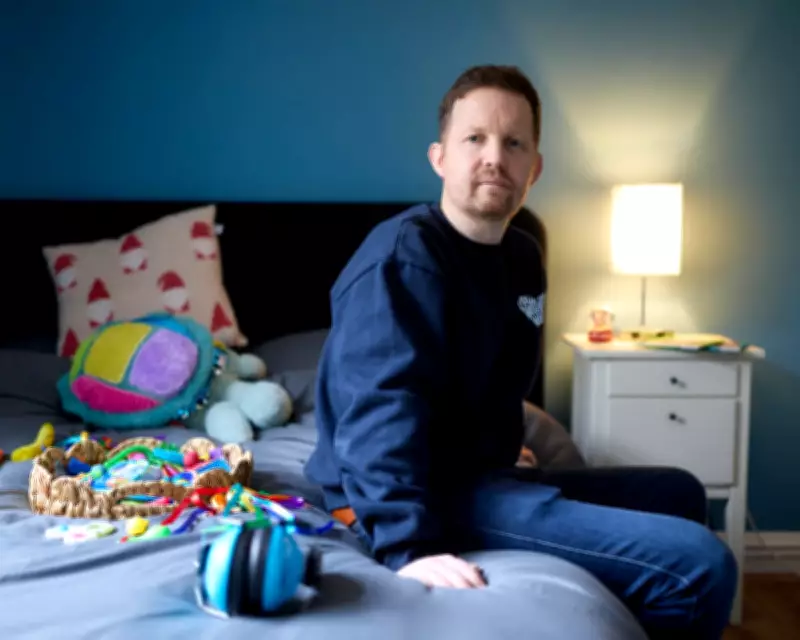
James Hunt, a father from Essex, has navigated an extraordinary parenting journey with his two autistic sons, Jude and Tommy. His story began with overwhelming isolation and has evolved into a mission to build community and support for families facing similar challenges.
The Overwhelming Early Years
When Hunt's eldest son Jude was diagnosed with autism at age two in 2009, he experienced what many parents describe as grief. "The future I'd imagined for Jude suddenly felt out of reach," he recalls. Compounding this emotional turmoil was the lack of guidance provided to him and his then-wife Charlotte—they received just a single leaflet and were essentially sent on their way without support.
Hunt found himself caring not only for his sons but also for his elderly father with Parkinson's and his mother with dementia. The constant demands created what he describes as "massively difficult parental challenges," including chronic sleep deprivation that would test anyone's resilience.

Finding Connection Through Sharing
The turning point came in 2015 when Hunt began blogging about his experiences. "I never imagined I'd be sharing my life like that," he admits. "When I started, it was because I felt I couldn't do my boys justice when talking to people."
His online presence grew dramatically, with his Stories About Autism accounts now boasting nearly 400,000 followers each on Facebook and Instagram. This digital community became a lifeline, helping him realize that his family wasn't alone in their struggles.
Navigating Complex Family Dynamics
When Tommy was born about three years after Jude, Hunt and Charlotte soon recognized their second son was also autistic. The family faced an unexpected and heartbreaking challenge: the boys' sensory sensitivities and behaviors made it increasingly difficult for them to coexist peacefully.
"It was incredibly scary," Hunt remembers. "It goes against every instinct you have as a parent. Already you're living a life that's not quite matching up to your expectations of parenthood, and then you're starting to think about splitting your boys up."
The constant meltdowns and tension eventually contributed to Hunt and Charlotte's separation and divorce. Ironically, this difficult transition provided an unexpected solution—the boys could now alternate between their parents' homes, reducing the overwhelming sensory overload they experienced when living together constantly.
Building Bridges and Finding Joy
Today, Hunt and his ex-wife have developed an unusual but effective co-parenting arrangement, living directly opposite each other and maintaining what Hunt describes as "happily blended lives." The boys now attend the same specialist school and have begun building a brotherly relationship that once seemed impossible.
"They went on a tandem bike together yesterday," Hunt shares with evident pride. "Big smiles, lots of laughing. We've been working on that relationship for years: 'I can have my brother next to me and I can still have fun. And the world is still OK.'"
Communication Breakthroughs
While Jude is nonspeaking, he communicates powerfully through his intense love of music. "Music unlocks something and shows how much is really going on inside," Hunt observes. Tommy, now 14, has developed a facility with written language and regularly communicates with his parents via WhatsApp—a development Hunt describes as "massively life-changing."
Creating Community Through Business
Hunt has channeled his experiences into SAA Clothing, a business specializing in sensory-friendly apparel with autism-positive messages. The shop in Burnham-on-Crouch includes a sensory room and has become a community hub where families can connect and share experiences.
"When people come in, they're usually there for at least half an hour," Hunt explains. "Often it's the only place that their kids have ever allowed them to have a conversation, because they can go and chill out in the sensory room."

From Isolation to Belonging
Hunt's journey from feeling completely alone to building community reflects a broader transformation in how society understands and supports neurodiverse families. His recently published book, Love Needs No Words, offers a bracingly honest account of his family's experiences, avoiding simplistic narratives about autism as a "superpower" in favor of raw, relatable human stories.
"The idea behind the whole thing has always been to help people feel less alone," Hunt emphasizes. "When I see someone wearing one of our shirts, it creates connection. Even if it's just a hello, it makes you feel like, 'Oh, there's another family like us.'"
He concludes with a revelation that still seems fresh to him: "That's the thing, isn't it? There are a lot of us out there."