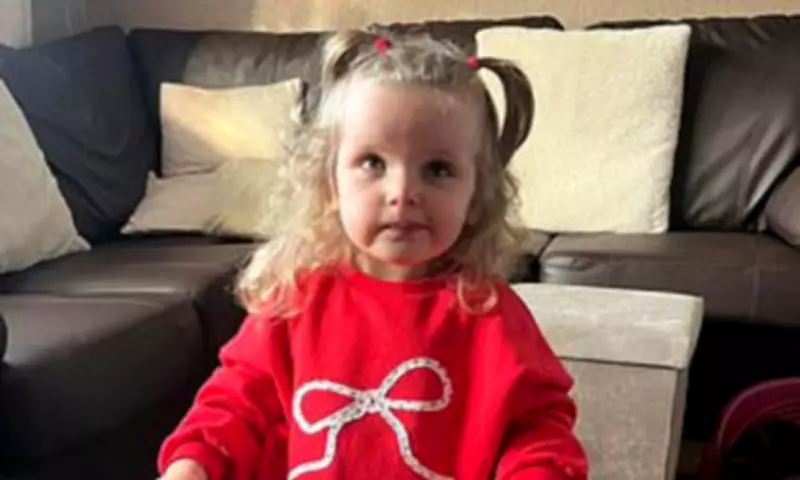
A young mother was left terrified when her six-month-old baby girl suddenly began experiencing seizures. Ellie Richards, 22, took her daughter Minnie Mae to a GP, who initially suspected a genetic disorder. However, further tests revealed that the child was born with an exceptionally rare condition affecting fewer than 500 people worldwide, with only 52 recorded cases in the United Kingdom.
Diagnosis and Impact
Minnie Mae, now three years old, was diagnosed with haploinsufficiency syndrome, described as a 'profoundly challenging neurodevelopmental disorder.' The condition impacts the toddler's brain, muscles, sleep, and digestion. At 13 months, she was also diagnosed with epilepsy and suffers from a weakened immune system, hypotonia (decreased muscle tone), and speech and mobility issues. In other cases, haploinsufficiency syndrome can lead to autism, visual impairment, severe or chronic sleeping difficulties, and gastrointestinal problems.
Ms Richards was initially told to 'prepare for the possibility' that her daughter might never walk or talk. Currently, Minnie Mae cannot walk independently, is completely non-verbal, and requires round-the-clock care. The mother has now revealed the profound impact of the diagnosis and set up a GoFundMe page to support the MEF2C Foundation, which aids children with this rare condition.

The Genetic Basis
MEF2C (Myocyte Enhancer Factor 2C) is a gene that acts as the body's 'master conductor,' controlling the activation and deactivation of other genes during development. It is critical for the growth and function of brain, muscle, immune, and heart cells. The condition occurs when one copy of the MEF2C gene is deleted or mutated, leading to dysfunction of the MEF2C protein. In Minnie Mae's case, the gene was deleted, resulting in only half the necessary protein being produced.
Ms Richards explained that the condition has affected 'every aspect' of her daughter's life, causing serious developmental challenges. There is currently no treatment available. She told the Daily Mail: 'Her first seizure was very scary. I had heard of epilepsy before but to see one in person was a really hard day for us. She kept having more, sometimes one every month or two, sometimes two or three a month, and they were getting worse. They usually happen when she feels poorly.'
Developmental Milestones
Minnie Mae first sat up at nine months old, but she 'wasn't able to do anything else,' according to her mother. She could not crawl, stand, or perform basic tasks that other children her age could. Now, she can crawl and walk with a frame. In January, she took her first independent steps, a moment of immense joy for the family. 'We could not believe it and we were so proud, we all cried with tears of joy. She has not done it since but it gives us hope,' Ms Richards said.
Despite the challenges, Ms Richards describes her daughter as a 'delightful, happy little girl with such determination.' She needs 24/7 care, cannot feed or bathe herself, and requires constant supervision due to the risk of seizures. 'This means I'm very anxious 24/7. I worry myself a lot so I'm there all the time in case she has a seizure. Some days are more difficult than others but it's very frustrating not being able to help,' she added.
Raising Awareness
On June 20, Minnie Mae's family and friends, around 40 people, will participate in a sponsored run for the MEF2C Foundation. Ms Richards has already raised nearly £1,200 through her GoFundMe page. 'We want to raise more awareness of her rare condition and do it for my daughter,' she said. The fundraising page states that since the condition is so rare, its full effects are still unknown, and severity can only be determined later in life. Donations will support research into rare genetic conditions affecting the MEF2C gene.