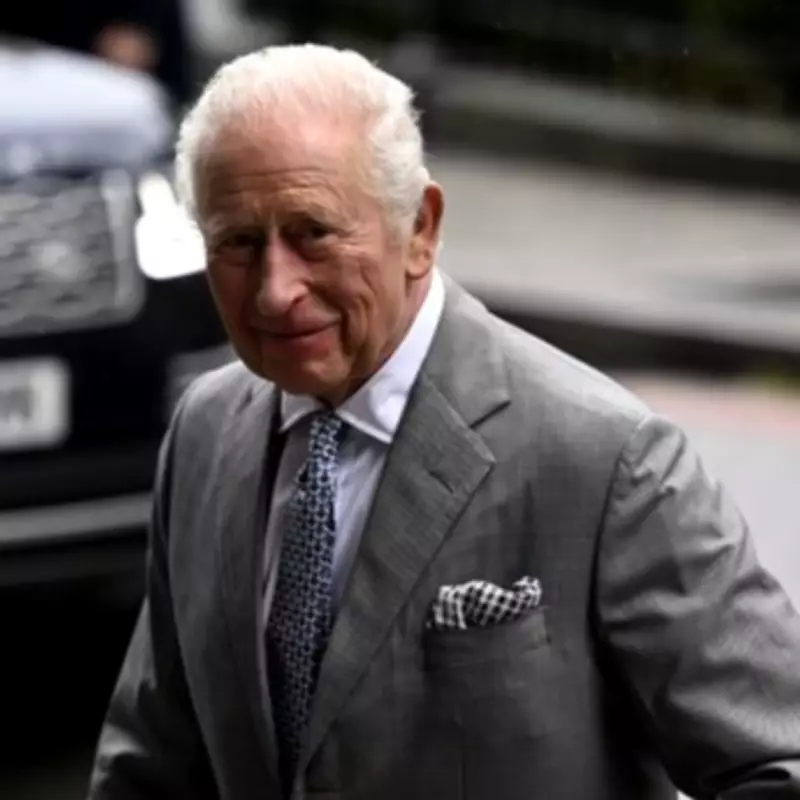
King Charles tried his hand at operating a revolutionary surgical robot during a visit to the cancer centre at Guy's Hospital in London, where he also spoke with chemotherapy patients and unveiled a plaque marking the hospital's 300th anniversary.
Robot Demonstration
The monarch was given a step-by-step presentation of the new fifth-generation Da Vinci Surgical System, which enables smaller and more precise incisions during bladder surgery. The robot, in the final stages of NHS approval, will help reduce patient operating and recovery time due to its immense precision.
After meeting Professor Ben Challacombe, Consultant Urological Surgeon, the King sat on a stool and looked through a headset to control robotic hands on an operating table. On display was a model of the internal bladder with a five-pound note placed inside. Professor Challacombe explained the robot's precision, noting that it can zoom in to see details invisible to the human eye.

Struggling at first, the King said, "I think I'll have to come back after some more training." He later called the robot a "marvellous invention." The Da Vinci series has been used on 15,000 patients at the hospital over 20 years and two million worldwide.
Meeting Cancer Patients
In the hospital's Chemotherapy Village, the King met patients undergoing treatment. Raymond Burgess, 69, from South London, told the King his chemotherapy had left him unable to taste certain foods, except lemons and limes. The King replied, "Doesn't help with eating!"
Another patient, who wished to remain anonymous, told Charles she brought her laptop to work while wearing a cold cap for breast cancer chemotherapy. The monarch said, "That's extraordinary. Very brave. I wish you all the best."
Innovation Hub Visit
The visit was part of Guy's Hospital's 300th anniversary celebrations. Scientists from King's College, including data scientists and geneticists, work within the Innovation Hub to embed cutting-edge cancer research and clinical trials into patient care. The King toured the lab where AI is used to analyse datasets, helping discover trends, improve diagnoses, and detect drug targets.
One doctor showed the King results organised by AI program Pharos in under an hour instead of a full day. The monarch, Royal Patron of King's College London, met senior leadership, academics, and PhD students pushing cancer research boundaries.
Research Highlights
Professor Sheeba Irshad explained a new immunotherapy treatment for breast cancers resistant to traditional therapies. Professor Anita Grigoriadis, founder of Pharos AI, discussed using AI to guide drug discovery and the hub's impact on industry and the economy.
On leaving, Charles greeted over 150 patients and staff in the lobby, shaking hands and wishing them well with their treatment.
Professor Sheila Singh said, "Innovation really is the key word; King's is leading the way in rethinking how we treat cancers, putting patients at the centre of everything we do."
The visit was commemorated with a plaque unveiled by the King in the Cancer Centre's entrance lobby.