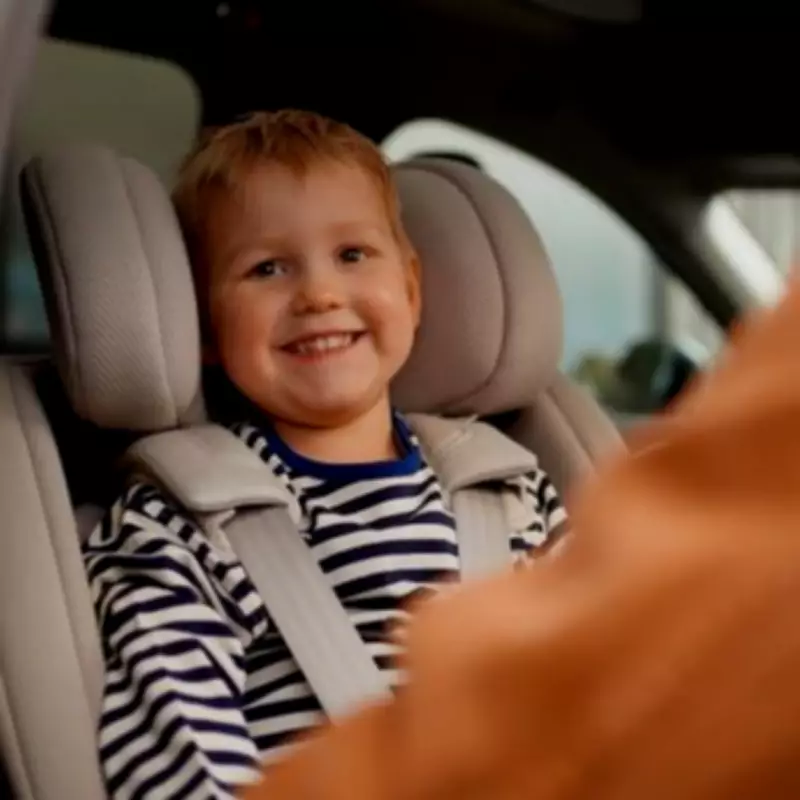
Car Seat Safety Expert Shares Vital Guidelines for Protecting Children
Kat Gemmell, a seasoned car seat safety expert with over 16 years of experience in the field, has issued a crucial warning to parents regarding child travel safety. As the professional overseeing car seat development at Silver Cross, Gemmell collaborates closely with design and development teams to uphold rigorous crash-test standards and ensure products meet real customer needs. In a detailed briefing, she emphasizes that while UK regulations provide a framework, additional factors are essential to keep children secure during journeys.
Understanding Legal Requirements and the Five-Step Test
Current UK legislation mandates that all children must use a car seat until they reach either twelve years of age or a height of one hundred and thirty-five centimetres, whichever occurs first. For parents uncertain about when their child can transition out of a car seat, Gemmell recommends a practical five-step assessment. She explains, "First, the child should be over 135cm tall, with their back and bottom fully against the backrest, and knees able to bend fully over the seat edge. If not, slouching could lead to submarining under the seat belt in an accident."
Additionally, the lap belt must sit at the pelvis, and the shoulder belt should cross the collarbone. Meeting these criteria indicates that a car seat is no longer necessary, ensuring compliance with safety standards.

The Debate Over Rear-Facing Versus Forward-Facing Seats
Another contentious topic among parents is the choice between rear-facing and forward-facing car seats. Legally, children in the UK must remain in a rear-facing seat until at least fifteen months old. After this age, the decision rests with parents, but Gemmell strongly advocates for keeping children rear-facing for as long as possible. She notes, "This orientation is safer in the event of a car accident, as it better protects against severe injuries."
Gemmell highlights the popularity of rear-facing seats in Sweden, where many aim to pass the stringent Swedish Plus Test. This voluntary test, one of the hardest globally, evaluates car seats under high-speed conditions with short braking distances, ensuring they prevent life-threatening injuries. In the UK, demand for Swedish Plus Test-approved seats is rising, reflecting growing parental awareness of enhanced safety measures.
Avoiding Second-Hand Car Seats and Common Installation Errors
Gemmell urgently advises against purchasing second-hand car seats due to significant risks. She warns, "There's no way to know if a used seat has been in an accident, which could compromise its effectiveness and endanger your child." Moreover, second-hand seats often lack proper instructions for installation and use, and they may not meet updated UK safety regulations, which are frequently revised.
She also identifies two common mistakes parents make when securing children in car seats. First, leaving bulky coats on can prevent proper harness tightening, increasing ejection risk in crashes as the coat compresses. Second, failing to tighten the harness adequately is a frequent error. Gemmell suggests the pinch test: after strapping the child in, attempt to pinch the harness straps; if possible, the harness is too loose and needs adjustment.
Guidelines for Newborn Travel and Breaks
For newborn babies, Gemmell recommends taking breaks from car seats every two hours during journeys. She clarifies, "This is general guidance, as minimal research exists on the topic, but it's crucial for safety and comfort." On longer trips, regular breaks are essential, especially for sleep-deprived parents, and newborns typically require feeds, nappy changes, and cuddles within this timeframe. The Highway Code supports this by advising drivers to stop for at least fifteen minutes every two hours, promoting both child well-being and road safety.
By following these five key tips—adhering to legal standards, using the five-step test, prioritizing rear-facing seats, avoiding second-hand purchases, and ensuring proper harness use—parents can significantly enhance their children's safety during travel. Gemmell's expertise underscores the importance of vigilance beyond basic regulations to protect young passengers effectively.