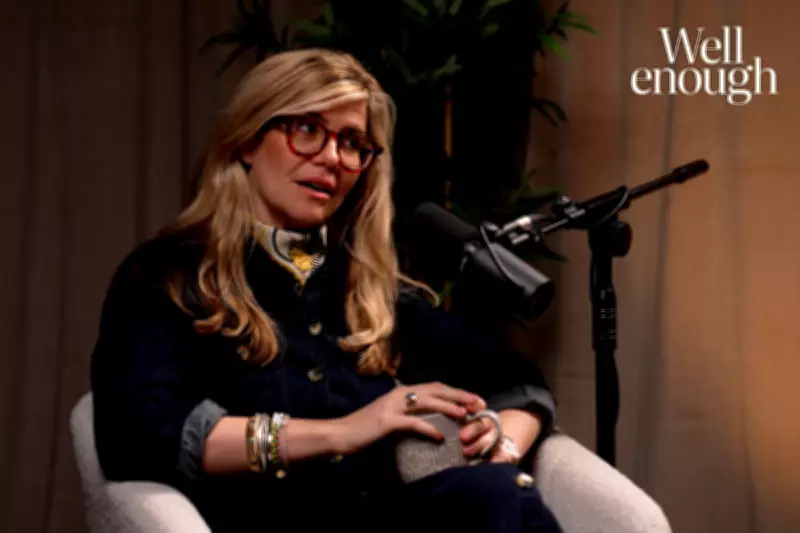
Emma Barnett Rejects Toxic Positivity: Motherhood Is Like Military Service
Award-winning broadcaster and journalist Emma Barnett is launching a direct assault on what she calls the "toxic positivity" surrounding motherhood. The host of Radio 4's Women's Hour and BBC presenter argues that the common advice to new mothers to "enjoy every minute" is not just unhelpful but fundamentally dishonest about the reality of becoming a parent.
From Maternity Leave to Maternity Service
Barnett, 41, is reframing the entire concept of maternity leave, proposing instead the term "maternity service." This linguistic shift is central to her new book, Maternity Service, which emerged from her reflections during what she describes as her "second tour of duty" after the birth of her second child.
"The word 'service' is more accurate," Barnett explains. "It speaks to the love, the repetitiveness, the digging deep that you need to do. I found it extraordinary to become a mother, to create another human with the person I love, but everything about my identity shifted. I was groping around for language to describe it."

The Military Metaphor of Motherhood
Barnett's military terminology extends throughout her analysis. She describes her own experience of watching "the hands of the kitchen clock go round, because there was nothing to do. It was bloody awful." The metaphor encompasses what she calls maternity "uniforms"—loose dresses during seven rounds of IVF when her body was bruised from daily injections, followed by stretchy black polo necks postpartum that she selected "for their forgiveness on a body in flux and healing."
When Barnett uses the word "duty," she evokes every layer: commitment, dedication, and honour, but equally the sacrifice, pain, injury, grit, and frustration. "There's a lot of parenthood, specifically motherhood, which is deadening," she states bluntly. "First off, there's no other job in the world that you go into injured. Most women enter that line of duty, that new world, while also needing to heal."
The Physical Battle of Birth and Recovery
Barnett's own healing journey was particularly dramatic. After delivering both children via cesarean section, she has strong words for those who suggest some women choose c-sections as an "easy" alternative: "F*** you. It's stomach surgery. It's the hardest thing I've ever done."
Her recovery involved complications with her bladder, catheter issues, and discovering she had a hypertonic pelvic floor. "I had no idea what a hypertonic pelvic floor was; I didn't even know that was something that could happen," she reveals. "Everyone told me that I wouldn't be able to jump on a trampoline; no one even mentioned that it can go the other way and be too tight instead."
The Return to Work and Identity Crisis
Barnett returned to presenting Andrew Marr's program on BBC 1 just three months after her son's birth, a transition she describes as anything but smooth. "I felt like I couldn't breathe. I was so anxious to make sure we got the program right, but I was still breastfeeding, I couldn't relax. I didn't understand what was going on."
Despite her long fight to become pregnant through IVF, the actual experience of motherhood took her completely by surprise. "I don't like to engage with something until I have to," Barnett admits, recalling how her husband begged her to unpack the pram before bringing their baby home from hospital. What awaited her was "a tectonic shift"—amazing love for her children coupled with bewildering new anxiety, isolation, boredom, and a massive sense of loss for her former identity.
Matrescence: The Missing Vocabulary
Barnett found some comfort in discovering the term "matrescence," coined by anthropologist Dana Raphael in the 1970s. Raphael argues that becoming a mother represents as drastic a life phase as puberty, complete with brain and hormonal changes, and a full-scale death and rebirth of identity.
"These ideas are quite regular to talk about now," Barnett notes. "We now know that your brain changes when you become a mother. It changes in fathers, too, but it seismically changes for mothers, so that you can care and become a carer. But this was back in 2018" when frank conversations about maternity were more of a "niche interest sport."

Rejecting the Silence Around Motherhood's Realities
Barnett is characteristically blunt about those who might argue that too much honesty about motherhood could discourage women from having children. "That's utter bollocks," she declares. "We know women and men are not having children, and it ain't nothing to do with honesty memoirs, it's to do with the realities of living in a worse-off situation than your parents for the first time in a generation. It's not because women like me have decided to tell certain things as they are."
Her mission is clear: to provide the vocabulary and framework that she herself lacked during her transition to motherhood, ensuring that other women don't feel as isolated and confused as she did in those first weeks, months, and years of what she now calls her maternity service.