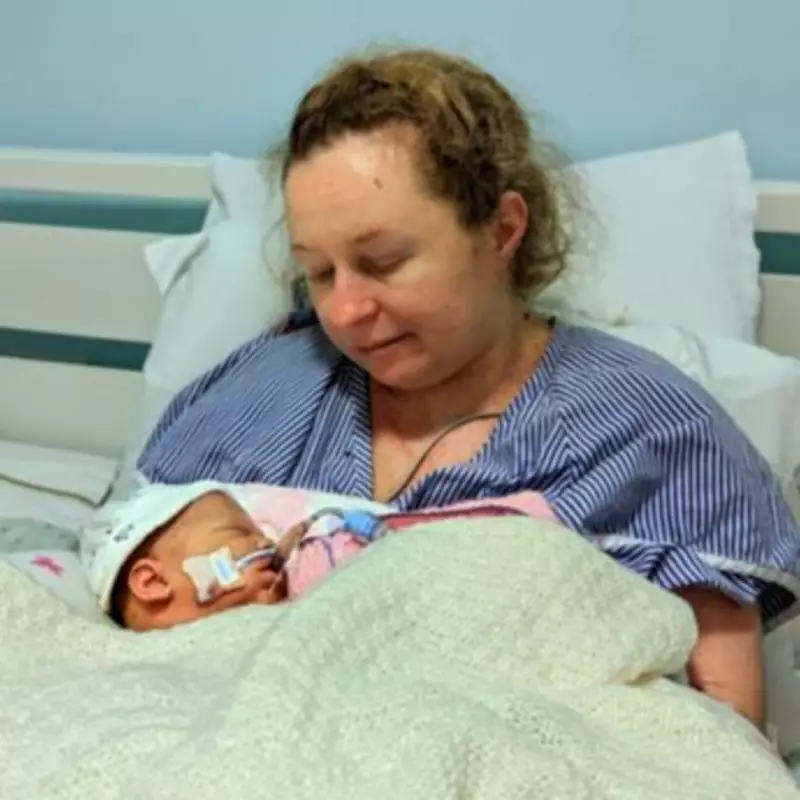
Midwives Dismissed Internal Bleeding as Panic Attack, Leading to Baby's Death
A national investigation into maternal and infant mortality has uncovered shocking cases of substandard NHS care, with one tragic story revealing how midwives misdiagnosed a life-threatening condition as a mere panic attack.
Katie Fowler's Harrowing Ordeal
Katie Fowler, now 39 years old, was in labour in January 2022 when she began experiencing severe symptoms. Midwives who assessed her condition solely over the telephone failed to recognize the warning signs of massive internal bleeding. Instead, they concluded she might be having a "panic attack" and advised her to remain at home.
Eventually, Katie and her husband Rob Miller took a taxi to the Royal Sussex County Hospital in Brighton, which is operated by University Hospitals Sussex NHS Trust. This trust is among those examined in the national maternity investigation. As the taxi arrived at the hospital, Katie suffered a cardiac arrest right outside the entrance.

Surgeons were forced to perform a dramatic emergency Caesarean section in the hospital lobby in a desperate attempt to save her life. Her newborn daughter, Abigail Fowler Miller, required immediate resuscitation on waiting room chairs.
The Devastating Outcome
Katie was placed in an induced coma and awoke nearly two days later to the heartbreaking news that her daughter had sustained unsurvivable injuries. Abigail passed away in her parents' arms later that same day, at just 48 hours old.
"The last thing I remember is getting into the taxi to go to hospital and thinking I would be bringing home my baby girl," Katie recounted. "Instead I was woken up and told she was dying. It was the worst moment of my life."
A subsequent inquest determined that Abigail would have survived if her mother had been admitted to the hospital earlier. Katie believes that maternity staff are often too overstretched to treat patients as individuals.
"You don't listen to someone when you just see them as a bed number," she explained. "When I speak to other parents who have been through this, the cruelty of some of the comments made by staff is something that comes up again and again. The lack of compassion compounds your grief."
National Investigation Findings
The national maternity probe, chaired by Baroness Valerie Amos, has identified six persistent factors contributing to poor NHS care, despite numerous previous inquiries into maternity scandals over the past decade. Baroness Amos's team has engaged with over 400 affected individuals and gathered input from more than 8,000 people, including mothers, relatives, and NHS staff.
"It is clear from the meetings and conversations I have had with hundreds of women, families and staff members across the country, that maternity and neonatal services in England are failing too many women, babies, families and staff," Baroness Amos stated.
The interim findings from the National Maternity and Neonatal Investigation are being released as Baroness Amos prepares a series of national recommendations to enhance maternity and neonatal services. However, some families argue that the investigation lacks sufficient authority and are calling for a full statutory public inquiry.
Calls for Systemic Change
Katie expressed feeling "frustrated and disappointed" that the interim report has not pinpointed the underlying reasons for the struggles within maternity services.
"There's a lot of stuff we already knew about issues with workforce and leadership, but there is nothing in this report which explains what is causing mums and babies to be harmed on the scale that they are," she said. "Change is urgent and necessary but we are not any closer to that yet."
She contends that only a public inquiry, which would legally obligate trusts to disclose information, can truly uncover the root causes of these failures. "This is a scandal and it should be treated as one," she added.

In her foreword to the interim report, Baroness Amos emphasized the investigation's unique scope: "I have been asked many times during the course of this investigation what makes it different to those investigations and reviews that have gone before. The answer is that this investigation is national in scope and takes a whole system view... I see it as my purpose to understand the context and identify the urgent systemic issues that must be addressed."
Institutional Response and Future Steps
Wes Streeting is set to chair a new National Maternity and Neonatal Taskforce in the New Year, which will be responsible for implementing the forthcoming recommendations.
Emma Chambers, director of midwifery at UHSussex, offered condolences: "We extend our deepest condolences to Ms Fowler and Mr Miller, and their wider families - we understand the loss of their daughter has been absolutely heartbreaking. We are all so sorry for their loss."
She also noted improvements since Abigail's death: "Since the death of Abigail, we have made several improvements to the way we triage our mums, and we are monitoring how effective these changes are very closely. The Maternity Team at UHSussex works hard to provide the best care to all of the families who use our service, and we are always seeking to improve wherever we can."