The Rise of the 'Mommune': Single Mothers Worldwide Embrace Co-Parenting
Across the globe, an increasing number of single mothers are rejecting traditional nuclear family structures and instead forming co-parenting communities. These innovative arrangements provide financial relief, emotional support, and practical childcare assistance while creating new definitions of family in the modern era.
Sisters Creating a New Family Dynamic
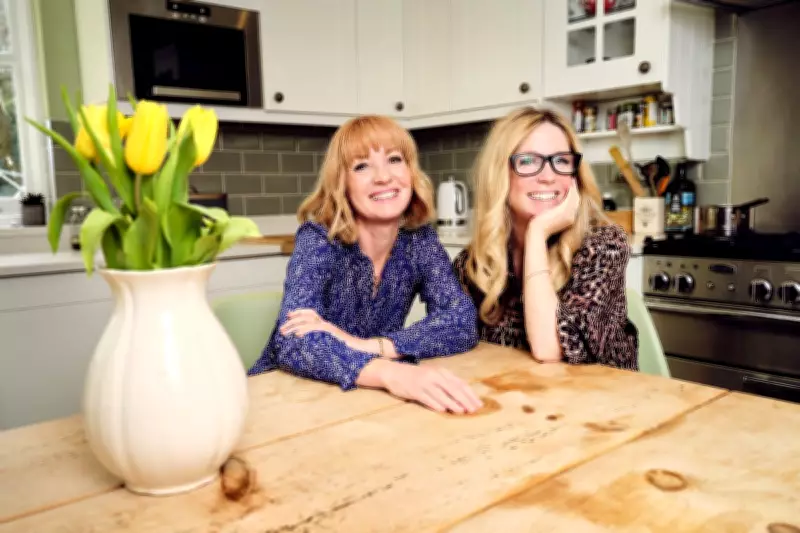
In the United Kingdom, sisters Lauretta and Sharon Gavin have been cohabiting and co-parenting for twelve years. What began as a necessity when Sharon was navigating divorce while struggling with an autoimmune disease has evolved into a thriving family unit. Lauretta explains, "She needed somewhere to live, she was very unwell and she had a small baby; she moved in with me so that I could help her and look after her."
As Sharon's health improved, the sisters discovered unexpected benefits to their arrangement. Financially, sharing expenses has been hugely advantageous, while their children have developed strong sibling bonds despite being cousins. The sisters also appreciate having another adult to consult about parenting decisions.

"It got better and better and better," Sharon reflects. "We have such a lovely home, and the kids are so much fun. It became this really lovely family unit." She notes that their sister relationship creates a low-conflict home without the complications that can arise in romantic partnerships.
A Global Movement Gaining Momentum
This phenomenon extends far beyond the UK. In China, where divorce rates have more than tripled since 2000, social media platforms are seeing increasing numbers of single mothers seeking like-minded parents to share living arrangements. With an estimated 30 million single mothers in China who receive custody in approximately 80% of family breakdowns, women are actively seeking alternative support networks.
One social media post captures this sentiment perfectly: "I'm hoping to find another single mom to share an apartment with, so we can take care of each other. Those raising kids alone know how tough it is; sometimes you're so busy you barely have time to eat."
Jiang Mengyue, 31, now lives with her three-year-old daughter alongside another single mother and daughter pairing after responding to a social media advertisement. She praises the arrangement for its simplicity compared to marriage, echoing the Gavin sisters' experiences.
Formal Services Facilitating Connections
In the United States, specialized services have emerged to facilitate these connections. CoAbode, a housesharing service that matches single mothers wanting to combine households, addresses growing economic pressures. With single-earner households with children more than doubling in the US and housing costs increasing by over 1,000% since 1970, such services provide practical solutions.
Heather and Carrie in Florida met through CoAbode and now share a home with their children. "It's a match made in heaven for us," Heather says. "Emotionally, it's been great to have someone that's going through the same experience that you are... We sit up at night after the kids fall asleep and laugh and joke about some of the trials and tribulations we go through, and don't feel so alone."
Shawn in Washington DC highlights additional benefits after moving in with Darcie: "Because our sons are both only children, it's been good for them to have brotherly attention and learn that they are not the centre of the universe." The practical co-parenting assistance has also reduced stress for both women.
Building Informal Support Networks
Beyond formal cohabitation arrangements, many single parents are creating informal support communities. Brooke Maddison, a writer and editor in Brisbane, Australia, developed an organic network after her separation when her son was six. "We built up this informal community before we realised what we were doing," she explains.

This community provides both scheduled and ad hoc support, from school pickups and shared meals to grocery shopping assistance and group holidays. Brooke emphasizes the emotional benefits: "Sometimes it's just having someone to talk to – if you need to call someone in the middle of the night, or if you've had a really tough day with the kids and need to vent."
Redefining Family Structures
Brooke argues that society needs to expand its understanding of what constitutes a family. "Broadly in society, that is still the expectation of how people live; we don't see alternatives modelled that much," she observes. "But I think things are changing."
This shift is reflected in emerging fertility networks like Pollen Tree, CoParents.co.uk, and The CoParenting Agency, which match prospective platonic co-parents. Meanwhile, Modamily connects people specifically seeking to start families through purposeful partnerships.
The statistics support this evolving landscape. In the UK, approximately one in four families with dependent children – totaling two million households – are headed by single parents, with 89% of these being single-mother families according to charity Gingerbread.
Lauretta Gavin suggests society has overemphasized romantic love in child-rearing contexts. "There's so much focus on, 'you need to find the one'," she notes. "There's not enough attention on the love of a friendship, particularly female friendship. That love is often dismissed or undervalued – but it's just as powerful."
As traditional family structures continue to evolve, these co-parenting communities demonstrate that supportive, loving environments for children can take many forms beyond the conventional nuclear family model.