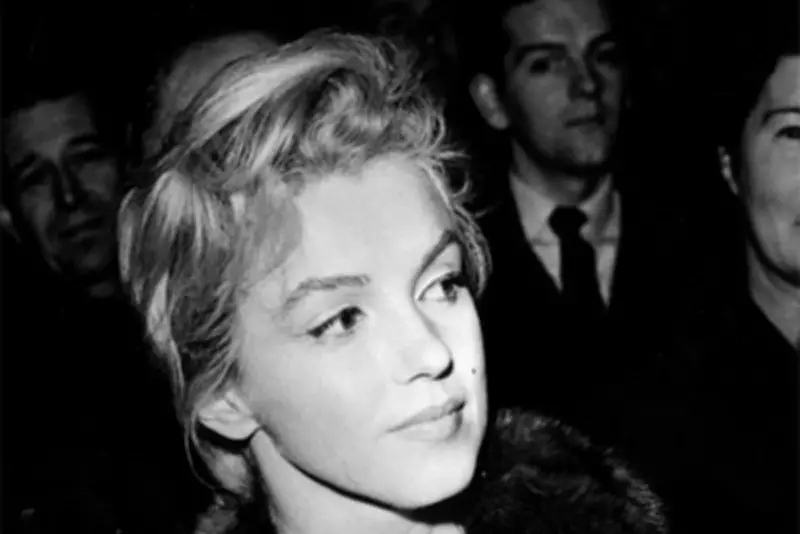
Next month marks 100 years since the birth of Marilyn Monroe, celebrated by a major exhibition at the National Portrait Gallery, a BFI film season, and several new books, including Andrew Wilson's I Wanna Be Loved By You – Marilyn Monroe, A Life in 100 Takes. This biography highlights an often-overlooked aspect of her life: her advocacy for mental health. Now, this legacy is honoured with the new Marilyn Monroe Mental Health for the Arts Program at Mount Sinai Hospital in New York, funded by a $100,000 donation from Lori Hall.
Marilyn's Personal Struggle with Mental Health
Monroe's interest in mental health was deeply personal. Her maternal grandfather, Otis, died of general paresis from syphilis in an institution. Her grandmother, Della, suffered manic-depressive psychosis and attempted to smother baby Marilyn, later dying in a state hospital. Her mother, Gladys, diagnosed with schizophrenia, placed Marilyn in foster care 12 days after birth. For years, Marilyn feared she inherited their illnesses. 'For a long time I was scared I'd find out that I was like my mother and end up in the crazy house,' she said.
Childhood Trauma and Its Aftermath
At age eight, Marilyn was sexually abused by a boarder in her foster home. Experts later linked this trauma to her emotional difficulties. 'The result is a child in a woman's body,' observed a 1986 article. This trauma also fueled her dependence on drugs, initially for endometriosis but later to ease psychological distress. After her three marriages and numerous affairs, she relied heavily on prescription medication.

Unpublished Letters from Her Therapist
In unpublished letters, Dr Ralph Greenson, her last psychoanalyst, wrote that her dependence on sleeping pills 'was her way of escaping the miseries of life.' He concluded, 'Marilyn was a bottomless well: one could not fill her, with all the deep, deep holes her lack of family had left her with.' Marilyn sought analysis from 1951, encouraged by Lee Strasberg. In 1956, she underwent therapy with Anna Freud in London, who diagnosed her with 'emotional instability, exaggerated impulsiveness, tendency to depression, paranoid with schizophrenic elements.' Another doctor believed she had bipolar disorder.
Unconventional Treatment and Final Days
From 1960, Dr Greenson saw Marilyn daily, sometimes encouraging socialisation with his family. By December 1961, he described her as a 'borderline paranoid addict,' so concerned he placed nurses to watch her. In her last two months, she was prescribed 830 units of medication. On 4 August 1962, she died from an overdose of Nembutal and chloral hydrate, ruled probable suicide but also considered accidental or murder. Dr Greenson wrote to Anna Freud, 'I could not defeat all the destructive forces stirred up in her.'
A Modern Legacy
Despite being written off as a 'dumb blonde,' Monroe spoke out about mental health and childhood sexual abuse while in the studio system. In 1959, she asked her lawyer to investigate psychiatric organisations for children, planning a foundation. Though unfulfilled in her lifetime, she left a quarter of her estate to Dr Marianne Kris, who left it to the Anna Freud Centre. As we remember her talents, it's time to acknowledge this legacy. 'I can think of no better way to celebrate her 100th birthday than by fulfilling this wish,' says Lori Hall.