Moral Injury: The Hidden Psychological Crisis Affecting Millions in America
Moral injury occurs when an individual is compelled to act or witness actions that starkly contradict their deepest ethical convictions. This psychological harm, often mistaken for depression, manifests as profound sadness or a sense of being a bad person. It can stem from a single catastrophic event, such as participating in an unjust armed conflict, or accumulate gradually through ongoing moral distress, as reported by workers in environments like slaughterhouses or prisons.
Clinical Recognition and Definition
In a significant development, the American Psychiatric Association's Diagnostic and Statistical Manual of Mental Disorders (DSM) now formally acknowledges moral injury under a 'moral problems' classification. This inclusion marks a pivotal shift toward integrating moral and existential dimensions of harm into clinical frameworks, as highlighted by Michael Valdovinos, a former US military psychologist.
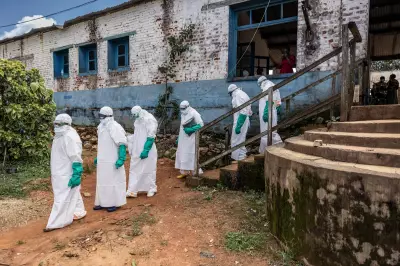
Valdovinos, in his new book Moral Injury: When Good Conscience Suffers in a World of Hurt, notes that this 'unique kind of stress' overwhelmed healthcare professionals during the Covid-19 pandemic, who felt they betrayed their oath to do no harm. He also shares his personal crisis of conscience while deployed in Afghanistan, illustrating the condition's profound impact.

Beyond the Battlefield: Widespread Causes
"The military helped us recognize moral injury, but the psychological mechanisms obviously aren't unique to war," Valdovinos explains. "Anytime people repeatedly participate in or witness actions that violate their moral framework and they feel unable to change it, you create the conditions for moral injury."
He points to the volatile political climate in the United States as a major contributor, leaving more citizens in moral distress than ever before. However, Valdovinos emphasizes that healing often lies in community support and open dialogue.
Personal Experience and Professional Insights
Reflecting on his deployment, Valdovinos describes a moment of intense emotional breakdown triggered by seeing a farm near his base, which reminded him of his family in Mexico. "I just started bawling," he recalls. "I had no idea at the time it was moral injury. I thought it was sadness." This personal encounter led him to research the concept, despite its then-limited formal recognition.
Historically, the military was hesitant to formalize moral injury due to potential implications for benefits and evaluations. However, Valdovinos notes that awareness has grown, with mental health circles now acknowledging its role in conflicts like Vietnam, Iraq, and Afghanistan.
Societal Impact and Prevalence
Moral injury extends beyond the military and politics into various sectors. Jobs involving harmful actions or enabling such behaviors, such as in slaughterhouses, social work, or corporate leadership, carry high risks. Valdovinos identifies two groups: those who carry out harmful actions and those who authorize or enable them, both susceptible to conscience-based shame and guilt.
While national prevalence data is lacking, Valdovinos estimates that 3 to 7% of US adults may experience clinical symptoms of moral injury annually, equating to approximately 7 to 18 million people. This underscores the condition's significant, yet often overlooked, public health impact.
Pathways to Healing and Community Role
Healing from moral injury involves confronting painful emotions rather than hiding them. "The best science tells us right now that that is part of the repair," Valdovinos states. Seeking support in trusted communities can foster healing, as shared experiences help individuals realize they are not alone or inherently bad.
Valdovinos advises engaging with others through questions rather than judgments, establishing psychological safety. This approach is crucial, as fear of exclusion from social groups can exacerbate distress.

Political Dimensions and Collective Trauma
In discussing collective moral injury, Valdovinos references societal shifts like the promotion of greed in public life, though he avoids naming specific political figures to maintain inclusivity. He observes that many patients, including older adults with long memories of institutional norms, are experiencing moral distress due to repeated violations of ethical expectations.
"The more that folks in these circles have a disconnection between the way they see themselves and their values and what they thought their party was, the more moral injury arises," he explains. This dissonance is prompting widespread reevaluation of moral compasses across the political spectrum.
Conclusion and Future Directions
As moral injury gains formal recognition, research and clinical pathways are evolving. Valdovinos's work highlights the urgent need for greater awareness and supportive interventions. By fostering open conversations and community connections, individuals can navigate this complex psychological terrain, finding solace in shared humanity amid ethical conflicts.