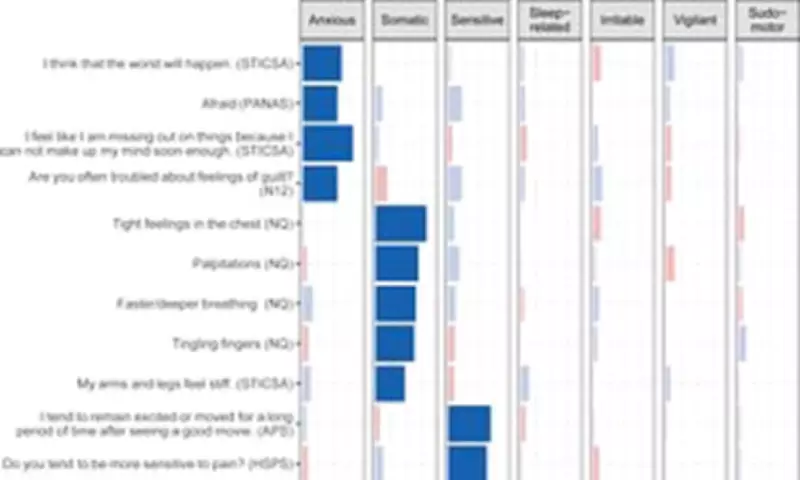
Most individuals encounter periods of stress in their daily lives, but a groundbreaking new study has revealed that hyperarousal—the feeling of tension—can be categorised into seven distinct subgroups. Researchers from the Netherlands Institute for Neuroscience have identified these types as anxious, somatic, sensitive, sleep-related, irritable, vigilant, and sudomotor, each with unique characteristics and symptoms.
Understanding the Seven Dimensions of Hyperarousal
In their study, published in the journal EClinicalMedicine, the team collected data from 467 adults who completed questionnaires about their everyday hyperarousal symptoms. This research marks a significant advancement, as no previous study had addressed whether hyperarousal is a single construct or comprises multiple dimensions. The findings provide a concise instrument to assess these seven different dimensions, offering new insights into mental health.
Detailed Breakdown of Each Hyperarousal Type
Anxious Hyperarousal is perhaps the most well-known, defined by worry or concern about potential future negative events. It can also involve feelings of guilt or fears of missing out on opportunities.

Sensitive Hyperarousal indicates emotional vulnerability and a tendency to be easily startled, reflecting heightened emotional responses to stimuli.
Sleep-Related Hyperarousal involves trouble falling or staying asleep, which often leads to difficulties in maintaining mental alertness during the day.
Somatic Hyperarousal, also known as the fight-or-flight response, is characterised by physical symptoms such as tightness in the chest, palpitations, faster breathing, or tingling fingers.
Irritable Hyperarousal manifests as being prickly, agitated, and hostile towards others, often seen in conditions like ADHD.
Vigilant Hyperarousal is defined by heightened awareness in public spaces, with individuals likely agreeing with statements like feeling overwhelmed in crowds due to an inability to track everything around them.
Sudomotor Hyperarousal involves experiencing hot or cold sweats, along with symptoms like a hot face or clammy hands.
Implications for Mental Health Treatment
The participants in the study all had psychiatric diagnoses, such as insomnia, depression, PTSD, or ADHD. Since hyperarousal plays a crucial role in these disorders, understanding its dimensions could lead to better diagnosis and treatment. For example, people with insomnia are more likely to experience sleep-related hyperarousal, while those with ADHD may exhibit irritable and anxious types.
First author Tom Bresser emphasised the importance of this research, stating that while hyperarousal is well-studied in insomnia, it also plays a major role in many other mental disorders. By better understanding what hyperarousal truly entails, we can improve approaches to managing conditions like anxiety and depression.
Future Research and Broader Context
The researchers plan to investigate which brain regions are involved in each type of hyperarousal, potentially uncovering neurological underpinnings. This could pave the way for targeted therapies and interventions.
While stress is a common experience, experts warn that excessive tension can be unhealthy. Last year, a leading psychologist highlighted that daily microstresses, such as traffic jams or losing keys, can have detrimental effects on the brain. Dr Becky Spelman, a UK licensed psychologist, explained that repeated minor stressors can lead to physiological and emotional exhaustion similar to a single major stressor.
A study from beverage company Trip found that Brits experience an average of eight microstresses per day, increasing blood pressure for up to two hours. Common stressors include untidy houses or parking difficulties, affecting around 90% of the population. Dr Spelman noted that when these small stresses accumulate without decompression, they create emotional static that impairs concentration, patience, and physical health.

This research underscores the complexity of stress responses and highlights the need for personalised mental health strategies. By recognising the seven types of hyperarousal, individuals and healthcare providers can better address the nuanced ways stress manifests, leading to more effective coping mechanisms and treatments.